Summary
Virginia, cadaverous yet incandescent, drifts through a candle-lit Athens flat that smells of cedar shavings and ether. Her husband, a taciturn wood-carver named Andreas, chisels miniature saints for tourist stalls while whispering psalms to the grain; each curl of wood falling to the floor is another prayer that she outlives the season. Consumption rattles her lungs like dry beans in a tin, but still she poses for him—veins glowing aquamarine beneath rice-paper skin—so he can carve her likeness into a walnut statuette meant to outlast them both. Between racking coughs she sketches impossible futures on bedsheets: trips to Syros, daughters named after wind, a grocery stall overflowing with persimmons. Instead, the couple receive eviction notices, a quack doctor who prescribes champagne, and a neighbour who sells holy water by the spoonful. On a night when rain lashes the Parthenon marbles, Andreas barters his final block of olivewood for morphine; he returns to find Virginia propped against the window, pupils blown wide, watching constellations fracture across the glass. She asks him to break his vow of realism and carve wings on the miniature version of her chest—an anatomical lie that might lift her out of the body. By dawn the real Virginia lies cooling, cheeks still rouged by mercurochrome, while the waxen surrogate on the workbench seems to inhale the first light. Andreas buries the doll with her wedding ring embedded in its wooden heart, then wanders the port of Piraeus clutching shavings that still hold the ghost of her scent. Months later, a British collector discovers the life-size effigy in a flea market, unaware it is pollinated by grief; he displays it under a glass dome, where tourists photograph the serene face that once watched a man carve his own soul into splinters.
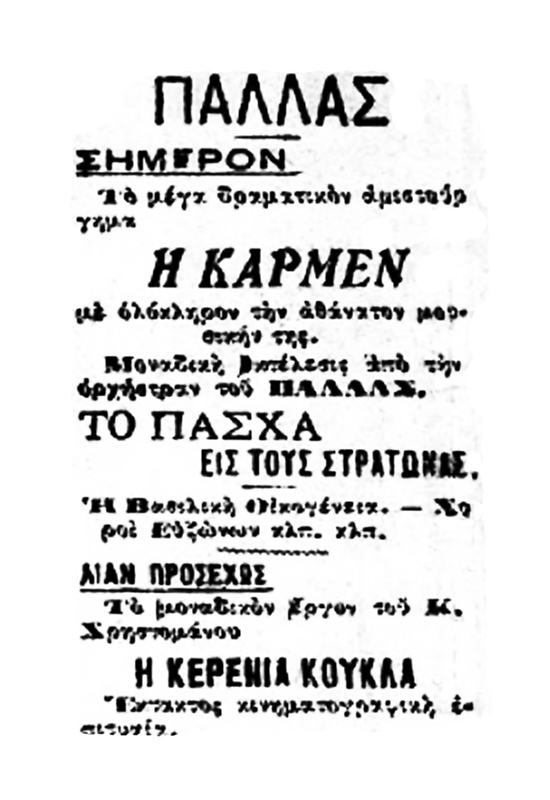
The melodramatic story of Virginia, an ill young woman in love with her wood-carver husband.
Review Excerpt
"
A candle gutters somewhere off-screen, and the first image we register is not Virginia’s face but the trembling halo round it—an ochre smear that feels borrowed from Rembrandt via way of Lesbos. Director-scenarist team Christomanos-Glitsos understand, better than most of their continental contemporaries, that melodrama is most lethal when lit like a chapel: every shadow becomes confession, every highlight a benediction. Shot on orthochromatic stock that turns blood into tar and lips into milk, ..."