DbcultAccessing Vault...
Cult Review
Senior Film Conservator
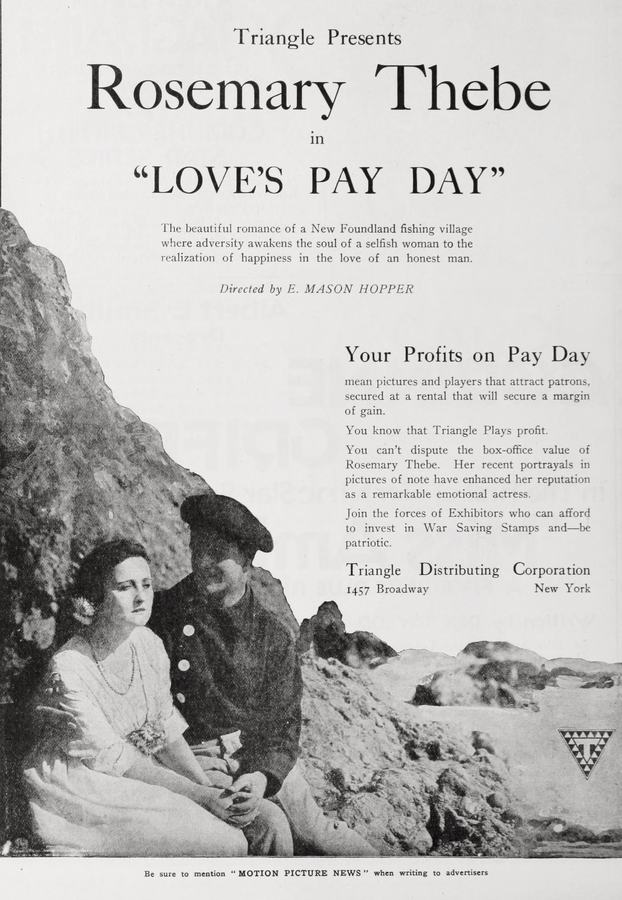
In the shimmering, often overlooked annals of early 20th-century cinema, certain narratives emerge with a resonance that transcends their silent origins, speaking to universal human truths with remarkable clarity. L.V. Jefferson’s Love's Pay Day, a compelling drama from 1917, stands as a testament to the era's potent storytelling capabilities, weaving a intricate tapestry of ambition, betrayal, and eventual, hard-won redemption against the stark, beautiful backdrop of a Newfoundland fishing village. This is not merely a tale of villainy and virtue, but a nuanced exploration of the choices that define us, the siren call of aspiration, and the profound consequences that echo through lives.
At the heart of the conflict lies George Wilton, portrayed by the formidable Harvey Clark, a character embodying the ruthless expansionism of burgeoning urban capitalism. Wilton arrives in the idyllic, yet economically vulnerable, community of Hearts Desire as an emissary from a large New York fish packing concern. His objective is clear: acquire Jean Laroque’s (John Lince) successful packing plant. Wilton is no mere businessman; he is a predator, observing the local landscape not for its inherent beauty or communal spirit, but for exploitable weaknesses. His very presence introduces a discordant note into the harmony of the village, a tangible manifestation of external forces seeking to subsume local autonomy under the banner of profit. This thematic tension between rustic integrity and commercial avarice is a recurring motif in cinema, echoing through later works that depict the erosion of traditional ways of life.
Jean Laroque, brought to life by John Lince, stands as the stoic embodiment of that threatened integrity. He is a man deeply rooted in his community, his livelihood, and his principles. His refusal to sell his plant is not merely a business decision; it is a defense of his heritage, his labor, and the very soul of Hearts Desire. Laroque represents a fading ideal in the face of relentless modernization, a man whose steadfastness becomes both his strength and, momentarily, a point of vulnerability. His initial defiance sets the stage for the dramatic confrontation, highlighting the inherent clash between individual will and the inexorable march of industrial progress.
The pivotal figure in this unfolding drama is Judith Bretans, played by the expressive Lillian West. Judith is not inherently malevolent, but rather a woman caught between two worlds: the comforting familiarity of her provincial existence and the dazzling, yet elusive, promise of metropolitan sophistication. Her restlessness, a yearning for something beyond the confines of Hearts Desire, makes her susceptible to Wilton’s insidious manipulations. He preys upon her nascent ambitions, painting a seductive picture of New York City, a world of opportunity and glamour that starkly contrasts with the arduous life of a fisherman’s fiancée. This psychological vulnerability is exquisitely rendered, a testament to L.V. Jefferson’s keen understanding of human desire and its potential to lead one astray. One might draw parallels to the moral dilemmas faced by characters in films like The Martinache Marriage, where personal ambition often clashes with established social contracts.
The film's central act of betrayal unfolds with poignant gravity on the very night of Judith’s wedding to Jean. Seduced by Wilton’s promise of financing her escape to New York, she commits the ultimate perfidy, securing the deed to Jean’s plant from her unsuspecting new husband. This moment is a stark illustration of how easily covetousness can corrupt love and loyalty. The revelation of her deceit shatters Jean, leading to his dramatic denunciation of Judith and his subsequent departure from the village. This sequence, undoubtedly rendered with the heightened emotionality characteristic of silent film melodrama, would have been a powerful spectacle of heartbreak and moral collapse. Lillian West's portrayal of Judith's internal conflict and ultimate choice would have been crucial here, conveying the depth of her ambition and the immediate, devastating cost of her actions.
With Jean gone and the plant in his possession, Wilton’s true nature is unleashed without restraint. He operates the plant with a cruelty that shocks even the hardened fishermen of Hearts Desire, turning their once-proud livelihood into a brutal enterprise of exploitation. This segment of the film serves as a potent social commentary, highlighting the predatory nature of unchecked capitalism and the plight of the working class. The fishermen, driven to desperation by Wilton’s tyrannical methods, are pushed to the brink of revolt, their simmering resentment erupting into a collective desire for justice. This narrative arc, where the oppressed rise against their oppressor, is a timeless dramatic engine, seen in countless stories across all mediums, but here imbued with the raw, visceral energy unique to early cinema.
Just as the enraged mob prepares to storm the plant, poised to enact their furious retribution, a dramatic turn of events unfolds. Jean Laroque reappears, his return signaling a shift in the moral landscape of the narrative. While he succeeds in dispersing the mob, preventing further violence, the climactic confrontation leads to Wilton’s demise. This sudden, violent end for the antagonist serves not only as a dramatic resolution but also as a form of poetic justice, suggesting that unchecked greed inevitably leads to self-destruction. The timing of Jean's return, preventing a descent into anarchy while still allowing for the villain's comeuppance, speaks to a carefully crafted narrative designed to explore both individual agency and collective response.
In the wake of the chaos, Judith, having witnessed the devastating consequences of her choices and the true cost of her ambition, undergoes a profound transformation. Her illusions of a glamorous New York life shattered by the harsh realities of betrayal and exploitation, she realizes the foolishness of her actions. This moment of anagnorisis, or recognition, is crucial for her character arc. She is reunited with Jean, a reconciliation that is not easily earned but forged in the crucible of shared suffering and mutual understanding. Their reunion signifies not a return to an idealized past, but a new beginning, built upon the painful lessons learned. Such a narrative of personal growth and atonement resonates deeply, reminding us that even the most grievous errors can be overcome through genuine remorse and a commitment to change, much like the challenging journeys of self-discovery depicted in films like The Parson of Panamint.
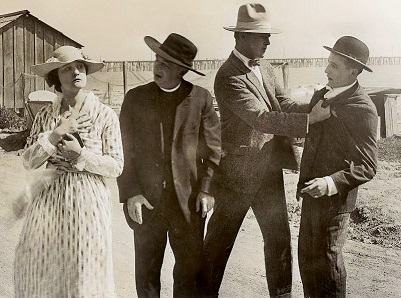
The performances in Love's Pay Day, particularly by Lillian West as Judith, Harvey Clark as Wilton, and John Lince as Jean, would have been exemplary of the silent era’s unique acting style. Silent film actors relied heavily on exaggerated facial expressions, grand gestures, and precise body language to convey emotion and drive the narrative forward in the absence of spoken dialogue. One can imagine West’s nuanced portrayal of Judith’s inner turmoil, from her initial yearning to her eventual remorse, conveyed through subtle changes in posture and gaze. Clark, as the villain, would have employed a more theatrical, menacing physicality, while Lince’s Jean would have embodied quiet strength and profound sorrow. The use of intertitles, carefully crafted by L.V. Jefferson, would have served as crucial narrative bridges, filling in dialogue and contextualizing emotional moments, ensuring the audience remained fully immersed in the unfolding drama. This reliance on visual storytelling and physical performance often lent silent films a raw, immediate power that could transcend cultural and linguistic barriers, a quality that continues to fascinate modern audiences.
Thematic depth is a hallmark of Love's Pay Day. Beyond the obvious conflict of good versus evil, the film delves into the corrupting influence of unchecked ambition, the fragility of trust, and the enduring power of community. It explores the tension between individual desire and collective well-being, a theme as relevant today as it was over a century ago. The narrative subtly critiques the allure of material wealth when pursued at the expense of moral integrity, suggesting that true happiness and belonging are found not in distant metropolises but within the bonds of one's own people and place. The story's resolution, while dramatic, champions the idea of second chances and the possibility of personal growth even after significant moral failings, a hopeful message often embedded in the more complex melodramas of the era.
L.V. Jefferson’s screenplay demonstrates a keen understanding of dramatic structure and character development. The pacing, from the initial setup of Wilton’s arrival to Judith’s fateful decision, Wilton’s tyrannical reign, and the climactic revolt, is meticulously orchestrated to build tension and emotional investment. The narrative arc is classic yet effective, presenting a clear progression from innocence to corruption, crisis, and ultimately, a form of cathartic resolution. The ability to craft such a rich and morally complex story within the constraints of silent film storytelling speaks volumes about Jefferson's talent as a writer. This narrative sophistication elevates Love's Pay Day beyond simple entertainment, positioning it as a significant piece of cinematic art from its period.
Visually, one can imagine the stark beauty of the Newfoundland setting being captured with a raw, documentary-like authenticity, contrasting sharply with the implied grandeur of New York. The cinematography would likely have emphasized the rugged coastline, the working lives of the fishermen, and the simple, yet resilient architecture of Hearts Desire. The shifts in tone, from the initial tranquility to the later scenes of exploitation and revolt, would have been underscored by changes in lighting, composition, and perhaps even early forms of tinting to evoke different emotional states. The costumes, while perhaps not as opulent as those in a grand society drama, would have been meticulously chosen to reflect the characters' social standing and regional identity, further grounding the narrative in a tangible reality. The visual language of the film would have been a crucial component in conveying its powerful message.
In terms of cinematic comparisons, Love's Pay Day shares thematic DNA with several contemporaries. The melodramatic tension and the clash of individual desires against societal expectations might evoke memories of films like The Intrigue, which often explored complex moral quandaries. The theme of a young person’s disillusionment and eventual moral awakening, as seen in Judith’s journey, finds echoes in the coming-of-age narratives of films like Young America. The dramatic portrayal of betrayal and its devastating consequences could be likened to the heightened emotional stakes found in productions such as Saved from the Harem, where personal choices lead to dire, often theatrical, outcomes. These comparisons highlight Love's Pay Day’s place within a rich tradition of silent era storytelling, where compelling human drama was paramount.
The enduring relevance of Love's Pay Day lies in its timeless exploration of human nature. The temptations of wealth, the corrupting influence of power, the pain of betrayal, and the path to forgiveness and redemption are themes that continue to resonate with audiences across generations. While the specific setting and silent film conventions might mark it as a product of its time, the underlying human drama remains universal. It serves as a stark reminder that the pursuit of material gain at all costs often leads to a spiritual and emotional bankruptcy far more devastating than any financial loss. The film, through its compelling narrative, offers a cautionary tale that remains pertinent in an ever-evolving world grappling with similar ethical dilemmas.
In conclusion, Love's Pay Day is more than just a historical curiosity; it is a vibrant piece of cinematic art that speaks to the enduring power of storytelling. Through its well-drawn characters, its exploration of profound moral questions, and its dramatic, yet ultimately redemptive, narrative arc, it solidifies its place as a significant contribution to early American cinema. It is a film that would have left its initial audiences contemplating the true cost of ambition and the profound value of integrity and community, a legacy that continues to shimmer even after more than a century since its initial release. For those interested in the foundational narratives of film, this silent drama offers a compelling and emotionally rich experience, showcasing the artistry and thematic depth that defined an era.
Cast: Lillian West, Alberta Lee, Harvey Clark, John Lince, Pete Morrison, William Dale, Rosemary Theby
Writer: L.V. Jefferson
IMDb —
1916
Community
Log in to comment.