DbcultAccessing Vault...
4.9/10
Senior Film Conservator
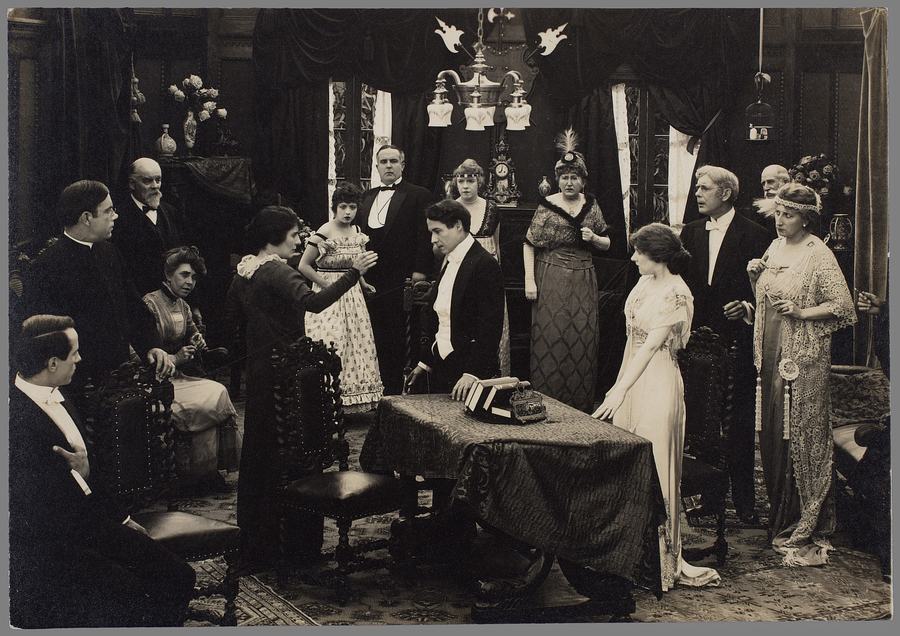
A definitive 4.9/10 rating for a film that redefined the boundaries of cult cinema. Pillars of Society remains a cornerstone of transgressive art.
Stepping back into the early cinematic landscape, one encounters works that, despite their age, resonate with an uncanny prescience. Henrik Ibsen’s Pillars of Society, brought to the silver screen in 1916, is precisely such a creation. It’s a film that peels back the veneer of respectability, exposing the often-corrosive compromises made in the pursuit of power and public adoration. The story of Karsten Bernick, a man whose life is a meticulously woven tapestry of calculated deception, feels as potent today as it must have over a century ago. This isn't merely a silent film; it’s a profound meditation on the cost of integrity, a cinematic mirror held up to the very foundations of communal morality.
From the outset, we are introduced to Karsten Bernick (portrayed with a compelling blend of gravitas and veiled desperation by William Parsons), a figure whose return from a bohemian sojourn in Paris is less a homecoming and more a strategic maneuver. His family's venerable shipyard, the lifeblood of their town, teeters on the precipice of financial ruin. In a move that defines his character's trajectory, Bernick shatters an engagement to the spirited Lona (Josephine Crowell), choosing instead the pragmatic path of marrying Betty (Juanita Archer), Lona's wealthy half-sister. This act, cold and calculating, injects much-needed capital into the failing enterprise, transforming Bernick overnight from a potential pariah into the town's savior – a veritable "Pillar of Society." It’s a classic Faustian bargain, one where personal happiness and genuine connection are sacrificed at the altar of material security and public esteem. The film brilliantly establishes this initial premise, laying the groundwork for the intricate web of lies that will ensnare Bernick and, by extension, the entire community.
The irony of Bernick's newfound status is palpable. His elevated position is built not on honest endeavor or inherent virtue, but on a foundation of expedient falsehoods. This is a recurring theme in Ibsen's work, a relentless dissection of bourgeois hypocrisy that finds its visual analogue in this compelling adaptation. Just as Bernick settles into the comfortable illusion of his unassailable reputation, a ghost from his Parisian past materializes: Mme. Dorf (Olga Grey), an actress whose arrival threatens to unravel his carefully constructed facade. The revelation she carries – an episode from his wilder youth – could dismantle everything he has so assiduously built. The tension here is exquisitely managed, a slow burn of impending exposure that keeps the audience on edge.
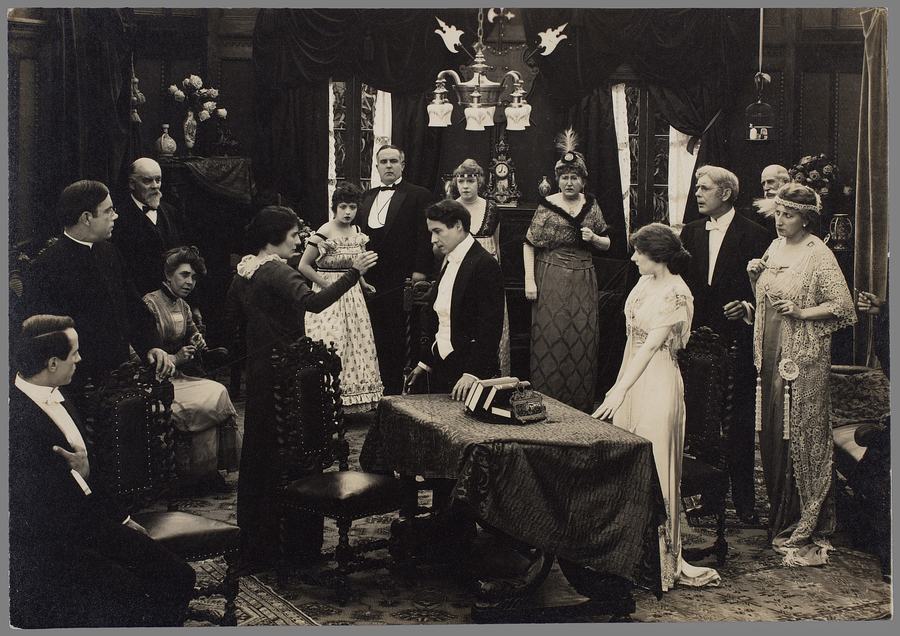
In a move that further stains his moral compass, Karsten persuades his impressionable brother-in-law, Johan (Joseph Singleton), to shoulder the blame for his past indiscretion. Johan, motivated by a misguided sense of loyalty to his sister Betty, acquiesces to this egregious demand. This act of self-sacrifice propels Johan and Lona, who still harbors deep feelings for Karsten, to seek refuge and a new life in America. The narrative deftly paints Karsten not just as a man who makes bad choices, but as a manipulative architect of others' fates, willing to exploit familial bonds for his own preservation. One might draw parallels to the moral quagmire seen in films like The Price of Vanity, where characters are similarly trapped by the consequences of their own deceit, though Bernick's machinations here feel even more cold-blooded.
Tragedy, however, offers Karsten an unexpected reprieve. Mme. Dorf passes away, leaving her young daughter in his care. This development, while seemingly a burden, becomes another unlikely stepping stone in Karsten's ascent. His acceptance of guardianship is not born of genuine benevolence but of fear – the fear of refusing and thus reigniting suspicion. Yet, to the unsuspecting townsfolk, it appears as an act of profound charity, further burnishing his image as an upright, compassionate citizen. The film masterfully highlights the chasm between public perception and private reality, a theme that remains profoundly relevant in contemporary discourse surrounding public figures. Karsten's reputation, now seemingly impregnable, allows him to bask in the glow of civic adulation.
This carefully cultivated security, however, is dramatically shattered by the sudden return of Johan and Lona from America. Their reappearance is the catalyst for the narrative's true reckoning. Johan, no longer content to live under the shadow of a lie, is determined to clear his name and reclaim his dignity. Lona, whose enduring love for Karsten is tinged with a fierce demand for authenticity, implores him to dismantle his edifice of deceit and build his standing as a "Pillar of Society" on the unshakeable bedrock of truth. This confrontation is where the film truly shines, as the moral battle lines are drawn with stark clarity. Karsten's defense, that a man in his position must resort to subterfuge to protect the very society that depends upon him, is a chilling articulation of moral relativism, a rationalization of corruption in the name of expediency. It echoes the complex moral dilemmas explored in Body and Soul, where characters grapple with the spiritual and ethical costs of their choices in a world demanding compromise.
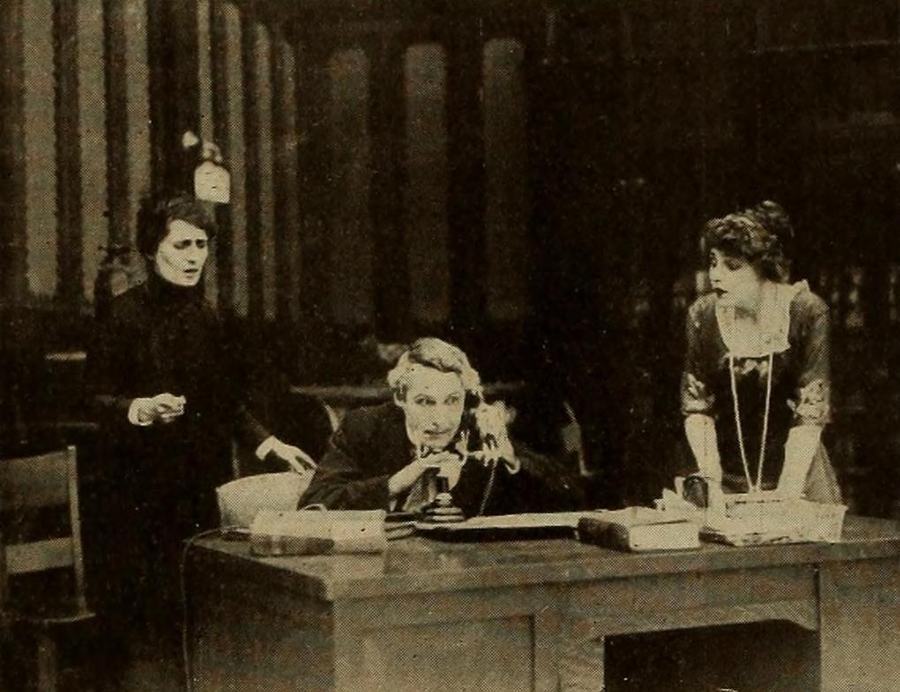
The emotional stakes escalate as Johan finds love with Karsten's young protégée, Mme. Dorf's daughter. This burgeoning romance adds another layer of urgency to Johan's demand for justice. His insistence that Karsten confess becomes more fervent, fueled by his desire to build an honest future with the woman he loves, free from the stain of a fabricated past. Karsten, now desperate and cornered, devises a truly insidious plan: he conspires for Johan and the girl to depart on an unseaworthy vessel, a silent, murderous act designed to permanently silence the threats to his reputation. The sheer depravity of this scheme underscores the depth of his moral decay, revealing the lengths to which a man will go to protect his carefully constructed lie.
Yet, in a stroke of narrative brilliance, Karsten's wicked machinations spectacularly backfire. His own son, Olaf, a spirited and adventurous child, runs away from home and is discovered as a stowaway on the very ship destined for disaster. This plot twist is not just a dramatic device; it's a profound moment of divine retribution, forcing Karsten to confront the direct, devastating consequences of his actions on the one person he truly cares about. The image of the ship catching fire, a symbol of his burning deceptions, and the thrilling rescue of little Olaf in a motorboat, is one of the film's most visually arresting and emotionally charged sequences. It’s a moment that jolts Karsten from his self-imposed delusion, a visceral awakening to the truth of his precarious position. The intensity of this sequence, though rendered in silent film, conveys a desperate urgency that few contemporaries could match.
The climax arrives at a grand reception, a tribute orchestrated by the townspeople to honor their esteemed leading citizen. The irony is excruciating. Surrounded by those who laud his supposed virtues, Karsten, now profoundly shaken by the near-loss of his son, can no longer sustain the charade. In a moment of raw, courageous vulnerability, he confesses the intricate web of lies that has defined his public and private life. It is a moment of catharsis, not just for Karsten, but for the audience, who have witnessed his agonizing journey through moral compromise. This confession isn't merely an admission of guilt; it's a profound realization, a spiritual epiphany. He finally grasps that the true "Pillars of Society" are not the powerful individuals who manipulate public opinion, but the immutable Spirits of Truth and Freedom themselves.
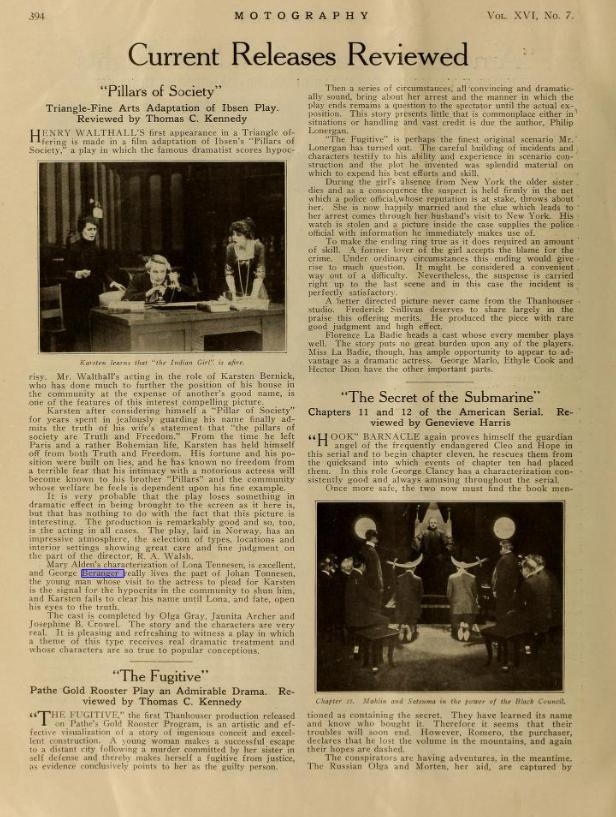
The performances in Pillars of Society are uniformly strong, particularly considering the stylistic demands of silent cinema. William Parsons embodies Karsten Bernick with a nuanced complexity, allowing us to witness his internal struggle even amidst his outward villainy. Josephine Crowell’s Lona is a beacon of moral clarity, her presence a constant reminder of the truth Karsten so desperately tries to suppress. Joseph Singleton’s Johan conveys both the initial naiveté and the later resolve of a man wronged. The ensemble cast, including Jennie Lee, Loretta Blake, and Henry B. Walthall, contribute significantly to the film's rich texture, creating a believable and vibrant community that is both complicit in and victim of Bernick's deceptions. The direction, while adhering to the conventions of the era, manages to imbue the narrative with a palpable sense of tension and emotional weight, making the most of visual storytelling in the absence of dialogue. The use of intertitles is effective, providing crucial exposition and character insight without disrupting the flow.
Cinematically, the film showcases the burgeoning artistry of early 20th-century filmmaking. The staging, though theatrical in its origins, is adapted effectively for the screen, with thoughtful compositions that guide the viewer’s eye and emphasize character dynamics. The dramatic sequences, especially the ship fire and rescue, demonstrate a commendable ambition for the period, utilizing practical effects and clever editing to create genuine suspense. While it may not possess the sprawling epic scale of a Four Feathers or the innovative visual language of later masterpieces, Pillars of Society leverages its resources to tell a compelling, character-driven story. It’s a testament to the fact that compelling narrative and strong thematic foundations can transcend technological limitations.
What truly elevates Pillars of Society beyond a mere historical curiosity is its enduring thematic relevance. Ibsen’s searing critique of societal hypocrisy, the corrupting influence of power, and the redemptive power of truth remains startlingly pertinent. In an age saturated with curated public images and the constant struggle between perception and reality, Karsten Bernick’s journey serves as a powerful cautionary tale. The film asks us to examine the very structures we venerate, prompting uncomfortable questions about the integrity of our leaders and the foundations of our communal values. It suggests that true societal strength doesn't come from rigid, unyielding institutions or powerful, unblemished individuals, but from the fluid, often messy, embrace of honesty and openness.
Comparing it to other films of its era, Pillars of Society stands out for its intellectual rigor and moral complexity. While films like In the Hour of Temptation might explore personal moral dilemmas, Ibsen's work broadens the scope to indict an entire societal structure. Its psychological depth goes beyond the more straightforward melodramas of the time, offering a character arc that is both tragic and ultimately hopeful. It's a film that demands reflection, inviting viewers to ponder the nature of integrity, the weight of reputation, and the ultimate liberation that comes with confronting one's own truths.
In conclusion, Pillars of Society is far more than an artifact from the silent film era; it is a timeless drama that continues to challenge and provoke. Its exploration of moral compromise, the seductive allure of public perception, and the ultimate triumph of truth over deception makes it an essential viewing experience for anyone interested in the foundational narratives of modern cinema and the enduring power of Ibsen's vision. The film reminds us that the quest for authenticity is a perpetual human struggle, and that genuine freedom can only be found when we dare to dismantle the lies we construct, both for ourselves and for society. It's a powerful and resonant work, urging us to look beyond the surface and question what truly holds our communities upright.

IMDb —
1921
Community
Log in to comment.