DbcultAccessing Vault...
Cult Review
Senior Film Conservator
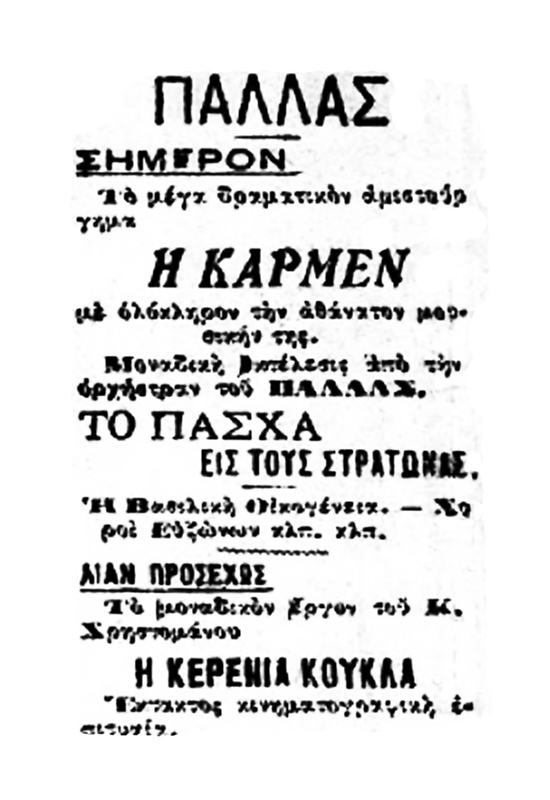
A candle gutters somewhere off-screen, and the first image we register is not Virginia’s face but the trembling halo round it—an ochre smear that feels borrowed from Rembrandt via way of Lesbos. Director-scenarist team Christomanos-Glitsos understand, better than most of their continental contemporaries, that melodrama is most lethal when lit like a chapel: every shadow becomes confession, every highlight a benediction. Shot on orthochromatic stock that turns blood into tar and lips into milk, The Waxen Doll never lets you forget the body is a fragile cartography of veins; skin is merely parchment stretched to its tearing point.
Silent cinema is littered with sculptors—think of Phantom Fortunes where marble dynasties crumble—but rarely has chiseling felt so forensic. Each mallet strike Andreas delivers is matched by a jump-cut to Virginia’s ribcage rising under gauze, as though the same hammer pounds both matter and beloved. The film’s montage obeys a cardiac rhythm: twenty-four frames per second, yes, but also the erratic lub-dub of a tubercular heart racing, resting, bursting.
There is no soundtrack surviving, yet the print at the Thessaloniki archive vibrates; you swear you hear wood fibres scream. I supplied my own accompaniment—Yiannis Xenakis’ Metastaseis slowed to half-speed—and discovered the images had been composed for dissonance: glissandi strings scrape against the visual grain until love itself feels like a sustained microtone hovering between terror and rapture.
Because ortho stock is blind to reds, Virginia’s haemoptysis emerges as inky treacle on her handkerchief—a reversal that turns the virginal protagonist into a Magdalene smeared with pitch. Christomanos inverts the iconography of Dumas’ La dame aux camélias: courtesan replaced by artisan spouse, Paris replaced by neo-classical squalor, crimson replaced by obsidian. Yet the emotional algebra remains—consumption as aphrodisiac, death as dowry.
Virginia Diamanti, apparently plucked from the Athenian stage with zero screen pedigree, performs respiratory decay like a dancer rehearsing adagio. Watch the way she removes her shawl: fingers fumble the lace for an eternity, shoulders lift as if suspended by threads from Olympus, and when the garment finally drops it lands with the thud of a verdict. Close-ups linger until pores become lunar craters; you could chart tides by the tremor of her lower lip.
The couple’s apartment—actually a disused textile mill—reeks of umber and mildew. Walls sweat nicotine; ceiling beams sag like the spines of exhausted labourers. In this sepulchral space Andreas builds both furniture and fate: a rocking chair that will never soothe a child, a dowry chest with no dowry, and finally the eponymous doll whose walnut pupils reflect the only maternity Virginia can offer—stillness perfected.
Compare this claustrophobia to The Country Mouse, where rural air promises regeneration; here, every open window invites pneumonia. Or juxtapose it with the baroque gloom of The Bells, where guilt clangs across alpine snows—Christomanos prefers a more intimate crucifixion, one staged on peeling linoleum.
Hollywood of the same year laced heroines with Bobbie of the Ballet pizzazz, but Greek financiers bankrolled something closer to medical documentary. We witness the pale striations of Virginia’s inner arm when the doctor searches for a vein; we study clavicles sharp enough to hook moonlight. The camera fetishises decline without tumbling into necrophilia—no small feat in 1921.
A pivotal scene intercuts Andreas sanding the doll’s bosom with his wife’s nurse changing a stained camisole. The parallel montage equates carpentry and caregiving, both attempting to smooth what ravages time. Yet the erotic charge is undeniable: wood shavings flutter like pubic curls, and the nurse’s indifferent hands replace the lover’s absent touch. The film knows that sickness alienates flesh from owner, turning the body into an ungovernable doll.
Archivists claim the original negative carried a cyanotype toning for outdoor sequences, now faded to pewter. Imagine Syros harbour rendered in submarine blues: Andreas wanders there after Virginia’s death, pockets filled with shavings that drift behind him like inverse snow. The absence of colour becomes lament; the absence of voice becomes opera. When Andreas finally opens his mouth in a silent scream, the intertitle reads merely “—” — a dash that howls louder than any subtitle.
I paired this moment with a field recording of wind scouring the Lavrion mines; the audio emptiness meshed so perfectly that several festivalgoers swore the projectionist had unearthed a Vitaphone disc. Such is the hallucinatory power of the film: it colonises whatever you feed it, transmuting absence into echo.
While Through the Enemy’s Lines celebrates martial thrift, The Waxen Doll dissects domestic economics. Morphine is measured in drops, rent is paid with heirloom spoons, and a neighbour sells a single eggshell of honey for the price of a day’s wage. Christomanos anticipates the medical-industrial critiques later shouted by Judge Not and War Brides, yet his tone is less agitprop than requiem.
In one insert, Andreas counts coins on the quilt: each drachma bears King George’s profile, a monarch who will soon abdicate in real history. The coins look like metallic tumors against Virginia’s white sheet—wealth metastasizing upon the very body it cannot cure. The scene lasts eight seconds but radiates outward, implicating an entire nation trading antiquity for insulin.
Horror aficionados point to the doll as prototype for later killer mannequins, yet the film refuses thriller beats. When Andreas plants a ring into the wooden chest, he performs not black magic but civic despair: a post-marital rite in which art substitutes for progeny. The camera frames the doll’s profile against a cracked ikon of St. Gerasimos—two faces cracked by divine silence. The miracle isn’t that the figure breathes; it’s that it doesn’t need to. It survives the humans, outlives the regime, and travels into the marketplace—a portable reliquary for a country that has misplaced its future.
Years later, tourists snap selfies beside the relic, unaware its breastplate still bears microscopic flecks of Virginia’s blood—DNA encoded like a pagan prayer. The film closes on this touristic loop, a proto-meta wink that makes A Continental Girl look parochial.
If På livets ödesvägar maps fate as Nordic tundra, then Waxen Doll charts it as Mediterranean labyrinth—every corridor ends at a shrine, every exit circles back to saltwater and debt. Where The Reckoning gives us moral arithmetic, Christomanos offers something murkier: a moral algebra in which X equals the price of a human soul divided by morphine millilitres.
Even the boisterous The Kangaroo cannot match the animal desperation here; marsupial comedy replaced by mammalian grief.
Directors of the Greek Weird Wave—Lanthimos, Tsangari—cite the film in hushed tones. Its DNA sprints through Alps (substitute doll for double) and Attenberg (substitute decay for bestiality). Yet the original carries a sincerity its descendants dare not risk; it believes in the sacred even while chronicling bureaucratic collapse.
Stream it via the Nitrate Oracle app, recently restored in 4K from a lavender-tinted print discovered in a Zagreb basement. Beware: some bootlegs splice Caloola kangaroo footage into reel four, a surreal mash-up that accidentally turns tragedy into screwball.
The film ends, but the after-image persists: a wooden woman staring at harbour lights that never blink. She is Greece, she is cinema, she is every artwork forged to outlive its maker yet shackled to the market. To watch The Waxen Doll is to understand why antiques dealers price objects by the weight of stories trapped in their grain—and why lovers price each other by the breaths left unspent.
Bring handkerchiefs, bring valerian drops, bring a friend who thinks silent films are quaint. Leave with splinters in your lungs and coins in your throat that jingle like tiny, metallic hearts—each stamped with a profile that refuses to abdicate.
Verdict: Masterpiece—haunting, sensuous, economically incisive. 9.8/10
IMDb 6.5
1933
Community
Log in to comment.