Summary
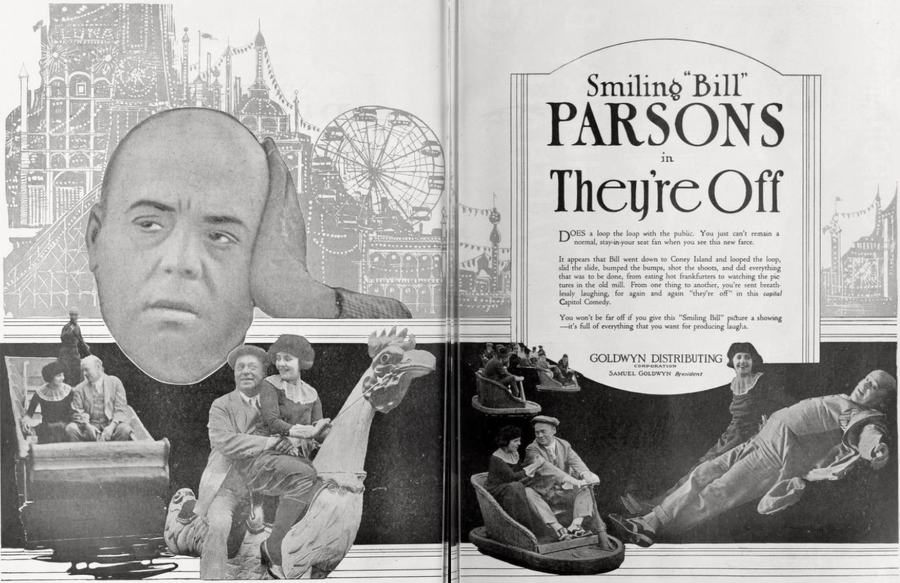
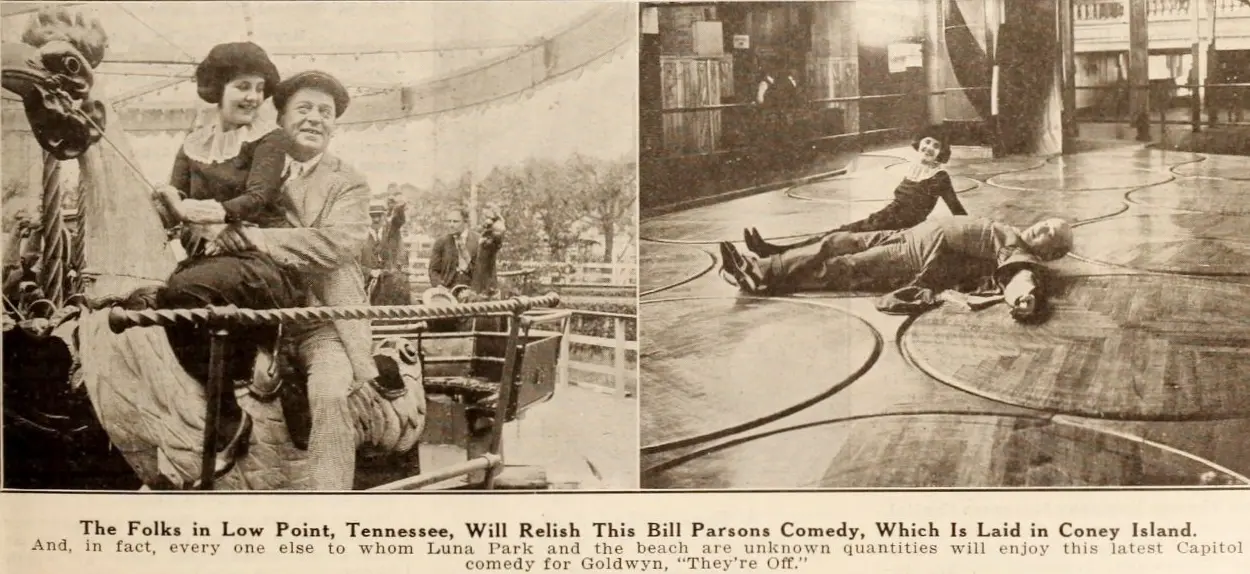
In an era ostensibly defined by rigid marital decorum, 'They're Off' unfurls a piquant narrative of a wife’s audacious pursuit of personal diversion, a spirited rebellion against the stifling ennui of domesticity. Our delightful ingenue, chafing under the presumed neglect of her husband, plunges headfirst into the exhilarating anarchy of Coney Island. There, amidst the thrilling descent of the chutes, the carnivalesque allure of 'hot dogs,' the kinetic energy of pony rides, and the disorienting merriment of a revolving floor, she finds an unexpected conspirator in 'Smiling Bill.' Their shared spree of unadulterated hilarity forms a clandestine bond, a vibrant tableau of pure, unburdened joy. The domestic tranquility is shattered when her husband, having finally tracked her down, drags her before the judicial system. Yet, in a twist of delicious irony, the arbiter of justice is none other than her erstwhile partner in revelry, 'Smiling Bill' himself. Bound by an unspoken code, perhaps that of a Mason, 'Smiling Bill' masterfully navigates the delicate tightrope between public duty and private camaraderie, delivering not a judgment against her, but rather a subtly incisive admonition to husbands oblivious to the vital necessity of enlivening their wives' summer evenings. The film thus transforms a simple romp into a nuanced commentary on marital responsibility, societal expectations, and the clandestine avenues of personal happiness.
Synopsis
"Smiling Bill" shoots the chutes, eats "hot dogs," rides the ponies, and finally is thoroughly bumped about on a revolving floor. But all this is done in the company of a delightful ingenue, who is bent upon having a good time at the Island. And when her husband finally locates her and hauls her to court, she discovers that the judge is none other than her partner in hilarity, "Smiling Bill" himself. And being a Mason, "Smiling Bill" doesn't tell, but confines himself to a few well addressed remarks to husbands who do not know how to entertain their wives on summer evenings.
Review Excerpt
"
The Unsung Subversion of 'They're Off' (1919): A Deep Dive into Silent Cinema's Subtle Satire
In the annals of cinematic history, especially within the vast, often-overlooked expanse of the silent era, certain films emerge not as monumental masterpieces, but as delightful, insightful curios that offer a unique lens into the social fabric of their time. 'They're Off,' a 1919 production penned by Tom Bret and starring William Parsons, is precisely such a film. On the surface, it ..."