DbcultAccessing Vault...
Cult Review
Senior Film Conservator
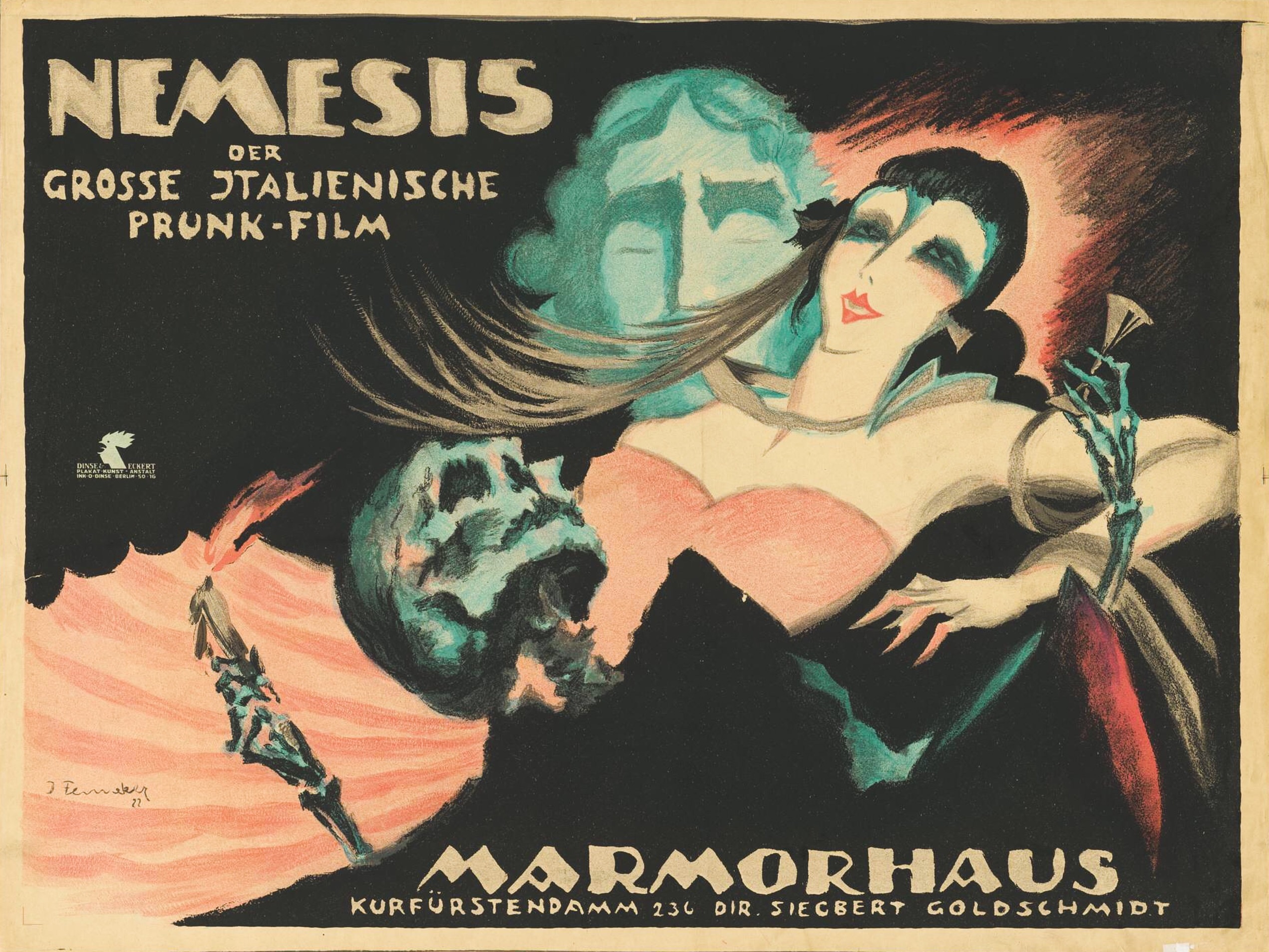
Stepping back into the cinematic annals of the early 20th century, one encounters 'Nemesis,' a film that, despite its vintage, pulsates with a timeless narrative of human frailty, ambition, and the inexorable march of consequence. Directed with a keen eye for melodrama and psychological tension, this picture, penned by Lucio D'Ambra and Paul Bourget, delves into the dark corners of the human heart, where self-interest often eclipses moral rectitude. It’s a compelling, if at times stark, exploration of the societal pressures and personal choices that can lead even the most privileged down a path of no return.
At its core, 'Nemesis' is a character study, centered on a young duchess, a woman ensnared by the gilded cage of her inheritance. Her late husband’s will, a testament to his lingering control, dangles wealth with a conditional hook: marry again, lose it all. Her solution? A clandestine marriage to a dashing military captain, a union forged in secrecy, intended to circumvent the will's decree. This initial act of deception sets the stage for a cascading series of moral compromises. The duchess, portrayed with a compelling blend of vulnerability and steely resolve by Soava Gallone, embodies the societal pressures of her era, where status and financial security often dictated the very fabric of existence. Her internal conflict, though rendered without spoken dialogue, resonates profoundly through the expressive power of silent film acting. It’s a struggle that feels as relevant today as it did a century ago, a testament to the enduring human struggle between love and lucre.
The captain, played by a stoic Carlo Gualandri, represents an anchor of conventional morality, albeit one caught in the duchess's tempestuous wake. When duty calls him to the front, the duchess's carefully constructed world begins to fray. Her desperate attempts to retain him, her frantic letters, speak volumes about her burgeoning dependence and fear of exposure. The subsequent fabrication of a pregnancy, a desperate plea for his return, is a pivotal moment, revealing the depths of her manipulative capacity. It's a move that echoes the intricate deceptions found in other period dramas, perhaps even touching upon the moral ambiguities explored in a film like The Promise, where personal pledges clash with practical realities.
The captain's response to her fabricated pregnancy is a stark contrast to her own calculating nature. He urges her to declare their marriage publicly, to embrace a life free from financial constraints, even if it means foregoing the inheritance. This vision of 'love in a cottage' – a life of simplicity and honesty – is a concept utterly alien, even repugnant, to the duchess. Her inability to countenance such a sacrifice, to choose authentic love over material comfort, seals her fate. It’s a powerful commentary on the corrupting influence of wealth and the psychological barriers it erects. Her decision to evade motherhood, to deny the very life she conjured, is chilling, a testament to her profound moral abandonment.
Upon the captain's return, the inevitable confrontation unfolds. His joyous anticipation of fatherhood is met with her cold, calculated admission: the letter was a ruse, a mere tactic to bring him home. This moment of brutal honesty, stripped of any genuine remorse, shatters the last vestiges of their relationship. For a time, the captain, bewildered and heartbroken, succumbs to her deceit. This sequence, fraught with emotional tension, highlights the devastating impact of betrayal on trust, a theme often explored in films where personal truths are distorted, much like the introspective narrative of As in a Looking Glass, where characters grapple with their own reflections and the truths they deny.
As if the duchess’s internal turmoil weren't enough, the narrative introduces external forces of malevolence. A 'blackmailing nihilistic doctor,' a character straight out of a simmering potboiler, embodies the darker underbelly of society. This figure, devoid of moral compass, becomes the catalyst for the duchess's ultimate downfall. He preys upon the resentment of a dismissed dwarf, an instrument of vengeance waiting to be wielded. The dwarf, whose prior service to the duchess makes him privy to her affairs, becomes the unwitting hand of fate, manipulated by the doctor's sinister designs. This subplot adds a layer of noir-esque intrigue, transforming the personal drama into a broader commentary on class resentment and the ease with which malevolent forces can exploit human grievances. The atmosphere of impending doom, crafted through these shadowy figures, resonates with the more conspiratorial elements found in films like Zagadochnyy mir, where hidden agendas dictate the characters' fates.
The casting, though limited in contemporary detail, suggests a deliberate choice of archetypes. Achille Vitti, perhaps as the doctor, would have conveyed a chilling intellectual menace, while Lorenzino Pery as the dwarf would have embodied a poignant blend of vulnerability and vengeful potential. The silent era's reliance on exaggerated facial expressions and body language would have amplified these characterizations, making their roles pivotal in driving the tragic conclusion.
Perhaps the most striking and thematically resonant element of 'Nemesis' is its subsidiary plot: the unearthing of a statue of Nemesis from the ancient grounds of a monastery. Buried for centuries, this physical manifestation of divine retribution, of inescapable justice, serves as a powerful meta-commentary on the main narrative. The timing of its discovery is no accident; it is a visual metaphor, a stark reminder that actions, particularly those born of deceit and avarice, carry their own inherent penalties. This symbolic parallel elevates the film beyond a simple melodrama, imbuing it with a profound sense of classical tragedy. The goddess Nemesis, often depicted with a sword or a bridle, symbolizes the precise calibration of justice, the balancing of fortunes, and the punishment for hubris. Her re-emergence in the narrative foreshadows the duchess’s violent end, suggesting that her fate is not merely the result of human machinations but of a cosmic order reasserting itself.
The film, through this powerful imagery, argues that some moral transgressions are so profound that they invite a form of cosmic reckoning. The duchess's 'conscience-stricken' state, leading to her being 'literally blown by a bomb into eternity,' is not just a sensationalistic plot device; it is the ultimate fulfillment of the Nemesis principle. Her inner turmoil, her inability to escape the consequences of her choices, manifests in external violence. It is a stark, brutal, and undeniably effective portrayal of karma, a concept that transcends cultural boundaries and resonates with the inherent human understanding of fairness and retribution. One might draw parallels to the stark moral choices presented in a film like Up or Down?, where characters face defining ethical crossroads with equally dramatic consequences.
'Nemesis' is a testament to the power of early cinema to explore complex themes with an economy of means. The performances, particularly from Ida De Bonis and Ciro Galvani in supporting roles, would have contributed to the film's rich tapestry, each character serving a distinct purpose in the duchess's tragic journey. The film's reliance on visual storytelling, given the silent medium, demands a heightened sense of theatricality and symbolic weight, which it delivers in spades. The use of close-ups, intertitles, and carefully orchestrated mise-en-scène would have guided the audience through the duchess's emotional and moral labyrinth.
The script by D'Ambra and Bourget, while adhering to the dramatic conventions of its time, manages to craft a narrative that feels both grand in its scope and intimate in its portrayal of personal failing. It's a reminder that human desires, unchecked by ethical considerations, can lead to devastating outcomes. The film's conclusion, while violent, serves as a powerful moral lesson, a dramatic pronouncement on the futility of trying to outrun one's conscience or evade the natural order of justice. In a cinematic landscape that was still defining its grammar, 'Nemesis' stands as a bold, if dark, exploration of humanity's enduring struggle with morality and fate. It’s a film that demands reflection, prompting viewers to consider the unseen forces that shape our lives and the ultimate price of our choices. The echoes of its themes can be found in countless dramas that followed, solidifying its place as a significant, albeit often overlooked, piece of cinematic history, a stark portrayal of the consequences that ripple out from a single, deceitful act.
The film’s thematic depth, particularly regarding the interplay between personal ambition and divine retribution, offers a compelling counterpoint to the more straightforward adventure narratives popular at the time, such as Diane of the Green Van or the rugged individualism of God's Country and the Woman. While those films celebrated human agency in the face of external challenges, 'Nemesis' plunges into the internal landscape, revealing how self-inflicted wounds can be the most fatal. It’s a somber, yet profoundly impactful, cinematic experience that continues to resonate with its timeless message about the inescapable nature of justice.

IMDb 5
1935
Community
Log in to comment.