DbcultAccessing Vault...
Cult Review
Senior Film Conservator
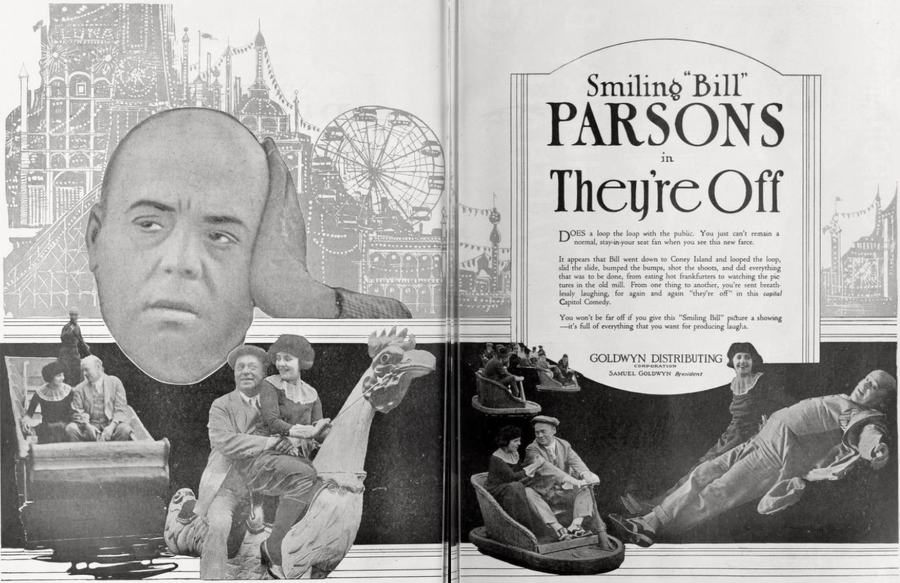
In the annals of cinematic history, especially within the vast, often-overlooked expanse of the silent era, certain films emerge not as monumental masterpieces, but as delightful, insightful curios that offer a unique lens into the social fabric of their time. 'They're Off,' a 1919 production penned by Tom Bret and starring William Parsons, is precisely such a film. On the surface, it presents itself as a lighthearted romp, a simple tale of an adventurous wife and her unexpected companion. Yet, beneath this veneer of innocent amusement lies a surprisingly astute commentary on marital dynamics, societal expectations, and the burgeoning quest for individual happiness in a rapidly modernizing world. It’s a film that, despite its brevity and apparent simplicity, resonates with a quiet audacity, challenging conventions with a wink and a knowing smile.
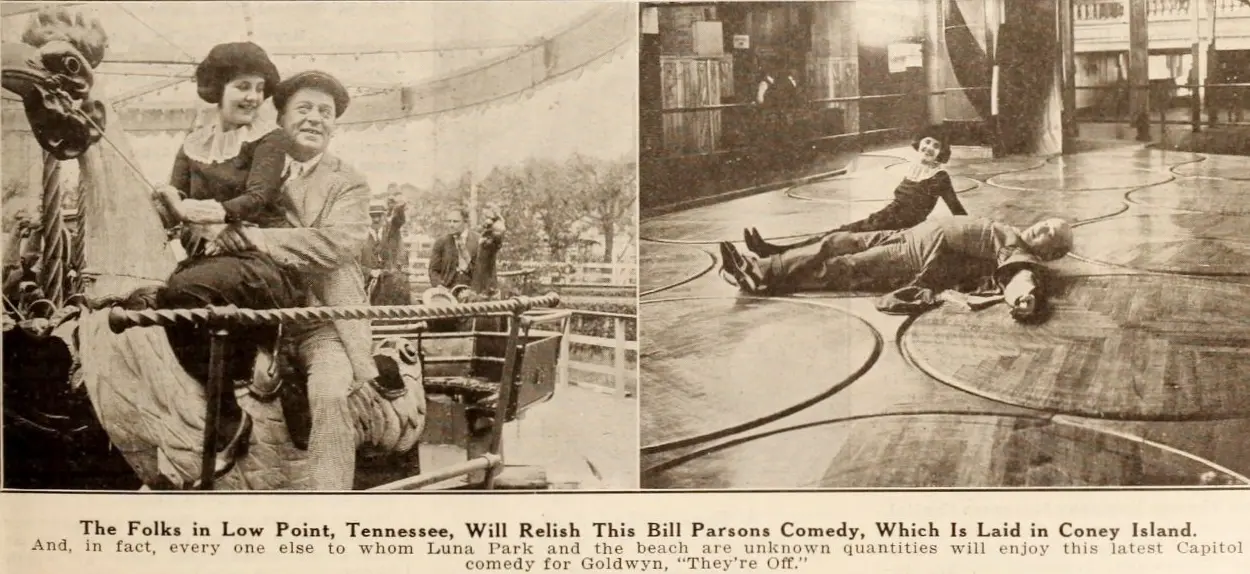
The premise of 'They're Off' is deceptively straightforward: a wife, clearly feeling the pinch of domestic monotony, embarks on a solo expedition to the effervescent playground of Coney Island. Here, she sheds the constraints of her married identity, transforming into a 'delightful ingenue' bent on pure, unadulterated pleasure. Her journey through the iconic attractions—the thrilling chutes, the novel 'hot dogs,' the whimsical pony rides, and the disorienting merriment of the revolving floor—is not merely an indulgence; it's an act of liberation. In this vibrant, chaotic milieu, she encounters 'Smiling Bill,' a kindred spirit whose infectious jollity perfectly complements her desire for mirth. Their shared escapade, a montage of wholesome fun, forms the core of the film's initial charm, painting a vivid picture of two souls reveling in the moment, unburdened by the world outside Coney Island's gates.
This quest for amusement, while seemingly innocuous, carries a potent undercurrent. It speaks to a nascent recognition of women's desires beyond the domestic sphere, a theme subtly explored in other films of the era, albeit often with more dramatic or tragic consequences, such as in Anna Karenina (1918), where marital dissatisfaction leads to far graver outcomes. Here, however, the tone remains light, almost celebratory. Our ingenue isn't seeking illicit romance; she's seeking joy, a commodity her husband, by implication, has failed to provide. Her actions, therefore, become a quiet indictment of a marriage lacking in vivacity, a poignant commentary on the emotional labor often expected of wives without reciprocal effort from their spouses. The film playfully suggests that sometimes, a dose of Coney Island chaos is precisely what the marital doctor ordered, an idea that resonates even today.
William Parsons, in the role of 'Smiling Bill,' delivers a performance that is central to the film's success. His portrayal is one of effortless geniality, a character whose very moniker suggests an inherent optimism and approachability. Bill is not a predatory figure or a romantic rival; he is, rather, a facilitator of fun, an embodiment of the carefree spirit of the amusement park. His interactions with the ingenue are marked by a delightful camaraderie, a shared understanding of the simple pleasure of the moment. Parsons manages to convey a sense of genuine warmth and playful mischief without ever straying into impropriety, a crucial balance that keeps the film firmly in the realm of innocent comedy rather than scandal.
This characterization is particularly noteworthy when considering the societal norms of 1919. A woman cavorting with an unknown man, even in a public setting like Coney Island, could easily be misconstrued. However, 'Smiling Bill's' inherent decency, conveyed through Parsons' subtle acting, ensures that their connection is one of shared merriment, not illicit liaison. This makes the film's eventual twist all the more impactful, as it relies on the audience's perception of Bill as a fundamentally good-natured, if somewhat unconventional, individual. His character is a refreshing departure from the often-stereotypical depictions of male figures in early cinema, offering a more nuanced vision of companionship and good humor. His presence is reminiscent of the charming, often mischievous male leads in films like The Valentine Girl or In Pursuit of Polly, where lighthearted male figures often guide the female protagonists through amusing escapades.
Coney Island itself functions as more than just a backdrop; it is a character in its own right, a vibrant symbol of nascent American leisure culture and a temporary sanctuary from the strictures of everyday life. In 1919, this iconic amusement park was a democratic space where social boundaries blurred, and individuals from all walks of life could partake in shared thrills and novel experiences. For our ingenue, it represents a liminal zone, a place where she can shed the mantle of 'wife' and embrace the spirit of spontaneous joy. The detailed description of her activities—shooting the chutes, eating 'hot dogs' (a relatively new and exciting street food at the time), riding ponies, and grappling with the revolving floor—immerses the viewer in the sensory overload of the park, making her escape feel palpable and exhilarating.
The choice of Coney Island as the setting is crucial, mirroring the escapist themes found in other contemporary films, most notably A Coney Island Princess. Both films utilize the locale to symbolize a break from convention, a place where new identities can be forged, even if temporarily. The inherent chaos and anonymity of the park allow for interactions that might be frowned upon in more formal settings, providing the perfect stage for the ingenue's 'harmless' rebellion. It's a place where the ordinary becomes extraordinary, and the mundane is replaced by the marvelous, a true testament to the power of environmental storytelling in silent cinema.
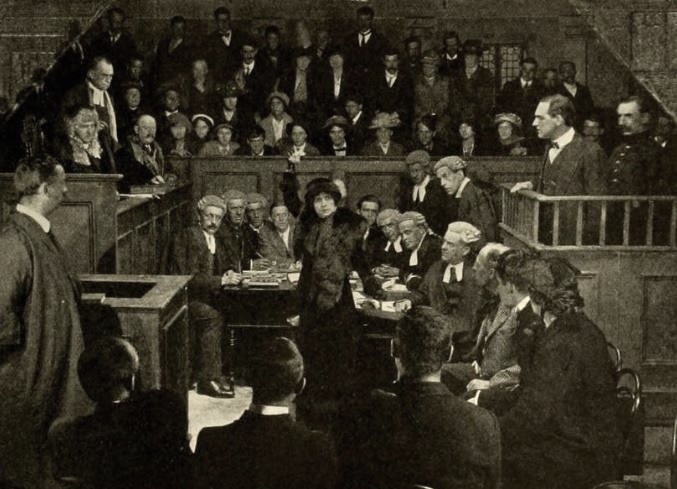
The film's true genius, however, lies in its audacious climax. The husband, having finally located his errant wife, hauls her to court, presumably for some form of marital insubordination or public indiscretion. This sets up an expectation of a moralistic lecture or a stern judgment, typical of many melodramas of the era. Instead, 'They're Off' delivers a twist that is both humorous and profoundly insightful: the presiding judge is none other than 'Smiling Bill' himself. This revelation instantly transforms the narrative from a simple comedy of errors into a sophisticated social satire. The very embodiment of law and order is revealed to be a participant in the 'crime' of joy-seeking, blurring the lines between authority and camaraderie.
The subsequent handling of the situation by Judge 'Smiling Bill' is nothing short of brilliant. Being a Mason, he is bound by a code of discretion and loyalty, which he masterfully applies without compromising his judicial integrity in the literal sense. He doesn't reveal their shared past at Coney Island, but instead delivers a series of 'well addressed remarks to husbands who do not know how to entertain their wives on summer evenings.' This is the film's mic drop moment, a subtle yet powerful indictment of patriarchal neglect disguised as judicial wisdom. It’s a moment that elevates the film from mere slapstick to genuine social commentary, suggesting that perhaps the 'crime' wasn't the wife's pursuit of happiness, but the husband's failure to provide it.
This twist, where the judge is implicated in the very 'transgression' he is meant to adjudicate, is a rare gem in early cinema. It cleverly subverts audience expectations and critiques the often-hypocritical nature of societal judgments. It avoids the heavy-handed moralizing often found in films dealing with marital discord, such as Pretty Mrs. Smith, which might explore similar themes of a wife's discontent but with a more dramatic, less comedic resolution. Instead, 'They're Off' offers a surprisingly progressive message wrapped in a delightful comedic package, advocating for empathy and understanding over rigid adherence to convention. It's a testament to Tom Bret's sharp writing that such a nuanced message could be conveyed so effectively in a silent medium.
As a silent film, 'They're Off' relies heavily on visual storytelling, physical comedy, and the expressive power of its actors. The director, though uncredited in the provided synopsis, masterfully orchestrates the scenes at Coney Island, capturing the frenetic energy and joyous abandon of the park. The physical gags, such as the struggles on the revolving floor, are executed with precision, eliciting genuine laughter without needing dialogue. William Parsons' facial expressions and body language are key to conveying 'Smiling Bill's' affable nature and later, his judicial gravitas, all while maintaining the secret of his dual identity. The ingenue's own transformation from a seemingly prim wife to a spirited adventurer is also conveyed primarily through her actions and reactions, a testament to the power of non-verbal communication in early cinema.
The film's pacing is brisk, keeping the audience engaged through a series of escalating comedic scenarios. The intertitles, sparse but impactful, serve to guide the narrative and deliver key pieces of information, particularly 'Smiling Bill's' final, memorable remarks. This economy of storytelling is a hallmark of effective silent film, where every shot and every gesture must contribute meaningfully to the plot and its underlying themes. Unlike more sprawling epics of the time, such as Richelieu, which relied on grand sets and historical drama, 'They're Off' finds its strength in its intimate focus and sharp comedic timing. The visual language is clear, concise, and utterly charming, making it accessible even to modern audiences unfamiliar with the conventions of silent film.
Beyond its immediate comedic appeal, 'They're Off' offers a surprisingly enduring message about the complexities of marriage and the importance of individual happiness. It subtly argues that a fulfilling partnership requires more than just adherence to societal norms; it demands active engagement, mutual understanding, and a willingness to foster joy. The husband's failure to entertain his wife is presented not as a minor oversight, but as a significant marital shortcoming, one that drives his wife to seek solace and amusement elsewhere. This perspective, articulated through the unconventional wisdom of 'Smiling Bill,' feels remarkably prescient for a film from 1919.
The film's resolution, with its gentle admonition rather than harsh judgment, suggests a progressive outlook on marital problems. It doesn't condemn the wife's actions but rather redirects the blame, at least partially, to the husband's complacency. This nuanced approach sets it apart from more didactic films of the period. It champions a vision of marriage where both partners are responsible for nurturing shared happiness and respecting individual needs for recreation and diversion. In this sense, 'They're Off' is not merely a historical curiosity but a timeless piece of social commentary, still relevant in its exploration of domestic harmony and the pursuit of personal contentment.
While 'They're Off' may not possess the grand scale of Kitchener's Great Army in the Battle of the Somme or the dramatic intensity of The Heart of Texas Ryan, its charm lies in its intimate focus and clever narrative. It's a film that deserves to be rediscovered, not just as a historical artifact, but as a genuinely entertaining and thought-provoking piece of silent cinema. Its ability to weave social critique into a seemingly simple comedic structure is a testament to the ingenuity of early filmmakers and writers like Tom Bret. For those interested in the subtle artistry of silent film, or indeed, anyone seeking a charming and surprisingly insightful look at marital life from a century ago, 'They're Off' offers a delightful diversion and a valuable glimpse into the evolving social mores of its time.
It stands as a testament to the fact that even in the nascent years of cinema, filmmakers were capable of crafting narratives that were both entertaining and intellectually stimulating, challenging audiences to look beyond the surface. The film's unique blend of physical comedy, social satire, and a surprisingly progressive message makes it a compelling watch, proving that sometimes, the most profound insights can be found in the most unexpected and seemingly lighthearted of tales. It’s a quiet triumph, a film that, much like its 'Smiling Bill,' knows how to deliver a memorable punchline with grace and discretion.

IMDb 4.1
1933
Community
Log in to comment.