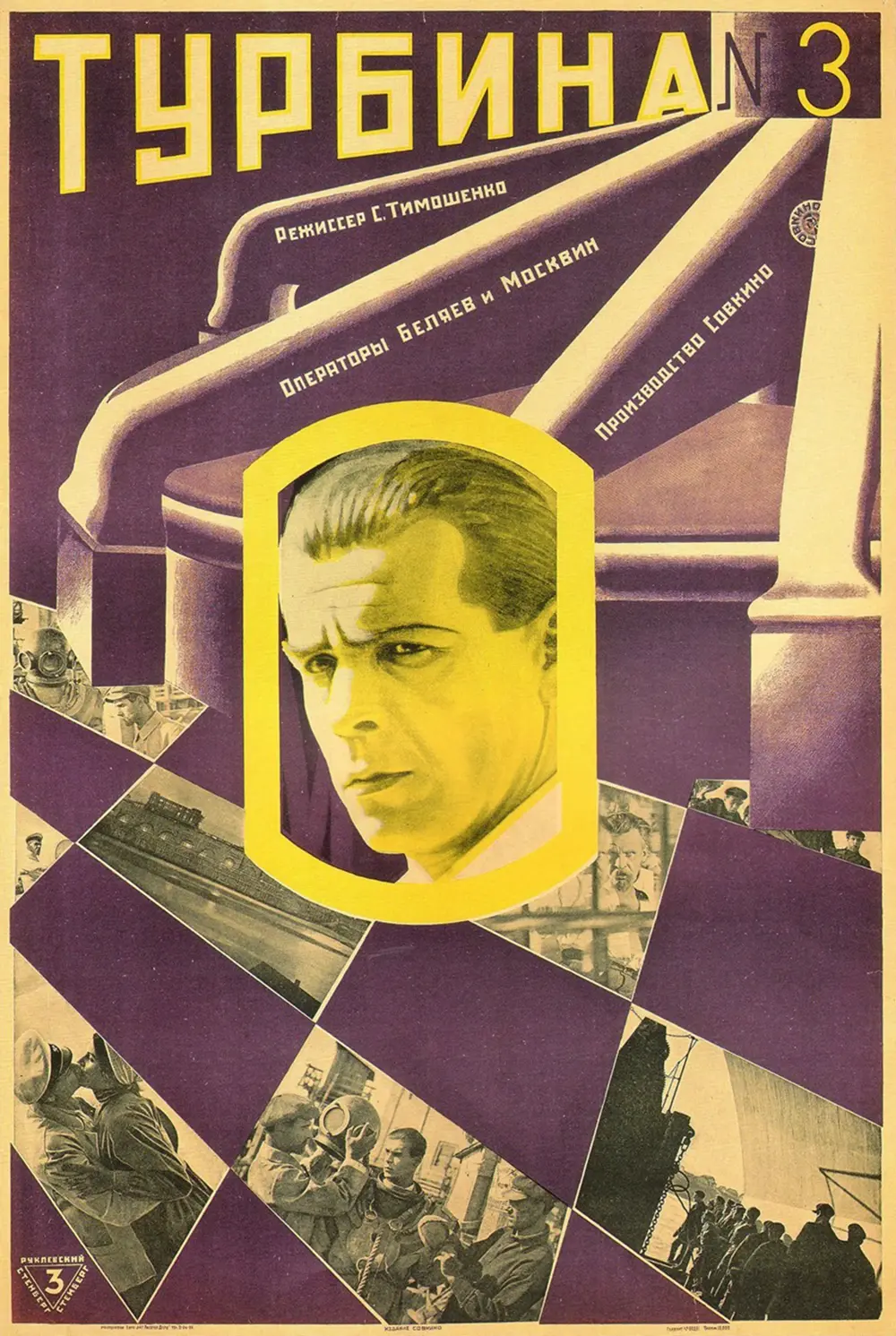
Is 'Turbina No 3' worth watching today? Short answer: yes, but with significant caveats that demand a particular kind of cinematic palate. This is a film for cinephiles, historians, and those utterly fascinated by the early epochs of industrial cinema, particularly the Soviet avant-garde or similar movements that prior...
Comparing the cinematic DNA and archive impact of two defining moments in cult history.
Semyon Timoshenko

Semyon Timoshenko
Community
Log in to comment.
"Turbina No 3" emerges from the early industrial cinema landscape not as a conventional narrative, but as a stark, almost documentary-like exploration of man's symbiotic yet often fraught relationship with the machine. The film immerses the viewer in the relentless, rhythmic pulse of a colossal power plant, where the titular turbine stands as both a monument to progress and a potential harbinger of human toil. Through the stoic faces of its workers, particularly a determined engineer (Tatyana Guretskaya) and a driven foreman (Mikhail Gipsi), the picture captures the essence of a workforce bound by the gears and steam, striving to maintain the relentless energy output. It’s less a story of specific events and more a visual poem on the collective human effort, the mesmerizing power of industrial might, and the subtle dramas playing out within the colossal, metallic heart of a nation's ambition, hinting at the ever-present tension between human fallibility and mechanical perfection.
"Is 'Turbina No 3' worth watching today? Short answer: yes, but with significant caveats that demand a particular kind of cinematic palate. This is a film for cinephiles, historians, and those utterly fascinated by the early epochs of industrial cinema, particularly the Soviet avant-garde or similar movements that prioritized visual metaphor over linear storytelling.It is emphatically NOT for casual viewers seeking modern narrative conventions, high-octane drama, or readily accessible character a..."