DbcultAccessing Vault...
Cult Review
Senior Film Conservator
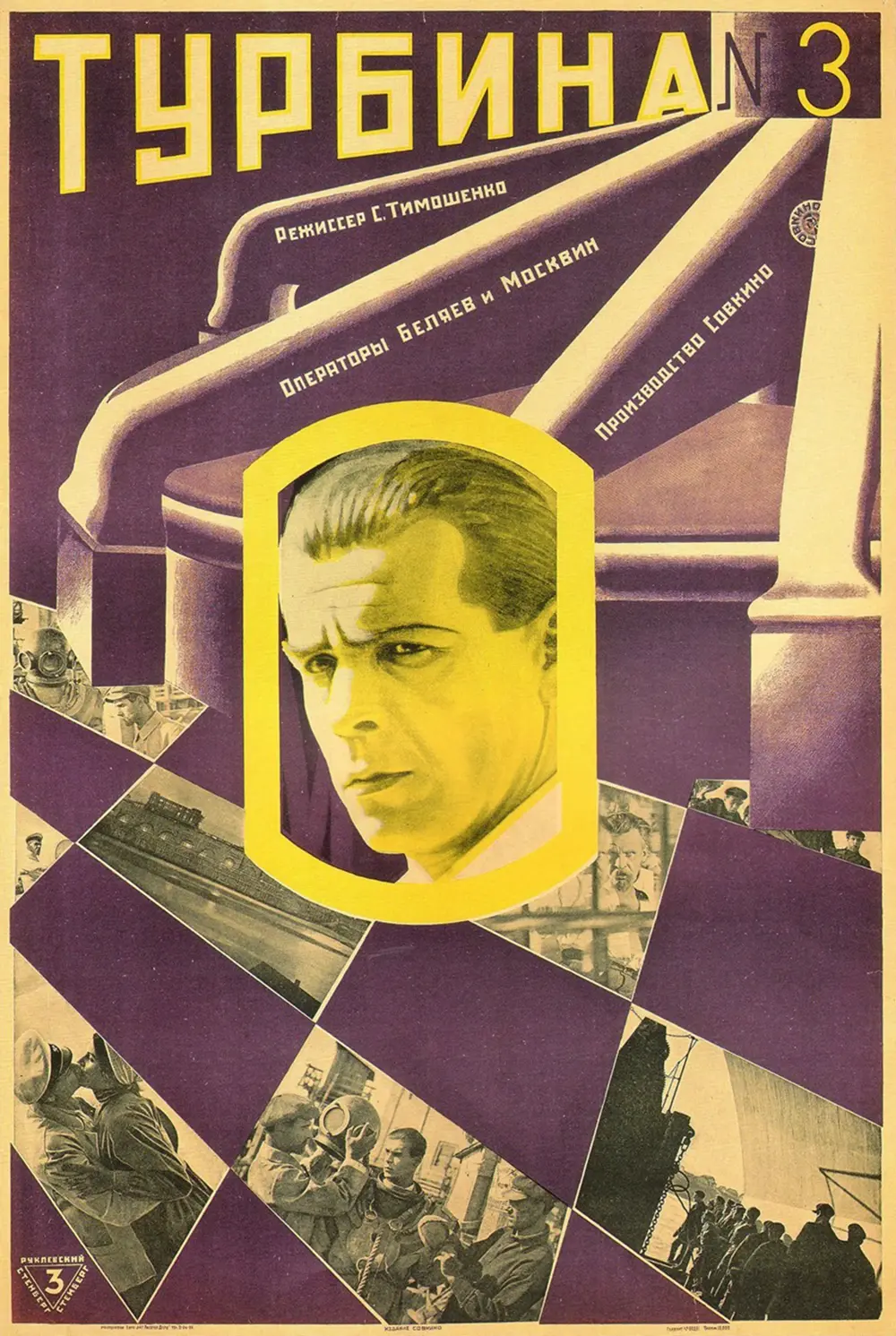
Is 'Turbina No 3' worth watching today? Short answer: yes, but with significant caveats that demand a particular kind of cinematic palate. This is a film for cinephiles, historians, and those utterly fascinated by the early epochs of industrial cinema, particularly the Soviet avant-garde or similar movements that prioritized visual metaphor over linear storytelling.
It is emphatically NOT for casual viewers seeking modern narrative conventions, high-octane drama, or readily accessible character arcs. Expect to be challenged, perhaps even frustrated, but also, for the right audience, profoundly moved by its stark, uncompromising vision.
This film works because of its stark visual poetry, its undeniable historical significance as a document of early industrial themes, and the raw, almost sculptural performances from its cast. It fails because its narrative ambiguity can be impenetrable, its pacing deliberately challenging for contemporary audiences, and its technical limitations, while historically understandable, can detract from immersion. You should watch it if you appreciate experimental early cinema, are drawn to the aesthetics of industrial power, or seek to understand the foundational approaches to storytelling before sound and complex character development became dominant.
In the annals of early cinema, certain films exist not as blockbusters or critical darlings, but as enigmatic artifacts. 'Turbina No 3' is precisely one such film. It’s less a traditional movie and more a kinetic sculpture, a moving photograph essay on the burgeoning industrial age. The title itself, stark and utilitarian, sets the tone: this is a film about the machine, its power, and the humans who serve it.
My initial encounter with 'Turbina No 3' was one of profound bewilderment, quickly followed by a grudging admiration. It demands patience. But it rewards insight. The film doesn't offer easy answers or spoon-fed exposition; instead, it plunges the viewer into a world of whirring gears, steam, and the relentless rhythm of mechanical production, forcing an active interpretation of its images.
The film's true protagonist isn't any human character, but the turbine itself – a humming, mechanical deity around which all human activity revolves. This is a bold, almost audacious choice, especially for its time, shifting the focus from individual drama to collective experience and the sheer, overwhelming force of progress.
The directing in 'Turbina No 3', while sparse in conventional storytelling, is masterful in its visual composition. The director (uncredited, but undoubtedly a visionary of their time) employs a stark, almost brutalist aesthetic. Shots are often wide, framing the human figures against the monumental scale of the machinery, emphasizing their smallness, their integration into the larger industrial organism.
There's a recurring visual motif, for instance, of Tatyana Guretskaya's character, the engineer, silhouetted against the colossal, turning flywheel of the turbine. This isn't just a pretty picture; it’s a deliberate statement on the individual's place within the burgeoning industrial complex, a visual echo of The Stampede's vast landscapes, but here, the 'wild' is man-made and metallic.
The cinematography is the film's undeniable standout element. It's a symphony of light and shadow, steam and steel. Close-ups on the intricate workings of the machinery – gears interlocking, pistons pumping, gauges flickering – are imbued with an almost hypnotic quality. The camera doesn't merely observe; it dissects, glorifying the mechanical ballet with an almost fetishistic detail.
One particularly striking sequence involves a rapid montage of various machine parts, intercut with the strained, focused faces of the workers. This early use of montage, reminiscent of Eisenstein's later work, isn't just stylistic; it’s functional, conveying the overwhelming speed and complexity of the industrial process in a way individual shots never could. It’s an intellectual leap for its era.
With minimal dialogue (if any, given its likely silent film origins) and a plot that prioritizes theme over character, the performances in 'Turbina No 3' rely almost entirely on physical presence and facial expression. The cast, including Tatyana Guretskaya, Mikhail Gipsi, and Nikolay Lebedev, deliver what can only be described as 'archetypal' portrayals.
Guretskaya, as the engineer, projects a quiet strength, her gaze often fixed on the machinery with a blend of concern and deep understanding. Her performance isn't about emotional outbursts; it’s about concentrated effort, the subtle tightening of a jaw, the focused intensity in her eyes as she inspects a gauge. This is a performance of internal resolve, a stark contrast to the more theatrical expressions one might find in Her Condoned Sin.
Mikhail Gipsi, likely portraying a foreman or a more physically demanding role, embodies the raw, unvarnished labor of the factory floor. His movements are deliberate, heavy, conveying the physical toll of his work. There's a scene, if one can call it that, where his character wipes sweat from his brow, a simple gesture that speaks volumes about the relentless heat and exertion of the industrial environment.
Nikolay Lebedev, too, contributes to this tapestry of human effort, his presence adding to the collective weight of the workers. These aren't nuanced characters in a modern sense, but rather crucial components of the film's larger statement about the human cost and dedication required to power the future. They are less individuals and more symbols, yet their earnestness rings true.
The pacing of 'Turbina No 3' is, by contemporary standards, deliberately slow and methodical. It eschews rapid cuts for lingering shots, allowing the viewer to absorb the industrial soundscape (imagined, of course, for a silent film) and the sheer scale of the machinery. This isn't a film designed for quick consumption; it demands immersion.
There are moments, however, where the pacing shifts dramatically, such as the aforementioned montage sequences, injecting a sudden burst of kinetic energy. These shifts are jarring, effective, and serve to underscore the film's central tension: the seemingly unstoppable force of the machine versus the often-slow, deliberate pace of human interaction and problem-solving.
The tone is overwhelmingly serious, almost reverent towards its subject matter. There's little room for levity or personal drama in the conventional sense. Instead, the film cultivates an atmosphere of industriousness, a quiet awe for mechanical power, and an underlying tension that suggests the ever-present danger lurking within such an environment. It’s a tone that makes Toddles feel like a raucous comedy by comparison.
For most mainstream audiences, 'Turbina No 3' will be a challenging, perhaps even frustrating, viewing experience. Its narrative is minimal, its pacing is deliberate, and its aesthetic is stark. It does not offer easy entertainment.
However, for those with an interest in film history, particularly early Soviet or European industrial cinema, it is an essential watch. It offers a unique window into a specific cinematic style and thematic preoccupation. Its visual language is surprisingly sophisticated for its era.
The film's exploration of man and machine, progress and toil, remains remarkably resonant. It provides a powerful, if abstract, commentary on the human condition in an industrialized world. Its historical value alone justifies a viewing for serious students of film.
'Turbina No 3' is a product of its time, likely emerging from a period fascinated by technological advancement and the collective spirit. It belongs to a lineage of films that explored the transformative power of industry, sometimes with utopian zeal, other times with a more critical eye towards its human cost. It predates, or runs parallel to, some of the great industrial documentaries and dramas, standing as an early, almost proto-example of the genre.
The film’s enduring themes—the awe-inspiring power of technology, the individual’s role within a vast system, the relentless march of progress—are still relevant today. In an age dominated by artificial intelligence and automation, 'Turbina No 3' offers a stark, black-and-white meditation on our earliest anxieties and admirations for the machines we create. It's a foundational text for understanding how cinema began to grapple with the modern world.
One could even argue that its lack of overt plot makes its thematic concerns more universal, less tied to a specific narrative and more to a timeless human experience. It forces the viewer to engage with ideas rather than merely follow characters, a quality that sets it apart from more conventional melodramas like Remember or Where Am I?.
'Turbina No 3' is not a film for everyone, nor does it pretend to be. It is a challenging, often austere, but ultimately rewarding experience for those willing to meet it on its own terms. Its value lies not in its entertainment factor, but in its historical significance, its groundbreaking visual language, and its potent, if abstract, thematic resonance.
For the dedicated cinephile, it’s an essential piece of the puzzle, a stark reminder of cinema’s boundless capacity for expression even in its nascent stages. It works. But it’s flawed. Yet, its flaws are inextricably linked to its unique strengths, creating a viewing experience that is both demanding and deeply memorable. It forces you to think, to observe, and to piece together its meaning, much like the gears it so reverently depicts. You won't forget it, even if you can't quite articulate why. It's a powerful, if silent, roar from the industrial age.
IMDb —
1925
Community
Log in to comment.