Summary
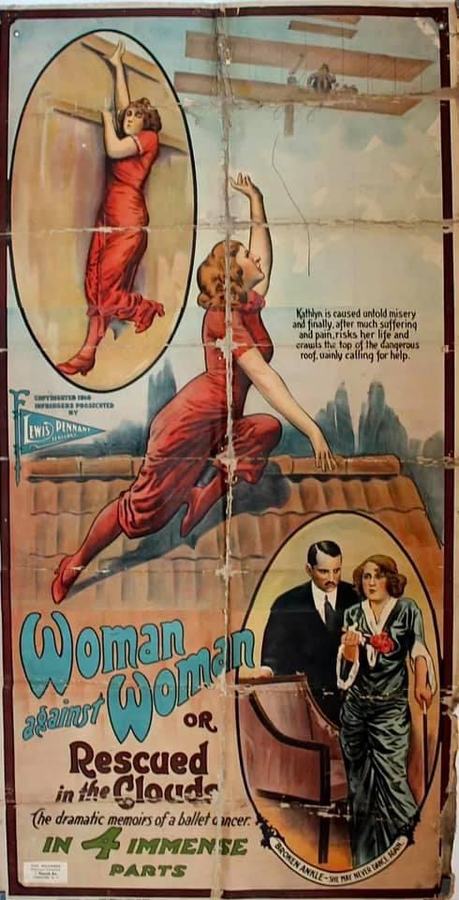
A celluloid fever-dream set in a sky-obsessed 1913, Woman Against Woman; or, Rescued in the Clouds hurls its heroine, the aviatrix Elinor Vale, into a vertiginous love-quadrangle suspended between earth and ether. While barnstorming across the American Midwest, Elinor’s biplane is sabotaged by her former mentor-turned-rival, the silk-gloved society duchess Constance Harrow, whose obsession with possession exceeds any aerodynamic law. The crash strands Elinor on the floating observatory of Dr. Sylas Merriweather, a reclusive meteorologist haunted by barometric ghosts and a past affair with Constance. From this aerial island of brass telescopes and silk parachutes, Elinor must decode cryptic cloud formations that spell out the location of Constance’s next victim: her own estranged twin, the pacifist poet Lila Vale, imprisoned in a Chicago penthouse gilded like a cage. The film’s second act becomes a kaleidoscope of stratospheric pursuits—glider duels above cumulonossal battlements, midnight radio transmissions through ionospheric static, and a dirigible masked as a storm front—culminating in a literal eclipse where identities, loyalties, and altitudes swap like a celestial shell-game. In the final reel, Elinor skydives through the umbra, clutching a negative of Lila’s latest verses that, once exposed to moonlight, project a manifesto onto the clouds, inciting a nationwide women’s strike. Constance, refusing to land, ascends until the thin air crystallizes her tears into hail that shatters her own cockpit glass—an icy self-portrait of thwarted desire. The closing shot freeze-frames Elinor and Lila side by side on a reclaimed airfield at dawn, their merged shadow stretching across the tarmac like a new runway, while somewhere above, the ghost of Constance circles in perpetual holding pattern, a silver-winged Icarus condemned to admire what she can no longer own.
Review Excerpt
"
A bolt of nitrate lightning that somehow slipped past the archive’s weather-vane, Woman Against Woman; or, Rescued in the Clouds is less a silent relic than a stratigraphic record of everything early cinema dared before the Hays Code clipped its wings.
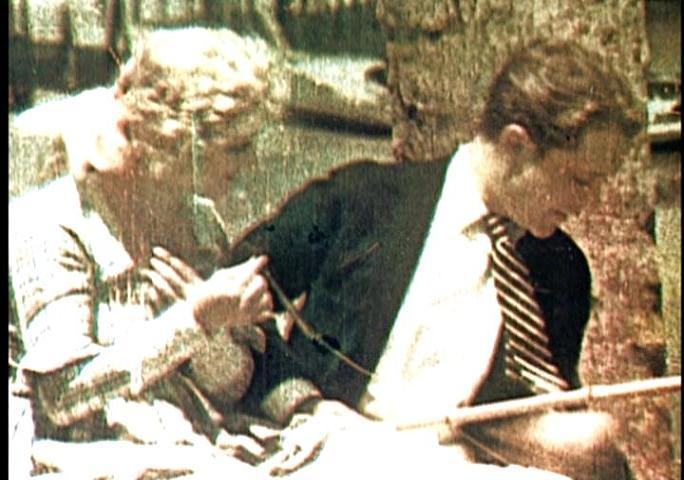
Shot under the migratory title The Cloud Duel during the Midwest’s torrid summer of 1913, the picture survives only in a decomposing 35 mm print held together by archivist prayer and Japanese paper tape. Yet what unfurls is a riot of tonal contr..."