DbcultAccessing Vault...
Cult Review
Senior Film Conservator
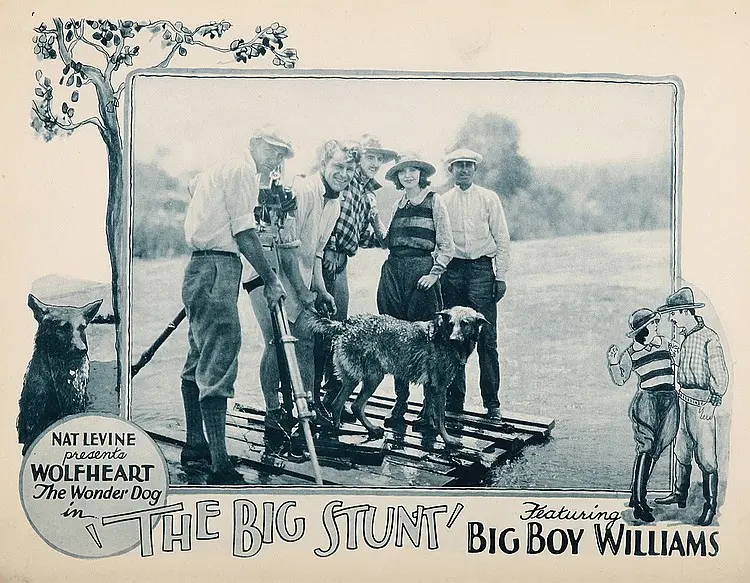
Is The Big Stunt worth watching today? Short answer: yes, but with significant caveats. This early cinematic offering provides a fascinating, if sometimes frustrating, window into the formative years of Hollywood, blending genuine thrills with the charmingly rough edges of its era.
It's a film for those with a deep appreciation for silent cinema, the raw energy of early action, and a curiosity for how foundational storytelling tropes were established. Conversely, it is decidedly not for viewers seeking modern pacing, sophisticated character development, or pristine visual fidelity. Approach it as an archaeological dig, not a contemporary blockbuster.
At its heart, The Big Stunt is a testament to the audacious spirit of early filmmaking. It’s a film that works because it embraces its identity as a spectacle-driven adventure, leveraging practical effects and genuine daring in an era before CGI could render such feats digitally. The raw, tangible danger of John Tansey’s on-screen (and likely off-screen) acrobatics provides a thrill that modern cinema, for all its advancements, often struggles to replicate.
However, the film ultimately fails because its narrative ambition often outstrips its technical and structural capabilities. The plot, while engaging in concept, occasionally stumbles into episodic tangents, and the character motivations, while clear, lack the nuanced depth that even some of its contemporaries were beginning to explore. You should watch it if you're keen to witness the foundational elements of the action genre taking shape, particularly if you have a soft spot for the charm of early Hollywood’s boundless enthusiasm.
The narrative of The Big Stunt, while straightforward, is imbued with a certain meta-cinematic charm. It’s a film about filmmaking, about the illusion of danger becoming genuinely dangerous, a common trope that still resonates today. John Tansey’s Jack Riley embodies the archetypal stuntman: fearless, perhaps a touch foolhardy, but ultimately heroic. His journey from performing for the camera to fighting for the survival of his studio frames the central conflict with an endearing simplicity.
The pacing, typical of many silent films, alternates between brisk action sequences and more deliberate exposition. There are moments of genuine exhilaration, particularly during the chase sequences and, of course, the titular stunt itself. These moments are often punctuated by broader comedic beats, largely delivered by Guinn 'Big Boy' Williams as "Bull" Murphy, whose earnest clumsiness serves as a welcome counterpoint to Tansey's stoicism. One particularly memorable sequence involves Bull accidentally triggering a chain reaction of props in the studio, a moment that feels both slapstick and surprisingly well-choreographed for its time.
The film’s thematic undercurrents explore the blurred lines between artifice and reality, a concept particularly potent in the nascent film industry. The struggle of Apex Studios against the predatory Silas Blackwood isn't just a plot device; it mirrors the real-life anxieties of independent studios vying for survival against larger, more ruthless competitors. It’s a surprisingly cynical observation buried within an otherwise lighthearted adventure, suggesting that even in the dream factory, not all dreams are pure.
The cast of The Big Stunt delivers performances that are, by and large, quintessential silent era portrayals. Exaggerated gestures, expressive eyes, and clear physical comedy are the order of the day, and for the most part, they serve the story well.
John Tansey as Jack Riley carries the film with a commendable blend of athleticism and understated charm. While his emotional range isn't as expansive as some of his contemporaries, his physical prowess is undeniable. He sells the danger of his stunts with conviction, making you believe he is indeed a "daredevil." His interactions with Wolfheart the Dog are particularly strong, showcasing a genuine bond that feels unforced.
Kathleen Collins, as Lily Travers, brings a vibrant energy to the screen. She’s not merely a damsel in distress; Lily is resourceful and spirited, often taking initiative in crucial moments. Her performance is a refreshing departure from some of the more passive female leads of the period, hinting at the evolving roles for women in cinema. A specific scene where she cleverly misdirects Blackwood’s thugs by feigning an injury stands out as a moment of genuine agency.
Slim Whitaker, a veteran of countless Westerns and thrillers, perfectly embodies the smarmy villain Silas Blackwood. His sneering expressions and menacing posture require no intertitles to convey his nefarious intentions. He is the mustache-twirling antagonist personified, and he plays it with relish.
Guinn 'Big Boy' Williams, as "Bull" Murphy, provides much of the film’s comedic relief. His physical comedy is broad, but effective, often eliciting genuine laughs. He’s the loyal, if clumsy, sidekick, a role he perfected throughout his career. His character’s earnest attempts to help, often resulting in more chaos, are endearing. The scene where he tries to fix a projector but ends up tangled in film reels is a classic example of his appeal.
And then there's Wolfheart the Dog. It’s not an exaggeration to say that Wolfheart is a standout. The dog’s intelligence and training are remarkable, performing complex actions that genuinely advance the plot. From fetching crucial items to distracting villains, Wolfheart is more than a prop; he’s an active participant, often stealing scenes with his uncanny ability to convey emotion and understanding. This isn't just a dog in a movie; it's a co-star.
The direction in The Big Stunt, while uncredited, demonstrates a clear understanding of what made early action films tick. The focus is on clear storytelling through action, with a reliance on long shots to showcase the full scope of the stunts and chases. There’s a raw energy to the filmmaking, a sense that the crew was inventing the language of cinema as they went along.
Cinematography, while not groundbreaking, is functional and often effective. The use of natural light, particularly in the outdoor sequences, lends an authentic texture to the film. The camera work, while mostly static, occasionally employs dynamic angles to emphasize a stunt’s scale or a character’s peril. One shot, tracking Jack’s motorcycle as it speeds along a precarious cliff edge, showcases a surprising degree of kineticism for the era, eschewing quick cuts for a sustained sense of danger.
The film’s tone shifts between high-octane adventure, lighthearted romance, and broad comedy, maintaining a generally upbeat and optimistic feel despite the underlying tension of Apex Studios' predicament. This tonal flexibility is a hallmark of many films from the period, designed to appeal to a wide audience. It avoids dwelling on darker themes, preferring to keep the audience engaged with spectacle and humor.
It’s a scrappy film. It works. But it’s flawed. And those flaws are part of its charm. To truly appreciate The Big Stunt, one must view it not just as a standalone work, but as a historical document, a relic from an era where the rules were still being written. The film's charm lies in its earnestness, its sheer desire to entertain with whatever means available. It’s a testament to the pioneering spirit of early cinema, where ingenuity often trumped budget. The practical effects, while rudimentary by today’s standards, carry a weight of authenticity that CGI often struggles to replicate. The sense of real danger, however simulated, is palpable, a stark reminder of the physical risks taken by early stunt performers.Is This Film Worth Watching Today?
For silent film aficionados, film historians, and those curious about the roots of the action genre, The Big Stunt is absolutely worth seeking out. It offers a valuable glimpse into the craftsmanship and narrative sensibilities of early Hollywood. It’s a film that demands a certain patience from modern viewers, but rewards it with moments of genuine excitement and historical insight.
For a casual viewer accustomed to the rapid-fire editing and sophisticated sound design of contemporary cinema, it might prove a challenging watch. The lack of dialogue, the reliance on intertitles, and the often theatrical acting style require an adjustment of expectations. However, if one is willing to make that adjustment, there’s a surprising amount of enjoyment to be found in its unpretentious storytelling and impressive practical stunts.
It's a forgotten piece of cinematic history that, while not a Love's Boomerang in terms of dramatic depth or a Number 17 in terms of directorial flair, holds its own as a delightful example of early action cinema. It reminds us that the fundamental appeal of spectacle and heroism transcends eras, even if the methods of delivery evolve.
Pros and Cons
- Pros:
- Authentic, daring practical stunts that still impress.
- Engaging performances, particularly from John Tansey and the remarkable Wolfheart the Dog.
- A fascinating look into the early days of Hollywood and the meta-storytelling of films about filmmaking.
- Fast-paced action sequences that hold up surprisingly well.
- Kathleen Collins' spirited portrayal of Lily Travers.
- Cons:
- Plot can be episodic and occasionally lacks deeper thematic exploration.
- Character development is broad, typical of the era, but might feel shallow to modern audiences.
- Pacing can be uneven, with moments of slow exposition.
- Technical limitations of silent film may deter some viewers.
- Some comedic elements feel dated.
Key Takeaways
- Best for: Enthusiasts of silent cinema, early action films, and Hollywood history buffs.
- Not for: Viewers seeking modern pacing, complex narratives, or those unfamiliar with silent film conventions.
- Standout element: The incredible practical stunts and the astonishing performance of Wolfheart the Dog.
- Biggest flaw: A narrative that, while charming, lacks the depth and consistent momentum to truly elevate it beyond its genre trappings.
Verdict
The Big Stunt is more than just a historical curiosity; it’s a lively, if imperfect, adventure that captures the infectious enthusiasm of early Hollywood. It’s a film that understands its primary goal: to entertain. While it won't redefine your understanding of cinematic art, it will certainly offer a delightful, often thrilling, glimpse into a bygone era of filmmaking where ingenuity and sheer nerve were paramount. It’s a film that, despite its age, still manages to leap over many of the pitfalls of its time, delivering genuine excitement. Give it a chance, and you might find yourself surprisingly charmed by this little piece of cinema history.
IMDb 7.2
1919
Community
Log in to comment.