DbcultAccessing Vault...
6.6/10
Senior Film Conservator
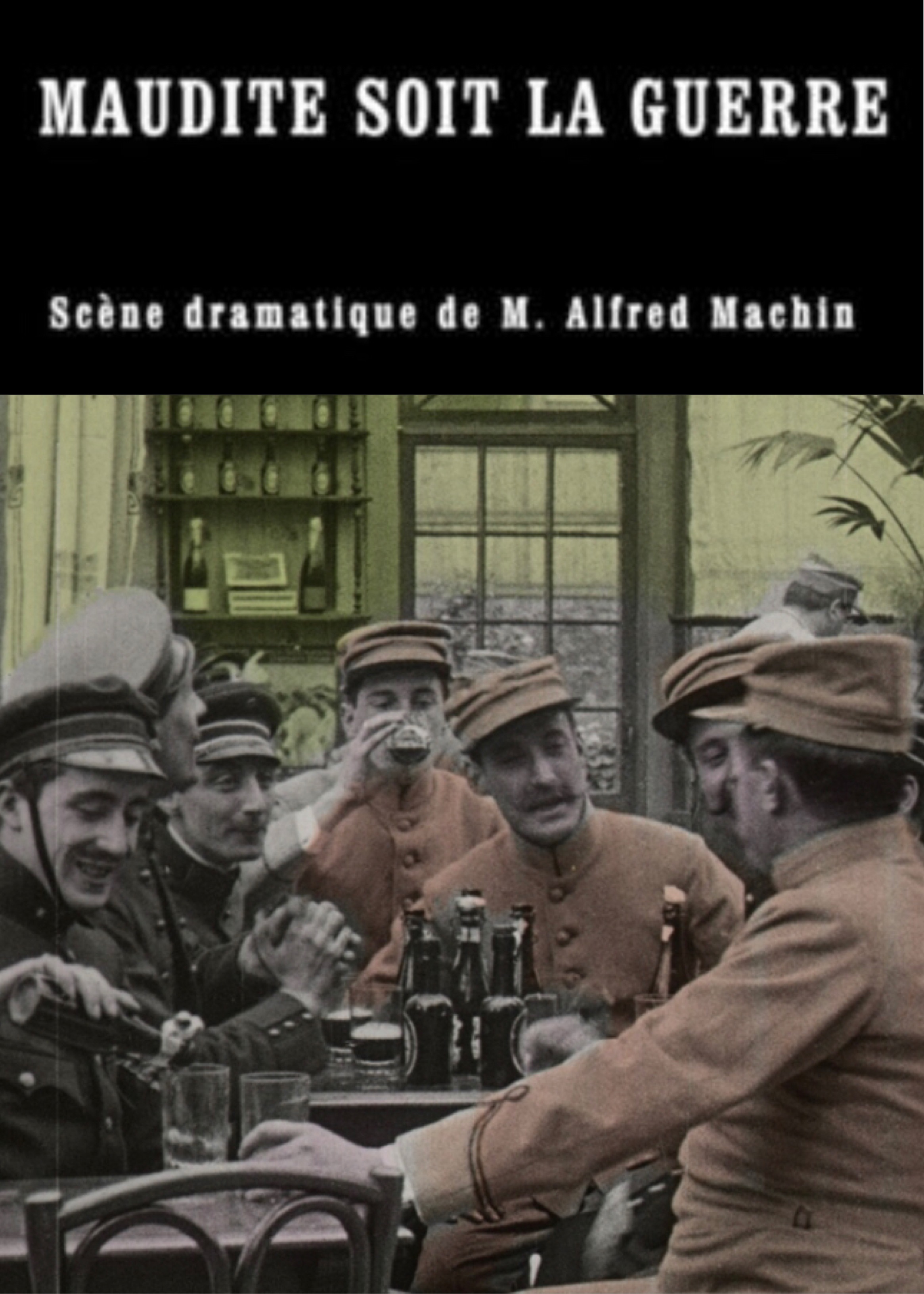
A definitive 6.6/10 rating for a film that redefined the boundaries of cult cinema. War Is Hell remains a cornerstone of transgressive art.
Before the Great War permanently altered the global consciousness, Alfred Machin was already documenting the inherent contradictions of the human condition through a lens that was startlingly advanced for its era. In War Is Hell (1914), Machin eschews the simplistic jingoism common to early military dramas, instead opting for a nuanced, deeply personal exploration of conflict. His background in nature documentaries and his penchant for using live animals—often a hallmark of his work as seen in The Flying Circus—translated here into a raw, almost naturalistic portrayal of human slaughter. The film stands as a monumental achievement in the Belgian and French cinematic traditions, capturing the zeitgeist of a continent teetering on the edge of oblivion.
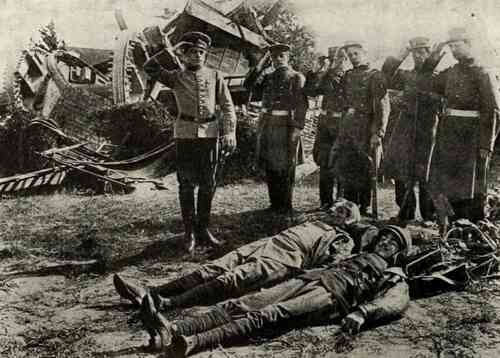
The cinematography in War Is Hell is characterized by a sophisticated use of depth and landscape. Machin, unlike many of his contemporaries who remained tethered to stage-like compositions, utilizes the open sky and the rolling terrain to emphasize the isolation of his characters. This spatial awareness creates a sense of dread; the vastness of the environment serves only to highlight the claustrophobia of the characters' moral dilemmas. When we compare this to the grand historical reconstructions in 1812 or the pioneering spirit of The Independence of Romania, Machin’s work feels more intimate, focusing on the microscopic tears in the social fabric rather than the macroscopic movements of empires.
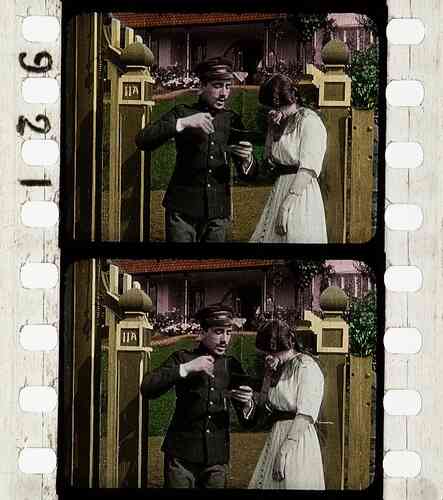
The protagonist’s role as an army pilot is central to the film’s thematic architecture. In 1914, aviation was the pinnacle of modern technology, a symbol of progress that was rapidly being repurposed for destruction. By placing an aviator in a domestic setting in a "neighboring country," Machin highlights the absurdity of borders. The pilot’s romance with the sister of his host is not merely a subplot; it is a critique of national identity. How can two men who share bread and professional respect one day be required to incinerate one another the next? This question echoes through the performances of Baert and Georges Etienne, whose chemistry conveys a brotherhood that is both genuine and doomed.
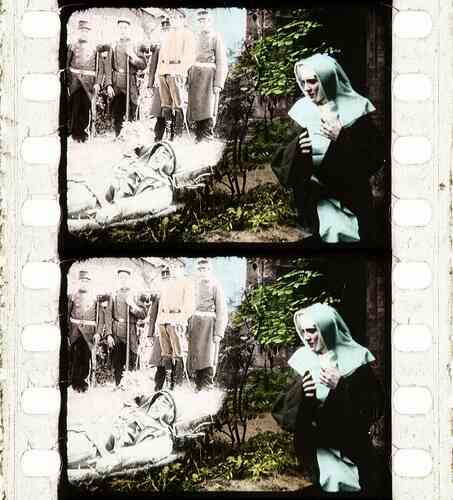
The tragic arc of the brother’s death—killed by a friend of the man who loves his sister—is a narrative device that Machin employs with surgical precision. It mirrors the messy, interconnected reality of European aristocracy and military circles of the time. This isn't the clean, heroic combat found in The Battle of Gettysburg; this is a messy, accidental fratricide. The emotional weight carried by Jane Tony as the sister is staggering. Her transition from a woman in love to a woman haunted by the ghosts of her brother and lover provides the film’s moral compass. Her eventual engagement to her brother's friend—the very man who survived the carnage—adds a layer of Gothic tragedy reminiscent of the heavy atmosphere in The Black Chancellor.
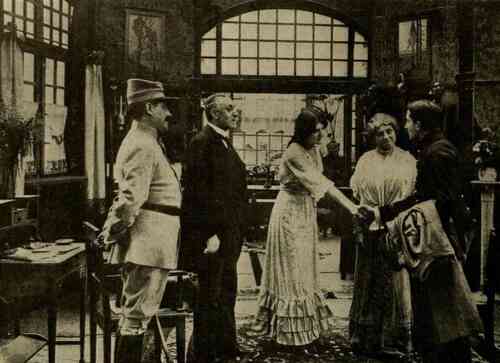
Technically, War Is Hell is a revelation. Machin’s editing rhythm during the battle sequences is remarkably modern, utilizing cross-cutting to build tension between the domestic sphere and the front lines. The use of location shooting lends an authenticity that studio-bound productions of the era, such as Oliver Twist, often lacked. There is a tactile quality to the mud, the smoke, and the canvas of the early biplanes. One cannot help but feel the influence of Machin’s earlier work in The War Correspondents, where the mechanics of observing war became the subject itself.
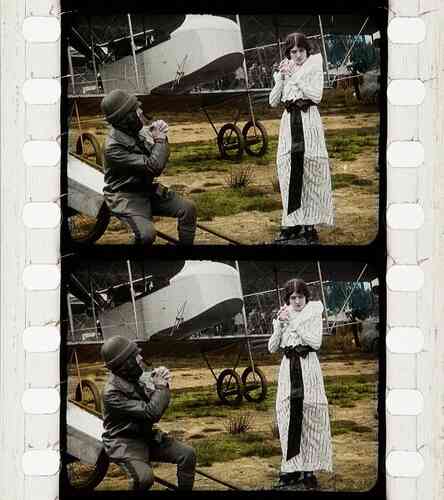
The lighting, though limited by the technology of 1914, is used expressively. In the scenes following the outbreak of war, the shadows seem to lengthen, swallowing the vibrant interiors of the early acts. This visual storytelling is far more effective than the expository intertitles of many contemporary films. Machin understands that the true horror of war is not just the explosion, but the silence that follows. The sequence where the sister discovers the truth about the battle is a masterclass in silent acting; her realization is a slow-motion collapse of her entire reality, a moment of epiphany that rivals the dramatic heights of Les Misérables.
The ensemble cast, featuring names like Réginald, Albert Hendrickx, Zizi Festerat, and Nadia D'Angely, brings a collective gravity to the production. Unlike the exaggerated pantomime often associated with silent cinema, Machin demands a more restrained, interior performance style. Jane Tony, in particular, delivers a performance of profound vulnerability. Her eyes become the central focus of the film’s final act, reflecting a world that has lost its color and its conscience. The supporting players, including Fernand Crommelynck and Henri Goidsen, populate the world with a sense of lived-in history, making the eventual destruction of their social circle feel all the more visceral.
It is worth noting the contribution of writer Alfred Machin himself, who crafted a script that avoids the pitfalls of simple melodrama. By focusing on the "friends of the brother" as the agents of the protagonist's death, Machin illustrates the cyclical nature of vengeance. There are no villains in War Is Hell, only victims of a pervasive madness. This thematic depth puts it on par with the spiritual explorations of From the Manger to the Cross or Life and Passion of Christ, albeit in a secular, more brutal context. The film asks: if God is present, how can such a tessellation of tragedies be permitted?
Released just as the real-world "War to End All Wars" was beginning, War Is Hell served as a prophetic warning. While films like Cleopatra or The Life and Death of King Richard III looked back at the conflicts of antiquity with a sense of romantic distance, Machin was looking directly at the present. The film’s title is a blunt instrument, but the execution is a delicate scalpel. It captures the transition from the 19th-century romanticism of war to the 20th-century reality of industrial slaughter. The inclusion of aviation, the focus on civilian trauma, and the rejection of clear-cut heroism make it a foundational text for the war genre.
In the broader landscape of 1914 cinema, which included diverse works like the surreal The Extraordinary Adventures of Saturnino Farandola and the social realism of Ingeborg Holm, Machin’s film occupies a unique space. It is both a technical showcase and a moral outcry. The ending, where the sister discovers the truth, does not offer catharsis. Instead, it leaves the viewer in a state of profound unease, a reflection of the uncertain future facing Europe at the time. It is a film that demands to be seen not just as a historical curiosity, but as a living, breathing piece of art that continues to resonate in our own era of perpetual conflict.
Ultimately, War Is Hell is a testament to the power of silent cinema to convey complex emotional truths without the need for spoken dialogue. Alfred Machin’s vision is one of stark beauty and uncompromising honesty. Through the star-crossed lovers and the shattered families, he reveals the fundamental truth of all war: that the lines we draw on maps are eventually written in the blood of those who dared to cross them for love. Whether compared to the epic scale of Quo Vadis? or the intimate character studies of The Student of Prague, War Is Hell remains a towering achievement of early 20th-century filmmaking. It is a haunting, essential experience for any serious student of the medium, a reminder that the camera is the most potent weapon against the forgetfulness of history.
IMDb —
1936
Community
Log in to comment.