DbcultAccessing Vault...
Cult Review
Senior Film Conservator
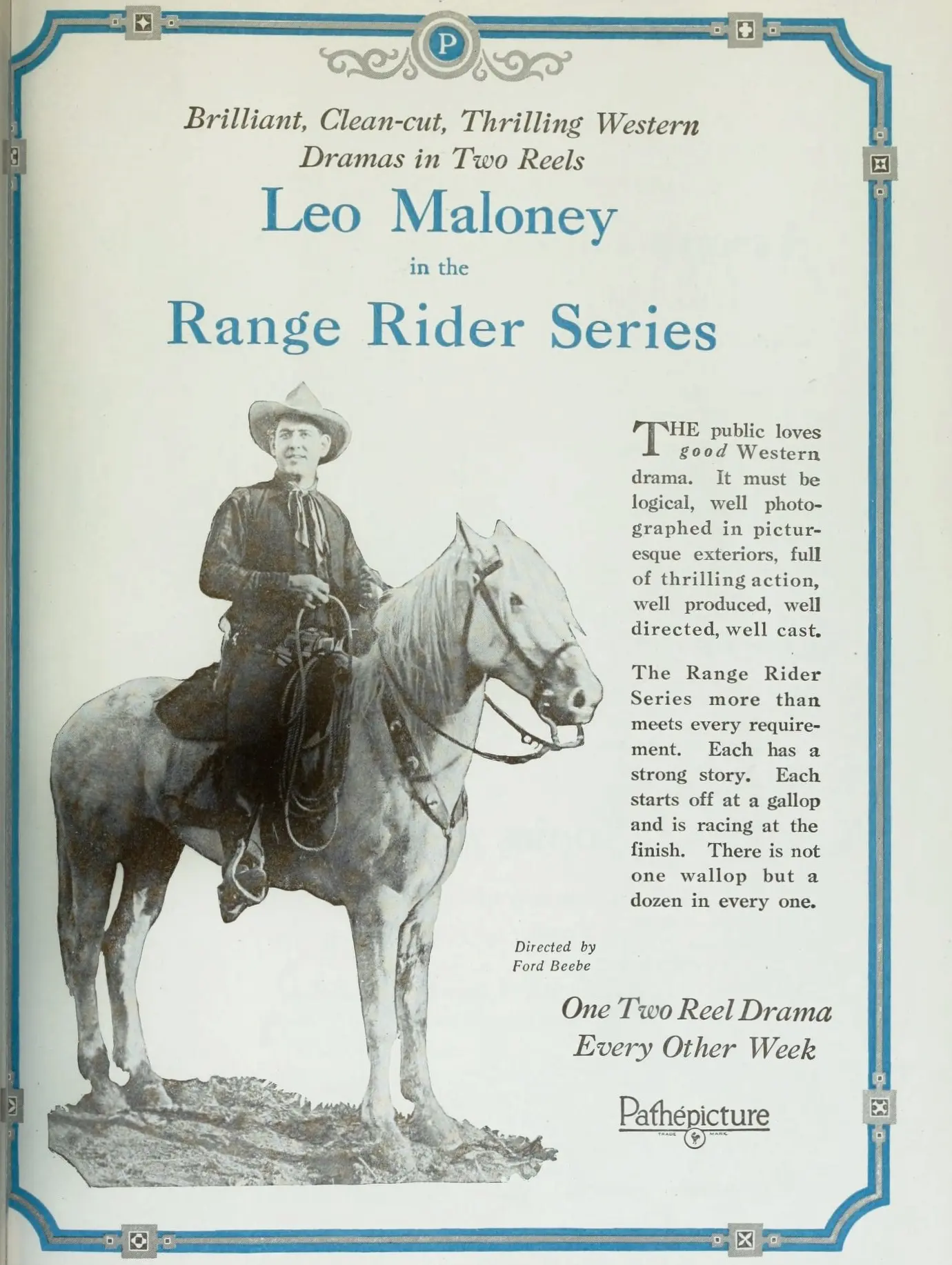
Step into the dusty, sun-baked landscape of the Old West, a realm where law was often a whisper against the roar of lawlessness, and individual courage was the only currency that truly mattered. In this crucible of human experience, the 1923 silent Western, 100% Nerve, emerges not just as a historical artifact, but as a vibrant testament to the enduring power of the genre and the captivating allure of a hero forged in the fires of adversity. Its very title is a bold declaration, a promise of unyielding bravery in the face of overwhelming odds, a promise that, I assure you, this film delivers with compelling conviction.
At its core, the narrative of 100% Nerve is elegantly simple, yet its execution imbues it with a profound resonance. We are introduced to Neil, the brother of a local Ranger Captain, a man whose livelihood and peace of mind are being systematically eroded by rampant cattle rustling. The gradual disappearance of his herd isn't merely an economic setback; it's an assault on the very stability of his existence, a palpable threat to the fragile order of the frontier. This escalating crisis compels the Ranger Captain to dispatch Gene Miller, portrayed with a stoic intensity by Edward Burns, into the heart of the troubled territory. Miller is not merely an investigator; he is an embodiment of the era's ideal of the self-reliant hero, a man whose quiet demeanor masks an iron will and an unwavering commitment to justice.
The plot thickens with the introduction of Margery, Neil’s spirited daughter, brought to life by the expressive Pauline Curley. Unlike the passive damsels often relegated to the background of early Westerns, Margery possesses an active curiosity and a fierce sense of loyalty. It is her initiative, her audacious venture into the unknown, that leads her to the rustlers' hidden lair. This pivotal moment, however, swiftly transforms her from an intrepid detective into a desperate captive, a pawn in the high-stakes game of frontier crime. Her capture elevates the stakes considerably, transforming Gene Miller's investigation from a routine pursuit of criminals into a desperate, personal rescue mission. The film masterfully uses this shift to amplify the emotional intensity, pulling the audience deeper into the perilous journey ahead.
What truly distinguishes 100% Nerve, and what gives it its potent title, is Miller's audacious response to the discovery of the rustler gang. Confronted by a numerically superior force – five hardened outlaws against one lone agent – any reasonable person might consider retreat, or at least a strategic regrouping. But Miller, true to the film's namesake, exhibits no such hesitation. He embraces the impossible, resolving to single-handedly dismantle the criminal enterprise and liberate Margery. This isn't merely bravery; it's a testament to an almost mythic ideal of heroism, a belief in the singular power of an individual to overcome insurmountable odds through sheer grit and moral conviction. Edward Burns' portrayal of Miller is a study in understated power, his actions speaking volumes where dialogue would be superfluous in the silent era.
The direction by Leo D. Maloney, who also shares writing credits with Ford Beebe, is remarkably adept at building suspense and conveying complex emotions without the benefit of spoken words. Maloney, himself a veteran of numerous Westerns both in front of and behind the camera, understood the visual language of the genre intimately. He uses wide shots to emphasize the vast, unforgiving landscape, making Miller's solitary quest feel all the more isolated and perilous. Close-ups, though sparing, are employed with precision to capture the raw emotions of fear, determination, and defiance in the faces of his cast. The pacing, a crucial element in silent cinema, is expertly managed, alternating between moments of quiet tension and bursts of exhilarating action, ensuring the audience remains fully engaged despite the absence of synchronized sound.
The performances, particularly from Burns and Curley, are exemplary of the silent era's unique demands. Edward Burns, as Gene Miller, embodies the strong, silent type, conveying immense resolve through his posture, his gaze, and his decisive movements. He is the archetype of the Western hero: principled, resourceful, and utterly fearless. Pauline Curley’s Margery is equally compelling; her fear is palpable, yet she never descends into mere helplessness. Her initial bravery in discovering the rustlers, and her subsequent struggle as a captive, give her character a depth that transcends the typical 'damsel in distress' trope. The supporting cast, including Leo D. Maloney himself (likely in a supporting role, though specific character details are scarce in surviving records), Fred Burns, Bud Osborne, and Barney Furey, contribute to the authentic texture of the frontier world, each bringing a believable grit to their roles as either stalwart citizens or nefarious outlaws.
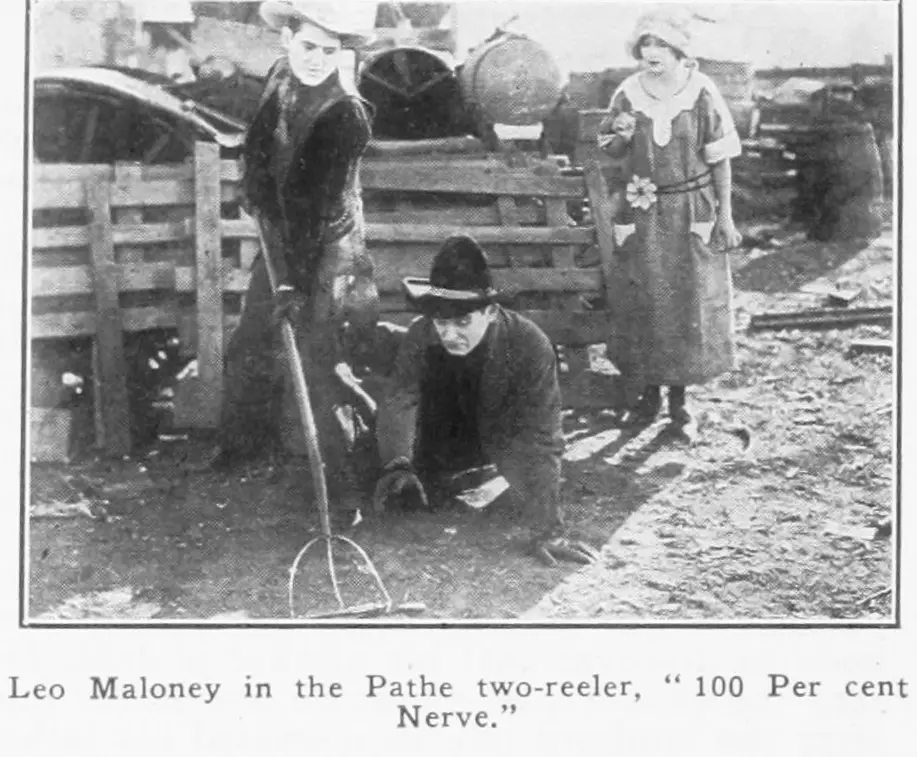
The thematic undercurrents of 100% Nerve are as compelling as its action. It explores the eternal struggle between order and chaos, the fragility of civilization on the edge of the wilderness, and the profound importance of individual moral courage. Miller's mission is not just about retrieving cattle or rescuing a girl; it's about upholding a nascent sense of justice, a belief that even in the most lawless corners, right can prevail through sheer will. This theme resonates strongly with other tales of frontier resilience, such as the struggles depicted in Nobleza gaucha, which, though set in a different cultural landscape, similarly explores the challenges and moral codes of rural life. The film argues for the necessity of individual action when institutional law is distant or ineffective, a concept that defined much of the American West's mythology.
In terms of comparative cinema, 100% Nerve stands proudly alongside contemporaries that explored similar themes of peril and perseverance. One might draw parallels to the arduous journeys depicted in films like A Rough Passage, where characters navigate physical and moral landscapes fraught with danger, or even The Man Who Came Back, which often deals with individuals returning to confront past wrongs or overwhelming challenges. The single-minded determination of Gene Miller to confront a numerically superior foe echoes the desperation and resolve found in many narratives of survival and redemption. The film's sense of looming threat, the unseen danger lurking just beyond the campfire's glow, shares a common atmospheric thread with the suspenseful elements of films like The Ghost of Old Morro, albeit trading supernatural dread for the very real, visceral terror of human predation.
The visual storytelling, a cornerstone of silent cinema, is particularly effective here. The barren beauty of the landscape serves as more than just a backdrop; it becomes an active participant in the drama. The vast, empty spaces amplify the sense of isolation and vulnerability for the protagonists, while simultaneously providing ideal cover for the rustlers' clandestine operations. The action sequences, though limited by the technical constraints of the era, are staged with a clear understanding of dynamic movement and visual impact. Horse chases are thrilling, and the climactic confrontation, while perhaps not featuring the pyrotechnics of modern cinema, relies on well-choreographed physical struggle and the palpable tension of life-or-death stakes. The use of intertitles is judicious, providing just enough context without disrupting the visual flow, a mark of skilled silent film craftsmanship.
What is particularly striking about 100% Nerve is its unvarnished portrayal of the frontier. There's a grittiness to the world it depicts, a sense that survival is a constant struggle, and justice is often self-administered. This isn't a romanticized vision of the West, but one where danger is ever-present and heroism is born out of necessity. It’s a stark contrast to some more overtly theatrical silent films, opting instead for a grounded realism that makes Miller's extraordinary actions feel even more impactful. The film’s focus on a single, almost suicidal act of defiance makes it a compelling character study wrapped in a thrilling adventure. It foregrounds the human element, the raw emotion and decision-making that define moments of extreme peril.
The film’s title, 100% Nerve, isn't just a catchy phrase; it encapsulates the very essence of its protagonist and the spirit of the era it depicts. It speaks to the psychological fortitude required to live on the edge of civilization, where every decision could be a matter of life or death. It’s a quality that resonates across time and cultures, making Miller’s journey universally understandable. This quality of unyielding resolve, facing down seemingly insurmountable odds, can be seen in various forms throughout cinematic history, from the high-stakes drama of The Darkest Hour (1923), where characters face profound moral dilemmas, to the more adventurous quests found in films like The Treasure of the Sea, where the lure of reward is often matched by the enormity of the challenge.
Ultimately, 100% Nerve is more than just a historical curiosity; it’s a powerful piece of early cinematic storytelling that holds up remarkably well. It reminds us of a time when film relied solely on visual artistry, compelling performances, and universal themes to captivate its audience. Edward Burns delivers a truly memorable performance as the quintessential Western hero, a man whose actions speak louder than any words could. Pauline Curley provides a strong counterpoint, embodying both vulnerability and inner strength. Director Leo D. Maloney crafts a lean, impactful narrative that wastes no time in getting to the heart of the action and the essence of its characters. For aficionados of silent cinema, and indeed for anyone interested in the foundational myths of the American West, this film offers a fascinating glimpse into a bygone era, proving that sometimes, all it takes is a hundred percent nerve to make a lasting impression.
It’s a film that eschews grandiosity for grit, relying on the sheer force of its protagonist’s will to drive the narrative forward. The rustlers remain largely faceless, a collective menace representing the generalized threat of lawlessness, which only serves to amplify Miller's individual heroism. The conflict isn't just between good and evil, but between the fragile order of fledgling communities and the predatory chaos that constantly threatens to engulf them. This film is a vibrant reminder that the silent era of cinema was far from simplistic; it was an art form rich with nuance, capable of conveying complex narratives and deep emotional resonance through the sheer artistry of its creators. Go watch it, and let the silent courage speak volumes.
IMDb 6.4
1934
Community
Log in to comment.