DbcultAccessing Vault...
5.7/10
Senior Film Conservator
A definitive 5.7/10 rating for a film that redefined the boundaries of cult cinema. 1812 remains a cornerstone of transgressive art.
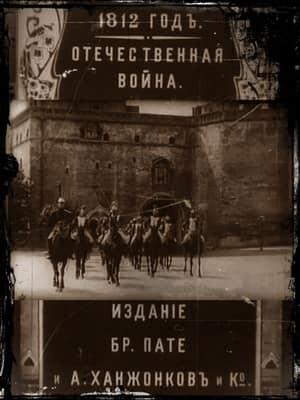
There are moments in cinematic history when a film, despite its vintage, manages to transcend its technical limitations and communicate a story with such raw power that it resonates across generations. The 1912 epic, 1812, is precisely such a phenomenon. A century after the actual events it portrays, this silent masterpiece brought to the silver screen the colossal drama of Napoleon Bonaparte's ill-fated Russian campaign, an endeavor that forever altered the geopolitical landscape of Europe. To call it merely a historical recreation would be an understatement; it is a profound meditation on ambition, resilience, and the devastating consequences of war, all delivered through the nascent language of early cinema.
In an era where the moving picture was still finding its voice, the audacity of tackling such a sprawling, momentous subject is commendable. The film, unburdened by dialogue, relies entirely on visual storytelling, a symphony of imagery and pantomime that demands an active engagement from its audience. It asks us not just to observe, but to feel the weight of history unfolding before our eyes. Unlike the often intimate narratives of contemporaneous productions such as Oliver Twist or even the more reverent biblical epics like Life and Passion of Christ, 1812 seeks to capture the grand sweep of national destiny, a canvas painted with the lives of hundreds, if not thousands, of men.
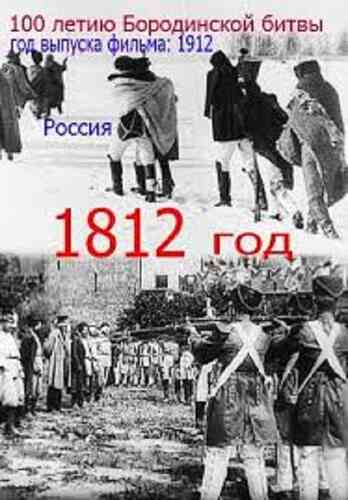
The sheer scale of 1812 is its most immediate and striking feature. Imagine the logistical hurdles of staging the invasion of Russia a mere century after it occurred, with the rudimentary technology available to filmmakers. Yet, the film manages to convey the immense scope of Napoleon’s Grande Armée, a formidable force that stretched across vast swathes of Eastern Europe. While modern audiences accustomed to CGI spectacles might find the crowd scenes quaint, for its time, the assembly of extras, the meticulously recreated uniforms, and the expansive outdoor shots were nothing short of revolutionary. One can almost feel the dust kicked up by marching boots and the chill of the Russian plains through the flickering images.
The narrative arc, though simplified for cinematic brevity, adheres faithfully to the historical record. We witness the initial, almost arrogant confidence of the French advance, a tide of humanity seemingly unstoppable. The early skirmishes, while perhaps lacking the visceral brutality that later war films would achieve, nonetheless convey the chaos and danger of combat. The strategic retreat of the Russian forces, a calculated, painful decision to abandon territory in favor of preserving their army, is depicted with a solemn gravity. This isn't just a march; it's a deliberate, agonizing sacrifice that sets the stage for the ultimate, devastating confrontation.
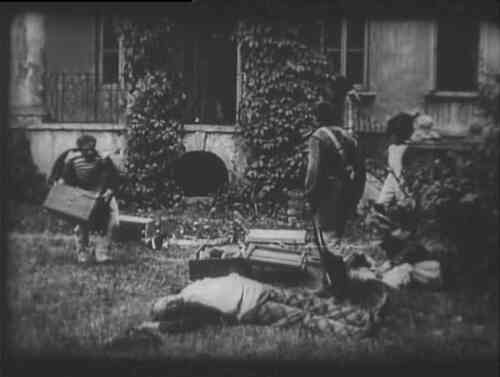
In silent cinema, the burden of conveying emotion, intent, and character falls squarely on the actors' physical presence and facial expressions. The cast of 1812 rises to this challenge admirably. Vasili Goncharov, likely portraying a pivotal Russian military figure, embodies a stoic resilience, his demeanor reflecting the unwavering spirit of a nation under siege. His gaze, even through the grainy film stock, suggests a deep understanding of the stakes involved, a quiet determination that contrasts sharply with the flamboyant confidence of the invading forces. Similarly, Aleksandra Goncharova, though her specific role might be peripheral to the grand military narrative, would have undoubtedly lent a human, often tragic, dimension to the story, perhaps as a civilian caught in the maelstrom, or a figure representing the suffering of the Russian populace. Her presence would have anchored the epic to individual experience.
On the other side of the conflict, Andrey Gromov, in what one can only assume is a portrayal of Napoleon himself or a prominent French general, exudes a compelling blend of strategic brilliance and growing desperation. His gestures, his posture, would have communicated the shifting fortunes of war – from initial triumph to the dawning realization of an insurmountable challenge. The hubris, the strategic genius, and the eventual despair must have been etched on his face, a silent testament to the emperor's epic fall. Pavel Knorr, another key performer, likely rounded out the principal cast, perhaps as a Russian general or a key advisor, providing a foil or a critical voice within the Russian command structure. The interplay between these actors, conveyed entirely through movement and expression, forms the emotional core of this historical drama, allowing the audience to invest in the human stakes amidst the grand military maneuvers.
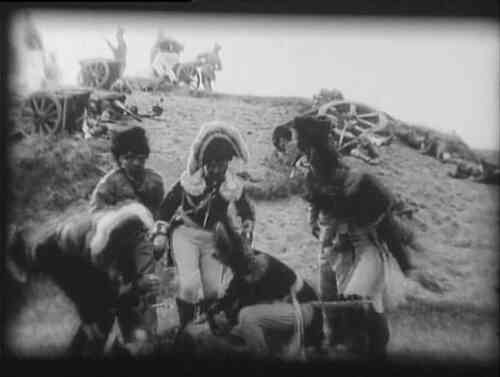
The direction of 1812, a collaborative effort often uncredited in early Russian cinema or attributed to studios rather than individuals, demonstrates a keen understanding of how to use the camera to tell a story of immense scope. The use of deep focus, wide shots to capture troop movements, and close-ups to emphasize the emotional toll on individuals, would have been groundbreaking. The pacing, critical in silent film, would have been carefully managed, building tension through sustained sequences of marching armies and strategic maneuvers, punctuated by the frenetic energy of battle. The Battle of Borodino, a pivotal moment in the campaign, would have been orchestrated as a central set-piece, a chaotic ballet of human conflict, even if limited by the technology of the day.
The film’s portrayal of Moscow’s burning, a truly iconic moment in the 1812 narrative, would have been a technical marvel. Whether achieved through clever miniatures, controlled pyrotechnics, or a combination thereof, this sequence would have been designed to evoke a profound sense of loss and desperation, transforming the city from a prize into a funeral pyre. This act of self-sacrifice by the Russians, depriving Napoleon of essential winter quarters and supplies, is a turning point, and the film would have emphasized its dramatic weight through compelling visual composition.
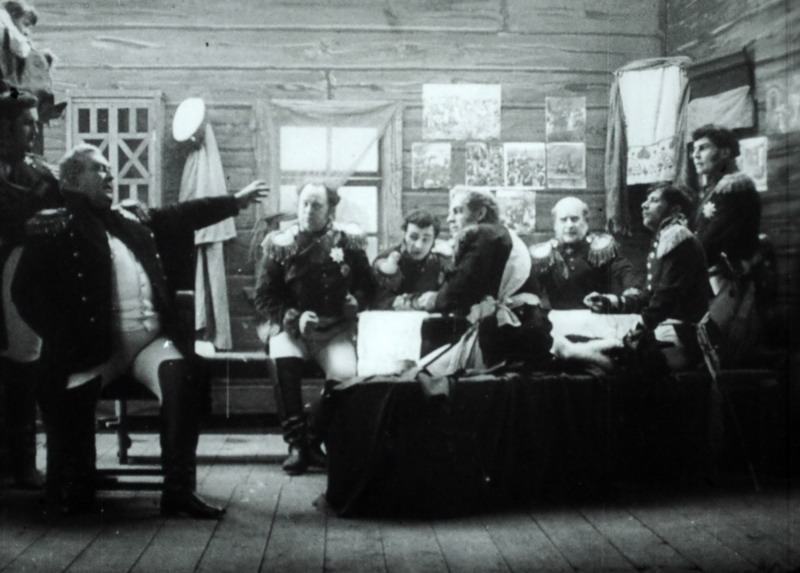
Where 1812 truly distinguishes itself is in its unflinching depiction of the French retreat. This is where the film transcends mere historical recreation and delves into the harrowing reality of human suffering on an epic scale. The vibrant uniforms of the Grande Armée are slowly replaced by rags, the organized ranks dissolve into a desperate, straggling procession. The relentless Russian winter, personified by blizzards and icy landscapes, becomes an antagonist as formidable as any army. The film would have visually communicated the pervasive cold, the gnawing hunger, and the creeping despair that decimated Napoleon’s forces more effectively than any direct combat.
Scenes of soldiers collapsing from exhaustion, scavengers picking through the frozen dead, and the constant harassment by Cossack cavalry would have painted a grim picture of a once-proud army reduced to a spectral shadow of its former self. This part of the film, in its stark realism, would have served as a powerful anti-war statement, a testament to the brutal, unforgiving nature of a campaign waged against both man and nature. The human toll, conveyed through the performances and the visual narrative, would have left an indelible impression, a poignant reminder of imperial overreach.
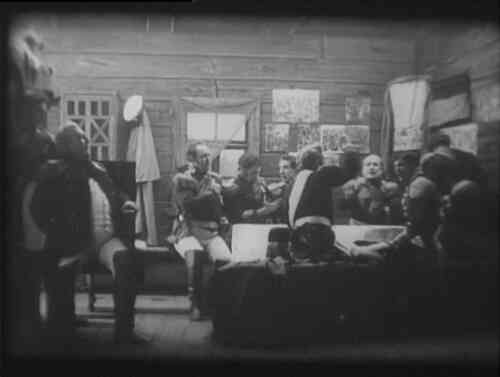
Coming out a century after the actual events, 1812 wasn't just a film; it was a cultural touchstone, a reflection of national identity and historical memory. In comparison to other historical epics of the era, such as The Independence of Romania or even the Russian production Pyotr Velikiy, 1812 stood out for its ambition to capture a truly monumental European conflict. While productions like Dante's Inferno explored allegorical or literary grand narratives, 1812 grounded its epic scope in verifiable historical tragedy, making it a compelling document of both history and early filmmaking.
The absence of specific writer credits is common for films of this vintage, particularly historical dramas that drew directly from well-known historical accounts rather than original screenplays in the modern sense. The 'writers' were, in essence, the historians and chroniclers of the past, whose narratives were adapted for the screen by the director and production team. This approach allowed for a collective, almost communal, interpretation of a shared history, rather than a singular authorial voice. It’s a fascinating aspect of early cinema, highlighting how these films functioned as visual history lessons for a mass audience.
While the technical sophistication of 1812 may seem primitive by today’s standards, its artistic merit and historical significance remain undiminished. It is a testament to the power of visual storytelling, a reminder that even without spoken dialogue or elaborate special effects, a compelling narrative and strong performances can convey profound truths. The film serves as a crucial artifact for understanding the evolution of cinema, demonstrating how early filmmakers grappled with epic scale and historical accuracy.
For those fascinated by early cinematic techniques, historical reenactments, or the sheer ambition of filmmakers pushing the boundaries of a new medium, 1812 offers a rich viewing experience. It invites us to consider the enduring impact of Napoleon’s campaign, not just on the battlefield, but on the cultural memory of nations. It's a film that speaks volumes about human folly and fortitude, a silent echo of a monumental clash that reverberates even today. It stands as a stark, powerful reminder of the unforgiving nature of war and the enduring spirit of resistance, captured with remarkable vision at the dawn of cinematic art. This film is more than just a document of a past event; it is a profound artistic statement about the human condition under extreme duress.
Comparing it to other historical spectacles of the era, such as the grand American travelogues like A Trip to the Wonderland of America, 1812 stands apart for its narrative ambition and the sheer weight of its subject matter. While those films sought to document natural wonders, 1812 plunged headfirst into the man-made crucible of conflict, offering a stark, often brutal, portrayal of historical events. Even within the realm of early European historical dramas, like Les amours de la reine Élisabeth, which focused on more intimate, albeit regal, narratives, 1812's scope was breathtakingly vast. It was a film that dared to tackle the very forces that shaped continents, an early pioneer in the genre of the historical war epic that would later see countless iterations, but few with such foundational gravitas.
The film’s portrayal of the Russian winter as a character in itself is particularly poignant. It is not merely a backdrop but an active participant, slowly but surely grinding down the formidable will and resources of the French army. This environmental determinism, a force far more potent than any human strategy, is conveyed with a chilling effectiveness that transcends the limitations of silent film. The suffering of the soldiers, the desperation in their eyes, the relentless march through snow-covered wastes – these images, even in their century-old form, convey a universal truth about the futility of ambition when confronted by elemental power. It’s a powerful lesson, delivered with a stark clarity that few films, even today, manage to achieve with such unadorned honesty.
Ultimately, 1812 is not just a film for historians or silent cinema aficionados; it is a profound human document. It captures a pivotal moment in history with an earnestness and scale that remains impressive. It invites us to reflect on the cyclical nature of conflict, the fragility of empires, and the enduring strength of the human spirit in the face of unimaginable adversity. Its legacy lies not just in its pioneering techniques, but in its ability to tell a monumental story with clarity, emotion, and an unwavering commitment to its historical subject.
IMDb —
1923
Community
Log in to comment.