DbcultAccessing Vault...
Cult Review
Senior Film Conservator
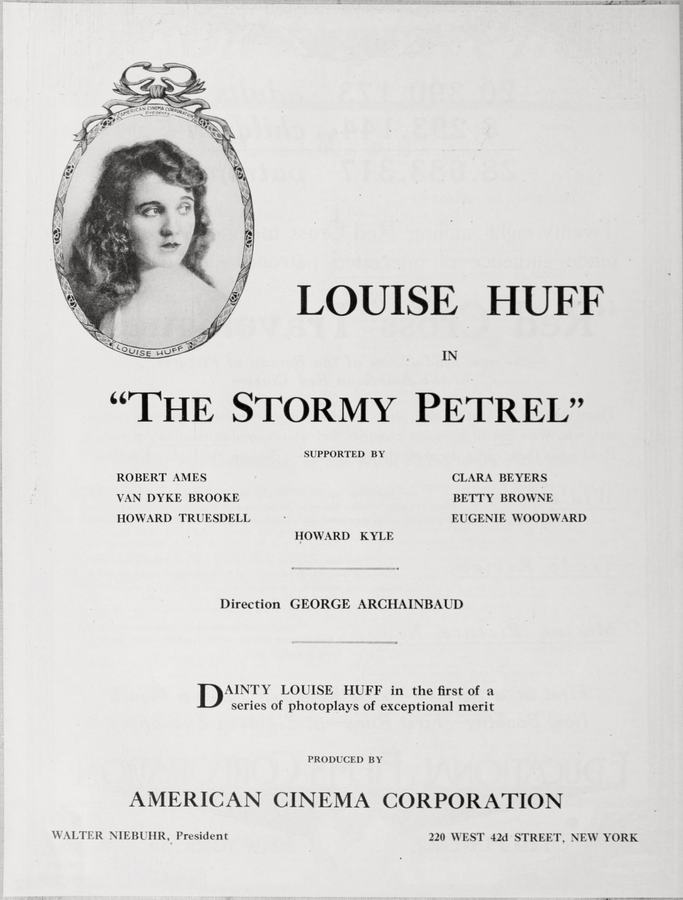
Clara Beyers' entrance in The Stormy Petrel isn't merely a character introduction—it's an atmospheric disturbance. Director Van Dyke Brooke frames her first appearance through rain-lashed train windows, droplets refracting light across her cheekbones like liquid diamonds. This subtle visual poetry establishes the film's core dialectic: surfaces versus subterranean truths. Beyers embodies Eleanor Vance as a conundrum wrapped in charmeuse, her Parisian gowns swirling through Puritan interiors like wine spilled on linen. Watch how she handles a teacup—not with decorum, but with deliberate provocation, fingertips lingering on porcelain as if testing its capacity to shatter. This isn't acting; it's behavioral sedition.
Brooke transforms the Vance mansion into a gilded prison. Dutch angles emphasize the oppressive weight of ancestral portraits glaring down at inhabitants. Notice the recurring motif of reflections—characters perpetually framed in mirrors or windowpanes, visually reinforcing their dual lives. Howard Truesdale's patriarch doesn't walk; he processes, his rigid spine echoing the mahogany banisters. When Eleanor deliberately rearranges his study’s ship models—icons of colonial masculinity—the violation feels more intimate than any kiss could be. Production design becomes psychological warfare: every velvet drape and Chippendale chair serves as battleground terrain.
"Beyers' performance anticipates Dietrich's later smokiness but with sharper edges—her Eleanor doesn't just cross legs; she unsheathes them like weapons."
What electrifies The Stormy Petrel is its mastery of tactile silence. Consider the scene where Louise Huff's Helen practices Chopin—fingers stumbling over keys as she senses Robert Ames' Arthur watching Eleanor instead. No title card interrupts the tension; we hear the discordance through Huff’s trembling shoulders. Similarly, Howard Kyle’s physician communicates suppressed yearning through medical bag handling—tightening his grip when Eleanor enters, as if clutching morality itself. Brooke understood that restraint amplifies eruption. When the illegitimacy revelation finally detonates, it’s delivered via close-up on a trembling letter, the paper’s crinkle louder than any scream in The Torture of Silence.
George Middleton’s screenplay smuggles radical feminism beneath melodramatic trappings. Eleanor’s European "scandal" is never specified—a brilliant evasion that transforms her into patriarchy’s ultimate nightmare: the sexually autonomous woman whose history remains gloriously opaque. Contrast this with Eugenie Woodward’s Aunt Agatha, whose dialogue cards overflow with moralistic clichés while her eyes betray voyeuristic fascination with Eleanor’s freedom. The film’s true tension isn’t about marriage prospects; it’s about cognitive liberation. When Eleanor reads Ibsen aloud (visible book spine carefully angled to camera), the act carries more danger than any pistol in The Spy.
Brooke weaponizes meteorology as emotional cartography. While lesser films like Lorelei of the Sea deploy storms as cheap symbolism, here the hurricane remains conspicuously outside until the climax. Instead, interior tempests manifest through fabric and flesh: Eleanor’s décolletage catching candlelight like storm surges, Arthur’s knuckles whitening against dark brocade upholstery. The famous parlor confrontation plays out against windowpanes streaked with phantom rain—no actual downpour required. This nuanced approach to atmosphere anticipates the psychological depth of later works like A Mormon Maid, but with greater formal discipline.
"Truesdale's collapse upon discovering his brother's bastard isn't shouted—it's a slow crumpling, like a steamer trunk tumbling down stairs in agonizing silence."
Contemporary viewers might overlook The Stormy Petrel’s radicalism, distracted by its corseted aesthetics. But inspect the margins: Betty Brown’s maid character observing key revelations through partially open doors—a working-class witness to bourgeois collapse. Note how Brooke photographs Eleanor’s discarded gloves on a hallway table; they resemble shed snakeskin, symbolizing transformation far more eloquently than any title card. This commitment to visual implication over exposition creates resonance missing from heavier-handed contemporaries like The Fettered Woman.
Forget thunderclap finales. The Stormy Petrel concludes with cinema’s quietest earthquake: Eleanor standing alone at a rain-cleared window, the estate reflected in the glass behind her like a fading daguerreotype. No title card explains her departure. No melodramatic wave farewell. Beyers’ micro-expression—a flicker of something between regret and liberation—becomes the film’s Rosetta Stone. This rejection of closure feels radically modern, closer in spirit to Chekhov than Cecil B. DeMille. While Little Lord Fauntleroy offered comforting resolutions, Brooke’s masterpiece understands that some storms leave permanent atmospheric shifts.
The film’s endurance lies precisely in its refusal to moralize. Eleanor isn’t punished like the sirens in The Siren's Song, nor redeemed like sacrificial heroines of Life Savers. She simply leaves, carrying secrets that poisoned one world to potentially seed another. In this, The Stormy Petrel becomes less period piece and more eternal manifesto—a testament to the revolutionary potential of women who refuse to drown quietly.
IMDb 5.2
1920
Community
Log in to comment.