DbcultAccessing Vault...
Cult Review
Senior Film Conservator
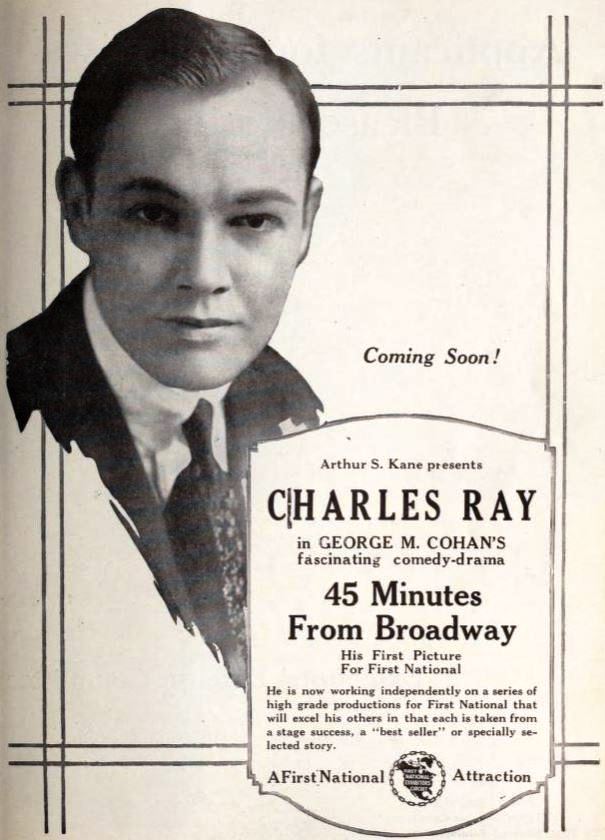
Stepping back into the flickering glow of the early 20th century, '45 Minutes from Broadway' emerges not merely as a relic of a bygone cinematic era, but as a surprisingly resonant exploration of human connection, societal barriers, and the often-unseen struggles of the heart. This 1919 silent film, adapted from George M. Cohan’s popular stage play, deftly navigates the intricate dance of social class and romantic yearning, delivering a narrative that, despite its age, still speaks volumes about the human condition. It's a testament to the enduring power of simple stories told with genuine sentiment, even when conveyed without spoken dialogue.
At its core, the film introduces us to Kid Burns, portrayed with an endearing blend of charm and wistfulness by Monte Collins. Kid is a man living a life of borrowed splendor, tethered to the coattails of his wealthy, somewhat oblivious playboy friend, whose affluence provides Kid with a comfortable, if unearned, existence. This arrangement, while seemingly idyllic on the surface, hints at a deeper existential void within Kid, a sense of unfulfilled potential masked by the glittering distractions of his companion's world. His days are spent in the shadow of another's fortune, a vicarious existence that, for all its material comforts, lacks the essential spark of self-determination. Collins imbues Kid with a subtle melancholy, a quiet yearning that subtly underscores his outwardly jovial demeanor. It's a performance that, through gestures and expressions, conveys the inner life of a character caught between two worlds.

The narrative truly ignites with the introduction of the housemaid, a character who, despite her societal standing, possesses an innate grace and quiet strength that immediately captivates Kid. Dorothy Devore, in her portrayal, eschews the typical subservient caricature, instead presenting a woman of dignity and genuine warmth. Her presence in the lavish household serves as a stark contrast to the superficiality that often surrounds Kid's wealthy friend, bringing an unexpected authenticity to his otherwise manufactured world. The burgeoning affection between Kid and the housemaid is not merely a romantic subplot; it is the central catalyst that forces Kid to confront the true nature of his existence and the compromises he has made. This forbidden romance, blossoming within the confines of a strict class system, becomes the film's beating heart, challenging the established norms with every stolen glance and hesitant touch.
The screenplay, adapted by Bernard McConville and Isabel Johnston from Cohan's original work, demonstrates a keen understanding of silent film's unique storytelling demands. Dialogue, of course, is absent, replaced by intertitles that provide crucial exposition and character insights. However, the true artistry lies in the visual narrative – the way the camera lingers on an expression, the subtle choreography of character movements, and the judicious use of close-ups to convey emotion. The director (whose name is not explicitly credited in available records but whose vision is palpable) masterfully orchestrates these elements to build tension and evoke empathy. One cannot help but draw parallels to other silent era dramas exploring social stratification, such as A Child of the Paris Streets or even the stark realism of Gatans barn, though '45 Minutes from Broadway' maintains a distinctly American sensibility, leaning more into romantic comedy-drama than gritty social realism.
Donald MacDonald, as the wealthy pal, delivers a performance that perfectly encapsulates the carefree, almost oblivious nature of inherited privilege. His character serves as a foil to Kid, highlighting the stark differences in their motivations and perspectives. He is not malicious, merely unburdened by the same anxieties that plague Kid, making his role crucial in underscoring the film's thematic explorations of class disparity. The supporting cast, including Harry Myers, William Courtright, and Eugenie Besserer, each contribute to the film’s rich tapestry, populating the world with believable, if sometimes archetypal, figures. Besserer, in particular, often brought a gravitas to her roles, even in smaller parts, adding layers to the domestic drama unfolding.
The film’s title itself, '45 Minutes from Broadway,' evokes a sense of proximity to the bustling heart of American aspiration and entertainment, yet also a subtle remove. It suggests a world on the periphery of glamour, close enough to feel its pull but perhaps too far to fully participate in its spoils. This geographical and metaphorical distance underscores the characters' positions within the social hierarchy. It is a world where ambition and opportunity are tantalizingly close, yet often just out of reach for those without the requisite birthright or fortune. This subtle commentary on the American dream, or the lack thereof for many, is quietly profound.
Visually, the film, like many of its contemporaries, relies on relatively static camera work and clear, expressive acting. Yet, within these constraints, the cinematography captures the period's aesthetic with a certain charm. The interiors of the wealthy home are depicted with a sense of grandeur, contrasting sharply with the more modest, often unseen, spaces occupied by the working class. The costumes, while simple, effectively delineate social standing, adding another layer to the visual storytelling. This attention to detail, even in a silent feature, speaks to the dedication of the filmmakers in conveying their narrative with clarity and emotional depth.
The central theme of love transcending class boundaries is, of course, a perennial favorite in storytelling, but '45 Minutes from Broadway' handles it with a delicate touch, avoiding overt melodrama. Instead, it focuses on the quiet moments of connection, the shared glances, and the unspoken understanding that forms between Kid and the housemaid. This subtlety allows the audience to invest more deeply in their plight, rooting for a resolution that challenges the societal norms of the time. In this regard, it shares a thematic kinship with films like Luck in Pawn, which also explored the unpredictable nature of fortune and romance, or even the more dramatic The Price Mark, where social standing often came with moral compromises.
Silent films often compel us to engage with them on a different level, to become more attuned to visual cues and the nuances of physical performance. '45 Minutes from Broadway' is a prime example of this immersive experience. The actors, particularly Collins and Devore, master the art of conveying complex emotions without uttering a single word. Their faces become canvases upon which joy, sorrow, longing, and determination are painted with remarkable clarity. This demanding form of acting requires a depth of understanding of human emotion and a refined control over one's physicality, qualities that are abundantly present in this production.
While not as widely known as some of its more epic silent counterparts, '45 Minutes from Broadway' offers a compelling glimpse into the everyday lives and romantic entanglements of a specific historical moment. It’s a reminder that even in an age of technological infancy for cinema, filmmakers were already grappling with sophisticated themes and crafting engaging narratives. The film's charm lies in its earnestness and its belief in the power of love to disrupt even the most entrenched social conventions. It doesn't preach, but rather invites the audience to observe and empathize with characters striving for happiness against the backdrop of an unforgiving social landscape.
The dramatic tension inherent in Kid's predicament — caught between loyalty to his friend and burgeoning love for the housemaid — forms the emotional bedrock of the film. It's a classic dilemma, one that forces a character to choose between comfort and authenticity, between a life of ease and a life of true fulfillment. The resolution, without giving too much away, manages to be both satisfying and reflective of the era's sensibilities, offering a glimmer of hope while acknowledging the persistent challenges faced by individuals navigating rigid social structures.
In an cinematic landscape that often celebrates the grand spectacles of the silent era, '45 Minutes from Broadway' stands as a quiet triumph of character-driven storytelling. It's a film that asks us to consider the subtle dynamics of power, privilege, and personal desire, all while delivering a heartfelt romance. For aficionados of early American cinema, or anyone interested in the evolution of narrative film, this production offers a valuable and enjoyable experience. It's a testament to the fact that even without spoken words, the universal language of human emotion can resonate across generations, proving that some stories, like true affection, are truly timeless. Its exploration of identity and aspiration, much like the introspective journeys seen in films such as The Golden Idiot, highlights the universal quest for meaning beyond superficial appearances. Ultimately, '45 Minutes from Broadway' serves as a captivating historical artifact and a surprisingly modern tale of love's unexpected emergence in the most improbable of circumstances, reminding us that the human heart often cares little for the boundaries society attempts to impose.
IMDb 7.3
1935
Community
Log in to comment.