DbcultAccessing Vault...
Cult Review
Senior Film Conservator
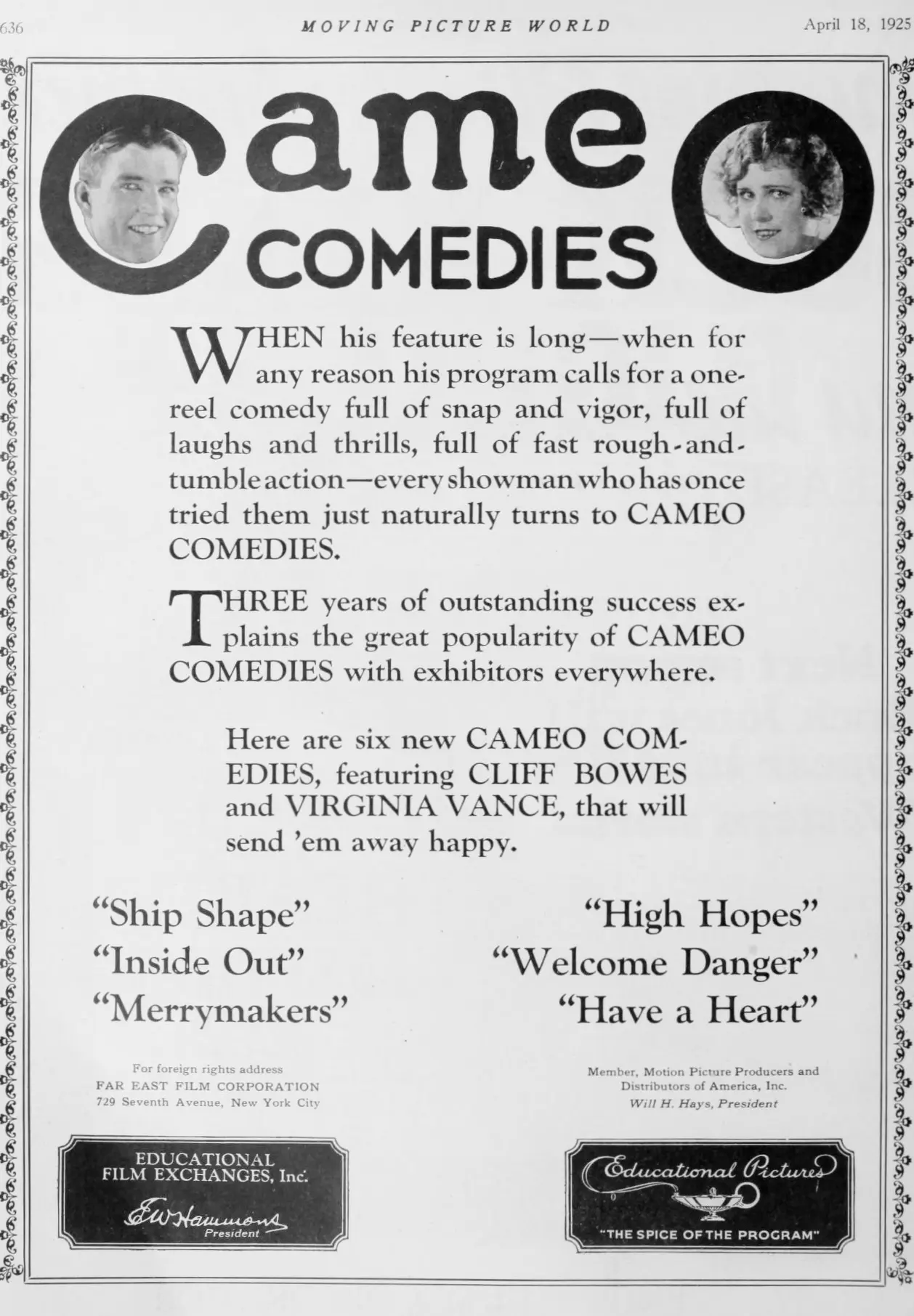
Is Have a Heart a hidden gem of the silent era? Short answer: No, it is a fascinating but flawed specimen of late-1920s slapstick that feels more like a warning than a comedy. This film is for dedicated historians and those who enjoy the specific, rhythmic chaos of Educational Pictures; it is NOT for anyone looking for the sophisticated narrative arcs of Chaplin or the architectural brilliance of Keaton.
This film works because the physical commitment of Cliff Bowes is absolute, turning a thin premise into a masterclass in high-impact falling.
This film fails because its central joke—the pursuit of love through self-harm—is repeated until it loses its comedic edge, culminating in a tonal shift that feels unnecessarily mean-spirited.
You should watch it if you want to see the DNA of the 'Mermaid Comedy' series and understand how mid-tier silent shorts relied on increasingly dangerous stunts to compete with the rising popularity of 'talkies'.
Have a Heart is a film built on a singular, obsessive loop. Cliff Bowes doesn't just want the girl; he wants the attention that comes with being broken. There is a psychological darkness here that the film refuses to acknowledge. In one specific sequence, Bowes attempts to trip himself in front of a moving vehicle, a moment that mirrors the frantic energy of Frenzied Film. The pacing is breathless, but the stakes feel hollow because the protagonist's motivation is purely external.
The cinematography is typical for the era: static wide shots that allow the actor's body to occupy the entire frame. This is essential for slapstick. If you cut during a fall, the magic is gone. When Bowes finally 'succeeds' in being admitted to the hospital, the film shifts from street-level chaos to a claustrophobic medical farce. The sets are sparse, emphasizing the coldness of the institution he so desperately wanted to enter.
It works. But it’s flawed. The irony isn't just a plot point; it's the film's entire personality.
If you are looking for a laugh-out-loud experience, Have a Heart might disappoint. It is a film that demands you appreciate the craft of the stunt over the logic of the story. Unlike the sentimental charm found in The Innocence of Lizette, there is no emotional core here. It is a machine designed to generate kinetic energy. For a scholar of the silent era, it is a vital watch to see how the 'everyman' character was evolving—or devolving—into a figure of pure slapstick punishment.
Bowes was never going to be a Harold Lloyd. He lacked the relatable 'striver' quality. In Have a Heart, he plays a man who is less a character and more a rubber ball. His timing is impeccable. Watch the moment he tries to fake a fainting spell; his body goes limp with a suddenness that suggests a total lack of self-preservation. It is impressive, yet it lacks the heart suggested by the title.
The female leads, Ruth Hiatt and Virginia Vance, are given very little to do other than look concerned or pretty. This was a common issue in shorts of this period, unlike more balanced features like Women Men Forget. The nurse is a MacGuffin in a cap. She is the prize at the end of a very painful obstacle course.
The ending of Have a Heart is what separates it from standard romantic comedies of the 1920s. After escaping the hospital in a panic—terrified of the very medical care he sought—the protagonist is hit by a car for real. This isn't a 'happy' ending. It is a cosmic joke. The film suggests that the universe has a sense of humor, and it is a dark one. This cynicism is a far cry from the adventurous spirit of Beloved Rogues.
The final shot of Bowes truly injured, having finally achieved his goal through actual tragedy rather than artifice, is a jarring conclusion. It makes the previous fifteen minutes of 'faked' stunts feel like a rehearsal for a disaster. It is a bold choice, but one that leaves the viewer feeling slightly cold. It’s effective, certainly. But it isn't 'fun'.
The pacing is the film's greatest asset. There isn't a wasted second. From the moment Bowes sees the nurse, the film enters a state of perpetual motion. The editing, while rudimentary by modern standards, creates a sense of frantic urgency. It reminds one of the high-speed chases in Mountain Dew, where the movement itself is the punchline.
However, the tone is inconsistent. The first half is light, almost whimsical. The second half, set within the hospital, introduces a fear of surgery that feels grounded in a very real, very period-specific anxiety about 1920s medicine. The shift from 'funny falling' to 'fear of the knife' is handled with the grace of a sledgehammer.
The stunt work is genuinely impressive and dangerous. The film serves as a perfect time capsule of 1920s urban life. The ending is a rare example of genuine irony in a medium that usually favored sentimentality.
The character motivations are paper-thin. The middle section drags as it struggles to find new ways for Bowes to hurt himself. The female characters are entirely sidelined.
Have a Heart is a fascinating failure. It demonstrates the technical prowess of silent comedians while highlighting the narrative limitations of the short-form slapstick genre. It lacks the soul of Love's Boomerang and the wit of A Gentleman of Leisure. Instead, it offers a gritty, almost nihilistic view of romance. It is a film where love is a catalyst for injury, and the only reward for persistence is a real trip to the emergency room. It is worth seeing once, if only to appreciate how far the genre has come—and how much more brutal it used to be.
IMDb 5.4
1930
Community
Log in to comment.