DbcultAccessing Vault...
5.4/10
Senior Film Conservator
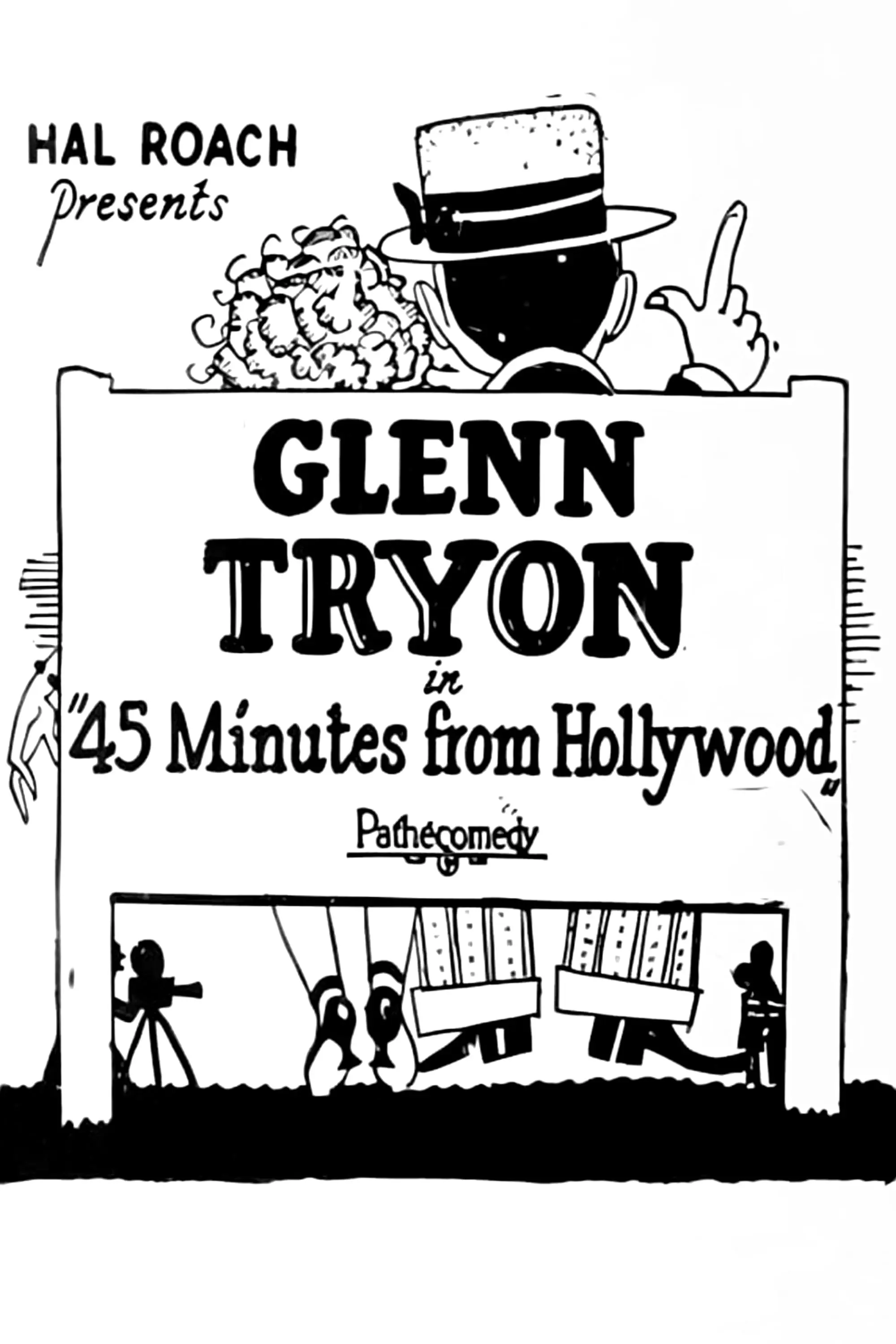
A definitive 5.4/10 rating for a film that redefined the boundaries of cult cinema. 45 Minutes from Hollywood remains a cornerstone of transgressive art.
Is '45 Minutes from Hollywood' worth watching today? Short answer: yes, but with significant caveats. This early silent short is a fascinating relic for film historians and ardent fans of classic comedy, particularly those interested in the nascent careers of Stan Laurel and Oliver Hardy, but it will likely test the patience of casual viewers seeking modern comedic pacing or narrative sophistication.
This film works because of its undeniable historical significance, offering a rare glimpse into the formative years of Hollywood's most iconic figures and the raw, unrefined comedic potential it showcases in its sprawling ensemble.
This film fails because its narrative is thinly stretched, relying heavily on a singular, repetitive comedic premise that, despite its charm, quickly wears thin, and its pacing often feels disjointed, even for a silent short.
You should watch it if you are a dedicated film historian, a silent film enthusiast, or someone specifically tracking the early appearances of iconic comedians and actors before their legendary partnerships or star statuses solidified.
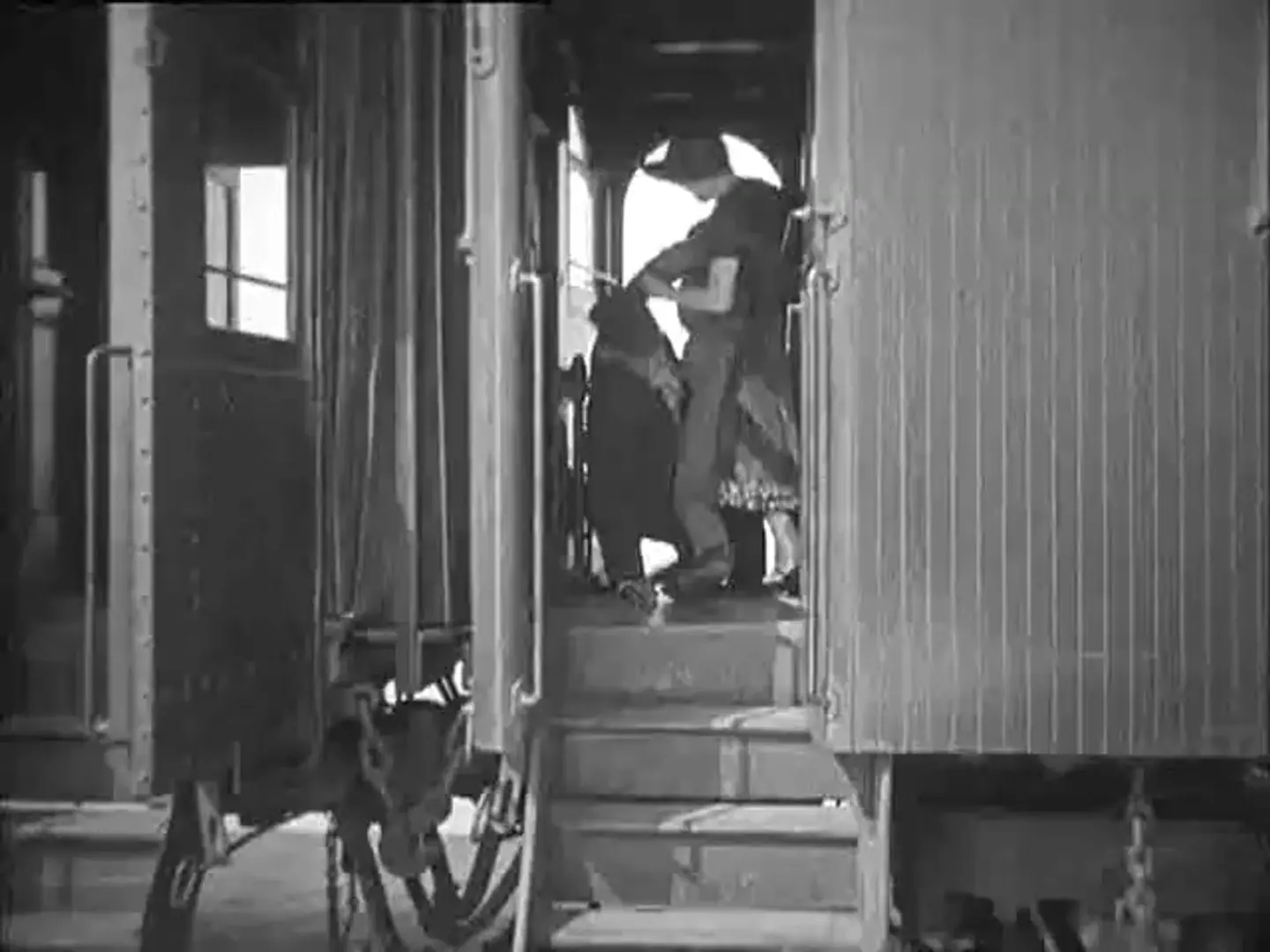
Hal Roach's 1927 silent comedy, '45 Minutes from Hollywood', arrives less as a narrative triumph and more as a curious time capsule, a fleeting glimpse into the chaotic, star-studded nascent days of Tinseltown. Its premise is disarmingly simple, almost quaint: a naive young man, fresh off the train for a family matter, stumbles into a genuine bank robbery, yet, blinded by the perceived glamour of Hollywood, mistakes the frantic crime for an elaborate movie scene. This central misunderstanding forms the entire comedic backbone of the short, a meta-commentary on the illusion factory that was already defining the city's identity.
The film plays on the classic fish-out-of-water trope, exploiting the protagonist's wide-eyed innocence against the backdrop of a city perpetually blurring the lines between reality and artifice. When the bank robbers burst forth, weapons drawn, our hero doesn't flee; he attempts to 'direct' them, to offer his unsolicited theatrical input, believing himself an accidental extra in a grand production. This specific gag, the cornerstone of the film, carries a certain intellectual charm, questioning the very nature of perception in an environment designed to deceive.
However, the execution, while occasionally inspired, struggles to sustain its cleverness over the film's runtime. The initial shock and humor of the misinterpretation gradually give way to a sense of repetition. The protagonist's unwavering belief in the 'film set' feels stretched, even for a silent comedy, pushing the boundaries of suspension of disbelief beyond mere slapstick into a realm of almost aggressive naiveté. Yet, it's precisely this exaggerated innocence that defines the film's tone – a lighthearted, almost whimsical take on criminality, viewed through the lens of Hollywood's burgeoning dream machine.
The film, penned by Hal Roach, Walter Lantz, and H.M. Walker, demonstrates a fundamental understanding of comedic timing, even if the pacing occasionally falters. There's a certain joy in watching the protagonist's earnest blunders, his well-intentioned interferences only serving to escalate the chaos. It’s a testament to the era's comedic sensibilities, where character archetypes and broad physical gags often took precedence over intricate plot developments. The film doesn't aim for profundity, but rather a series of escalating, if somewhat predictable, farcical situations.
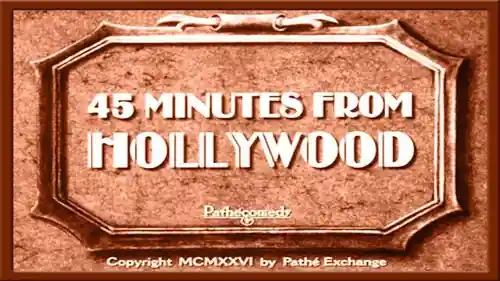
Perhaps the most compelling reason to seek out '45 Minutes from Hollywood' today isn't its central narrative, but its jaw-dropping, almost impossibly stacked cast list. This short is less a star vehicle and more a constellation of future legends, a veritable 'Where's Waldo?' of silent era talent. Jay R. Smith leads as the bewildered protagonist, delivering a performance typical of the era's earnest, physically expressive leads. But it's the supporting and cameo roles that truly ignite the historical imagination.
We catch fleeting glimpses of Stan Laurel and Oliver Hardy, years before their iconic partnership would fully blossom and redefine comedic duos. Their appearances are momentary, almost blink-and-you'll-miss-it, yet they serve as tantalizing breadcrumbs for those tracing the lineage of cinematic comedy. To see them, individually, in this context, is to witness the raw materials of greatness, unpolished but undeniably present. It's a testament to Hal Roach's studio as a breeding ground for talent, a place where stars were not just born but forged in the crucible of relentless production.
Beyond the legendary duo, the film boasts appearances from Janet Gaynor, who would win the very first Best Actress Oscar just a year later, and the enigmatic Theda Bara, a vamp icon of an earlier era, in what I would argue is one of cinema's most surprising and underappreciated cameos. Bara's presence, even if brief, adds a layer of unexpected glamour and historical weight, a bridge between two distinct epochs of Hollywood mythology. The sheer density of talent, from Mickey Daniels and Joe Cobb of the 'Our Gang' shorts to Clara Guiol and Molly O'Day, makes this film a treasure trove for cinephiles. It's an unconventional observation, but the film's true star isn't its lead, but the collective historical weight of these fleeting appearances, hinting at careers that would shape generations of cinema.
These cameos, while exciting for historical context, do not significantly impact the film's immediate comedic success. They are Easter eggs for future generations, rather than active participants in the primary gag. However, their inclusion underscores the collaborative, almost familial atmosphere of early studio systems like Hal Roach's, where actors often moved between projects with remarkable fluidity, lending their presence to even the most minor of roles. The cumulative effect is less about individual performances and more about the collective energy of a nascent industry teeming with talent.
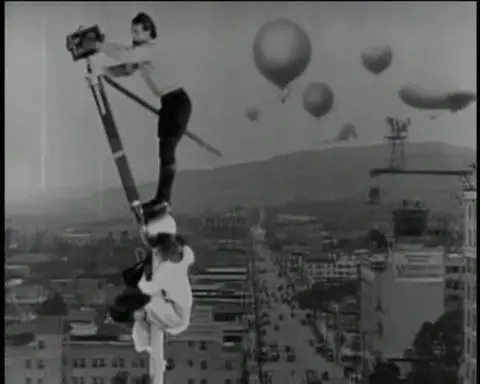
While '45 Minutes from Hollywood' doesn't explicitly credit a director, the influence of Hal Roach, both as a writer and the head of his prolific studio, is palpable. The film embodies the rapid-fire, gag-driven ethos that characterized much of Roach's output, prioritizing comedic situations over intricate character development. The pacing is typical of 1920s silent shorts: a quick setup, a series of escalating mishaps, and a relatively swift resolution. It works. But it’s flawed.
The film's rhythm is punctuated by physical comedy and broad gestures, relying on visual cues and intertitles to convey humor. There are moments of genuine comedic invention, particularly in the initial sequence of the bank robbery where the protagonist's 'helpful' interventions disrupt the criminals' plans. For example, his attempt to 'block' a shot or offer a 'line reading' to a panicked robber provides a momentary spark of brilliance, showcasing the meta-humor at play. However, these flashes of inspiration are not consistently maintained.
The primary challenge for modern viewers lies in the film's reliance on a single, extended gag. While the concept of mistaking a robbery for a film set is clever, the film struggles to introduce sufficient variations to keep it fresh. The chase sequences, while energetic, lack the precision and escalating absurdity found in the best slapstick of the era. They often feel a bit too protracted, diluting the comedic impact rather than amplifying it. This is not uncommon for shorts of the period, but when compared to the tightly choreographed chaos of a Buster Keaton or Charlie Chaplin, the difference in directorial finesse becomes apparent.
Despite these limitations, the film does capture a sense of the frenetic energy of Hollywood, a city where anything seemed possible, and the line between reality and performance was perpetually blurred. The direction, while perhaps not groundbreaking, is competent, ensuring the comedic beats land, even if gently. It’s a functional piece of filmmaking that serves its primary purpose: to entertain with a simple, high-concept gag.
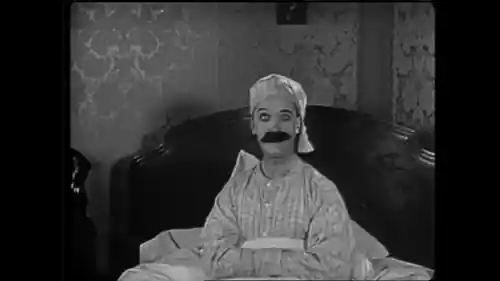
Visually, '45 Minutes from Hollywood' is a straightforward product of its time. The cinematography, while not revolutionary, effectively captures the bustling energy of the 1920s Hollywood environment. Shot in black and white, the film relies on clear, functional compositions, favoring medium shots that allow the physical comedy to play out without unnecessary visual clutter. There are no grand sweeping vistas or innovative camera movements; instead, the focus remains squarely on the characters and their farcical predicament.
The tone is overwhelmingly lighthearted and farcical, characteristic of many Hal Roach productions. There's an innocence to the humor, a gentle lampooning of both the earnest protagonist and the absurdity of Hollywood itself. Even the bank robbery, a serious crime, is treated with a comedic lightness that prevents any genuine tension from developing. The intertitles, a crucial element of silent cinema, are used effectively to convey dialogue and exposition, often adding an extra layer of comedic punch with their playful language.
One particular shot that stands out, for its sheer historical irony, is any wide shot that captures the array of future stars in the background, almost accidentally part of the tableau. These frames, perhaps unremarkable at the time of filming, now serve as powerful historical documents, preserving the collective energy and promise of a nascent industry. The visual style, while not pushing boundaries, perfectly serves the film's comedic intent, creating a world where reality is easily mistaken for a movie set, and the consequences are more comical than calamitous.
The overall aesthetic is one of cheerful chaos, a testament to the era's belief in uncomplicated entertainment. It's a film that doesn't demand deep thought or emotional investment; it simply invites you to chuckle at the absurdity of its premise and the endearing blunders of its hero. The visual language, though simple, is clear and direct, ensuring that the audience is always in on the joke, even if the protagonist isn't.
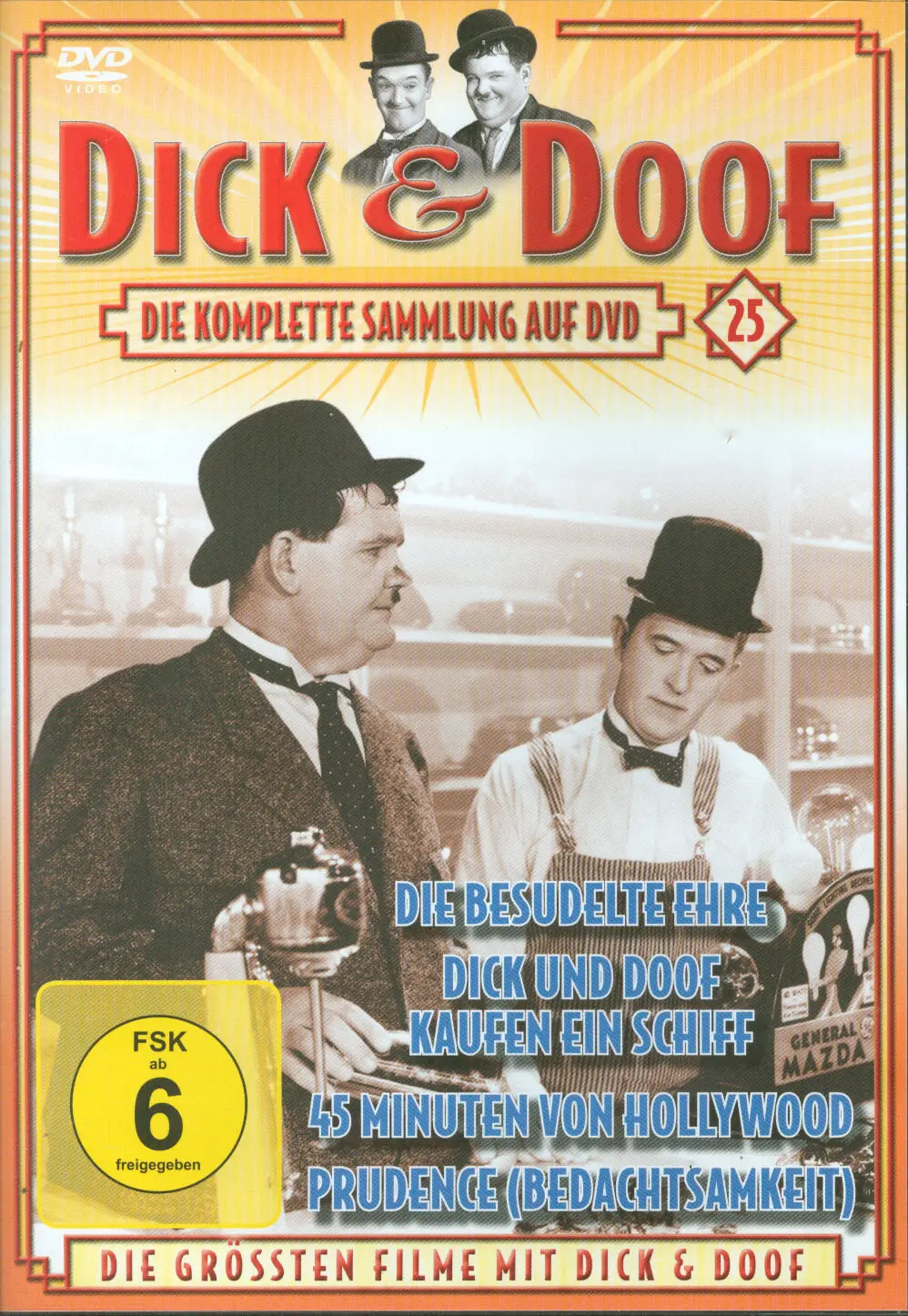
For the casual moviegoer, '45 Minutes from Hollywood' might feel like an archaeological dig, more academic interest than pure entertainment. Its pacing is slower than modern comedies, and its humor relies on a singular, extended gag that can grow tiresome. However, for those with a keen interest in film history, particularly the silent era and the origins of Hollywood's biggest stars, it is absolutely worth watching.
Short Answer: Yes, for film enthusiasts and historians, but not for casual viewers seeking modern entertainment.
It offers invaluable historical context.
It showcases early performances of legendary actors.
Its humor is charmingly anachronistic.
For all its historical allure, as pure entertainment, it struggles to hold its own against the best silent comedies, let alone contemporary fare. It's a stepping stone, a fascinating footnote, but not a standalone masterpiece. Its greatest value lies in its ability to transport us to a specific moment in time, offering a window into the creative ferment of early Hollywood.
'45 Minutes from Hollywood' is an intriguing historical artifact, a fascinating curio from the dawn of Tinseltown. It’s a film that offers more value as a historical document than as a standalone piece of compelling entertainment. While its central comedic premise is clever, its execution is often stretched thin, relying heavily on the novelty of its concept and the star power of its fleeting cameos. It is not a forgotten masterpiece, nor is it a cinematic revelation. It is, however, an essential watch for anyone dedicated to understanding the evolutionary tapestry of silent comedy and the remarkable convergence of talent that defined the Hal Roach studio. Approach it with an archaeologist's eye and a historian's appreciation, and you will find its modest treasures. For casual viewing, however, you might find yourself The Tourist, looking for a more engaging destination.
IMDb —
1918
Community
Log in to comment.