DbcultAccessing Vault...
Cult Review
Senior Film Conservator
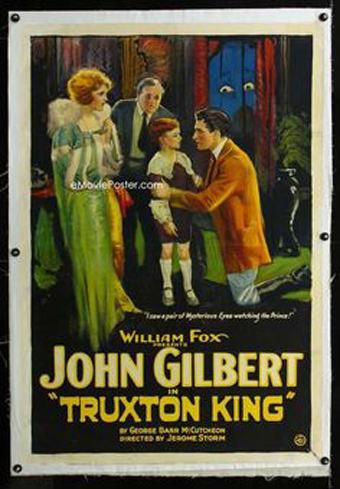
When the silent era birthed a film that dared to fuse swashbuckling adventure with a tender romance, Truxton King emerged as a singular artifact of early Hollywood ambition. Directed by a team whose names have largely faded into archival footnotes, the picture nonetheless commands attention through its audacious narrative premise: an American wanderer, fresh from the bustle of New York, steps onto the moss‑laden cobblestones of Graustark, a kingdom that feels simultaneously mythic and meticulously staged.
The story unfolds with a simplicity that belies its underlying complexity. Tru‑King (portrayed with a roguish charm by Michael D. Moore) is not a hero born of destiny; he is a man chasing the promise of adventure, a motif that resonated with 1920s audiences still reeling from the aftermath of war. His first encounter with Prince Robin, a sprightly six‑year‑old played with precocious gravitas by a child actor, sets a tone of innocence juxtaposed against the looming menace of political intrigue. Aunt Lorraine (the luminous Winifred Bryson) appears as a figure of aristocratic poise, yet her eyes betray a yearning for something beyond the gilded cage of royalty.
The narrative accelerates when Truxton, wandering the palace corridors, overhears a conspiratorial whisper: a faction within the court plans to assassinate Prince Robin and seize the throne. The subsequent arrest, a scene drenched in chiaroscuro lighting, positions Truxton as both victim and catalyst. His escape—executed with a blend of physical agility and clever subterfuge—propels the film into a kinetic chase that traverses secret tunnels, moonlit gardens, and the very heart of the castle’s fortified walls.
Winifred Bryson’s Lorraine is perhaps the most layered performance in the film. Without a spoken line, Bryson communicates through expressive eyes, subtle hand gestures, and a posture that oscillates between regal detachment and vulnerable yearning. The revelation that Lorraine is herself an American—an echo of Truxton’s own expatriate longing—creates a poignant symmetry that elevates their eventual union from mere plot convenience to an emblem of transatlantic kinship.
Michael D. Moore, though relatively early in his career, infuses Truxton with a swagger that feels both earnest and self‑aware. His physicality—whether scaling a crenellated tower or brandishing a sword in the climactic battle—conveys a kinetic energy that compensates for the absence of dialogue. The supporting cast, including the stoic Mark Fenton as the loyal captain and the comic relief provided by Otis Harlan, round out a tableau that feels both expansive and intimately human.
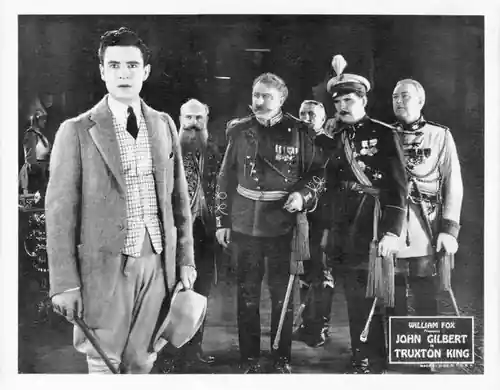
Cinematographer Paul Schofield (also credited as a writer) employs a palette of stark whites and deep shadows that renders Graustark as a dreamlike realm. The use of low‑angle shots when introducing the castle underscores its imposing majesty, while close‑ups on Truxton’s face during moments of peril draw the viewer into his internal conflict. The film’s set design—particularly the throne room, resplendent with towering columns and gilded tapestries—evokes a sense of opulence that rivals contemporary epics like Scaramouche.
The chase sequences deserve special mention. Edited with a rhythm that anticipates modern action cinema, the cuts are swift yet coherent, allowing the audience to follow Truxton’s frantic dash through labyrinthine passages. The final siege, a tableau of torches flaring against a night sky, is orchestrated with a meticulous attention to spatial geography; every arrow, every footstep feels deliberately placed, heightening the suspense.
Beneath the surface spectacle, Truxton King interrogates the notion of belonging. Both Truxton and Lorraine are expatriates navigating a foreign sociopolitical landscape, their American identities serving as both a source of alienation and a bridge to each other. The film subtly critiques the aristocratic rigidity of Graustark, suggesting that true nobility stems from moral courage rather than hereditary title.
The motif of rescue—Truxton rescuing Robin and Lorraine, and later rescuing the kingdom itself—mirrors the broader American mythos of the self‑made hero. In a post‑World War I context, audiences would have found solace in a narrative where an ordinary individual can alter the course of a nation’s destiny.
When juxtaposed with contemporaneous adventure dramas such as A Gentleman from Mississippi, Truxton King distinguishes itself through its fusion of fairy‑tale romance and political intrigue. While the former leans heavily on comedic misadventures, Truxton’s tale is a tighter, more earnest exploration of loyalty and love. Moreover, the film’s visual language anticipates later swashbucklers like Scaramouche, particularly in its use of grand set pieces and choreographed swordplay.
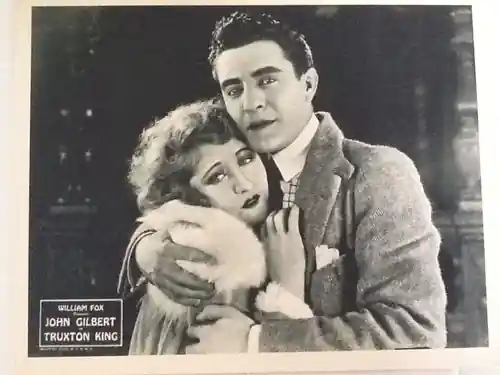
In terms of narrative structure, the film bears a faint resemblance to the melodramatic beats of Little Eva Ascends, especially in its climactic revelation that the heroine shares the hero’s cultural roots. This device, while perhaps predictable to modern eyes, was a powerful emotional catalyst for audiences of the 1920s, reinforcing the era’s fascination with transnational romance.
Although Truxton King has not achieved the enduring fame of D.W. Griffith’s epics, its preservation status—thanks to recent restoration efforts—allows contemporary cinephiles to appreciate its craftsmanship. The film’s exploration of identity, its daring action set‑pieces, and its heartfelt romance render it a valuable case study for scholars examining the evolution of adventure cinema.
For modern viewers, the film offers a window into a period when Hollywood was still defining its narrative grammar. The absence of synchronized sound forces reliance on visual storytelling, a skill that modern directors occasionally emulate to evoke nostalgia or to challenge the audience’s imagination.
In sum, Truxton King is a compelling amalgam of daring escapade, tender romance, and political suspense, all rendered in the stark beauty of silent cinema. Its strengths lie in the magnetic chemistry between its leads, the meticulous production design, and a narrative that, while rooted in its era, speaks to universal themes of courage and love. For aficionados of classic film, the movie provides a rewarding immersion into a world where an American’s wanderlust can reshape the destiny of a kingdom.
If you are seeking a film that balances high‑octane action with emotional depth, and that showcases the silent era’s capacity for sophisticated storytelling, Truxton King should sit prominently on your watchlist.
IMDb —
1923
Community
Log in to comment.