DbcultAccessing Vault...
Cult Review
Senior Film Conservator
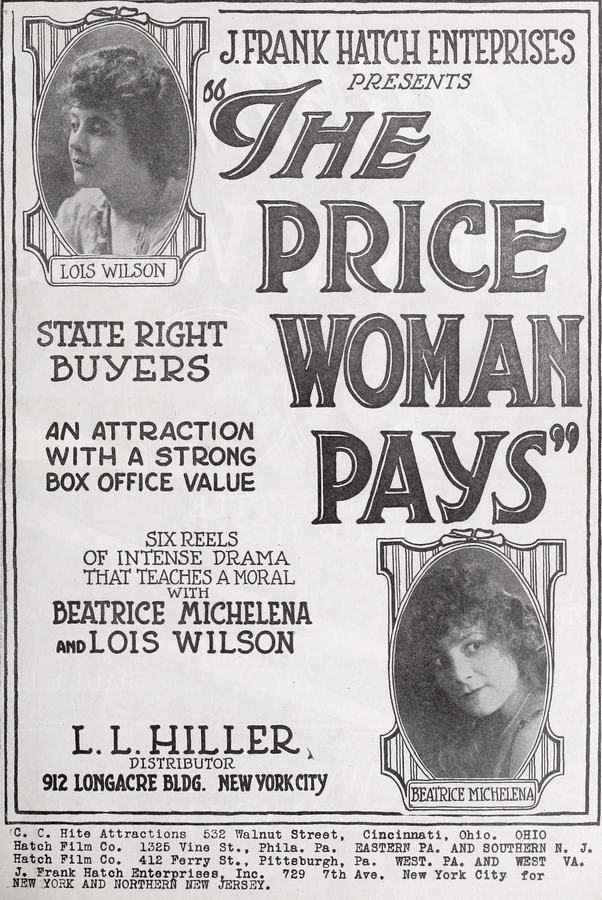
The year 1919 was a pivotal juncture in cinematic history, a period where the medium began to shed its nickelodeon skin and embrace the complex architectural demands of feature-length storytelling. In this landscape, The Price Woman Pays stands as a fascinating, if somewhat didactic, artifact of social anxiety. Directed with a certain rhythmic precision by William Scott, the film functions as both a cautionary tale and a psychological exploration of the adolescent female psyche during an era of rapid social transition.
At the heart of this narrative is Lois Wilson, whose portrayal of Louise provides the emotional ballast for the film's more fantastical elements. Wilson, who would later achieve immortality in The Covered Wagon, displays here a nuanced vulnerability that elevates the material above mere melodrama. Unlike the protagonists in The Spite Bride, who often navigate their social constraints through external defiance, Wilson’s Louise is a character defined by internal conflict—a battle between the burgeoning desires of youth and the rigid moral scaffolding of her upbringing.
The most striking element of the film is its explicit reliance on the Faustian mythos. By introducing the story of Faust as a literal text within the film, the screenwriters create a meta-narrative that mirrors the protagonist's own journey. This is not merely a stylistic flourish; it is a structural necessity. When Louise’s mother hands her the book, the film shifts from a contemporary social drama into a realm of high expressionism. The sequences involving Marguerite’s enshroudment in darkness are visually arresting, utilizing primitive yet effective lighting techniques to signify moral decay.
This use of literature as a moral prophylactic is a recurring theme in silent cinema, yet here it feels more visceral. We see echoes of this thematic weight in other contemporary works like The Golden Lotus, where the consequences of desire are similarly amplified through cultural or literary archetypes. However, The Price Woman Pays distinguishes itself by making the reading process the catalyst for the film's entire third act.
The cinematography in the dream sequence is particularly noteworthy. As Louise transitions from the safety of her bedroom into the labyrinthine dangers of the city, the visual palette shifts. The city is presented as a predatory organism, a stark contrast to the pastoral innocence of the schoolyard scenes. The use of shadows and the framing of the urban skyline evoke a sense of vertical dread that culminates in the harrowing ten-story window sequence. This scene, which predates the more famous skyscraper stunts of Harold Lloyd, is handled with a grim seriousness that emphasizes the stakes of Louise’s perceived moral failure.
One cannot help but compare the urban alienation depicted here with the atmosphere found in Money or even the darker segments of The American Way. The film suggests that the modern city is a space where the soul is constantly up for auction, much like the bargain struck by Faust himself. The "wicked boys" who lure Violet and Louise are not merely individual antagonists; they are symbols of a broader, systemic corruption that the film seeks to expose.
While Lois Wilson is the undisputed star, the supporting cast provides essential texture. William Scott, pulling double duty as director and actor, brings a grounded presence, while Beatriz Michelena (though her role is often overshadowed in later retrospectives) adds a layer of intensity that was a hallmark of her career. The chemistry between the girls—Violet’s reckless abandon versus Louise’s cautious observation—creates a tension that drives the first half of the film. This dynamic is far more nuanced than the binary morality found in The Miner's Daughter, as it acknowledges the genuine allure of the forbidden.
The character of Violet serves as a tragic foil. Her journey to the distant city and her subsequent betrayal by a false promise of marriage reflect the very real social fears of the "white slave traffic" that dominated the headlines of the 1910s. In many ways, the film acts as a cinematic companion to the sensationalist journalism of the era, yet it manages to maintain a poetic distance through its dream-logic structure.
The revelation that the film’s climax is a dream is a trope that modern audiences might find frustrating, yet within the context of 1919, it was a sophisticated narrative tool. It allows the film to explore the darkest possible outcomes of its characters' choices without permanently scarring the protagonist or alienating the audience. This "safe" exploration of trauma is a hallmark of early moralistic cinema, similar to the resolutions seen in The Rosary.
Furthermore, the dream sequence functions as a psychological purge. Louise doesn't just learn a lesson; she experiences the trauma of her potential downfall in a way that is ontologically real to her. When she wakes up, her decision to share the lesson with Violet is not an act of judgment, but one of survival. The film posits that the imagination, fueled by great literature, can be a powerful tool for moral fortitude.
Technically, the film is a product of its time, yet it shows flashes of brilliance in its editing. The cross-cutting between the reading of Faust and the visualization of the story is handled with a fluidity that suggests an advanced understanding of montage. The intertitles are not merely expository; they are often poetic, reflecting the high lexical diversity of the source material they are referencing. This elevates the film above the standard fare of 1919, such as No Money, No Fun, which relied more heavily on slapstick and physical comedy.
The set design of the ten-story apartment is also worth noting. It captures the claustrophobia of the urban environment, a setting that would become a staple of later film noir. The window, as a threshold between the domestic interior and the lethal exterior, becomes a powerful symbol of the precariousness of the female position in society. It is a visual echo of the themes found in Time Locks and Diamonds, where the domestic sphere is constantly under threat from external criminal elements.
To understand The Price Woman Pays, one must view it through the lens of post-war America. The traditional values of the Victorian era were clashing with the burgeoning freedom of the Flapper era. The film is a reactionary piece, attempting to bridge this gap by using a classic of European literature to reinforce traditional American values. It shares a certain DNA with Peggy, which also dealt with the navigation of youth in a changing world, though Scott’s film is significantly darker in its execution.
While some might dismiss the film as a relic of a bygone paternalistic age, such a reading ignores the genuine artistry involved in its production. The performances, particularly by Wilson and Gleason, are imbued with a sincerity that transcends the didactic plot. The film’s exploration of the female gaze—specifically how women observe and interpret the dangers posed by men—is surprisingly ahead of its time. It doesn't just show Louise being saved; it shows her processing the mechanics of her own salvation through intellect and imagination.
In the broader canon of silent cinema, this film deserves a place alongside more recognized masterpieces for its ambitious attempt to blend high literature with popular entertainment. It lacks the cynicism of A Bid for Fortune and the sheer experimentalism of Les heures - Épisode 4: Le soir, la nuit, but it possesses a unique moral gravity that is entirely its own. It is a film that demands to be watched not just for its historical value, but for its evocative visual storytelling and its sophisticated use of narrative framing.
Ultimately, The Price Woman Pays is a testament to the power of the moving image to serve as a mirror for the soul. It reminds us that every choice has a cost, and that the greatest prices are often paid in the currency of one's own peace of mind. For fans of silent cinema, this is an essential viewing experience that provides a window into the moral and social anxieties of a world on the brink of modernism.
IMDb 6
1935
Community
Log in to comment.