DbcultAccessing Vault...
3.9/10
Senior Film Conservator
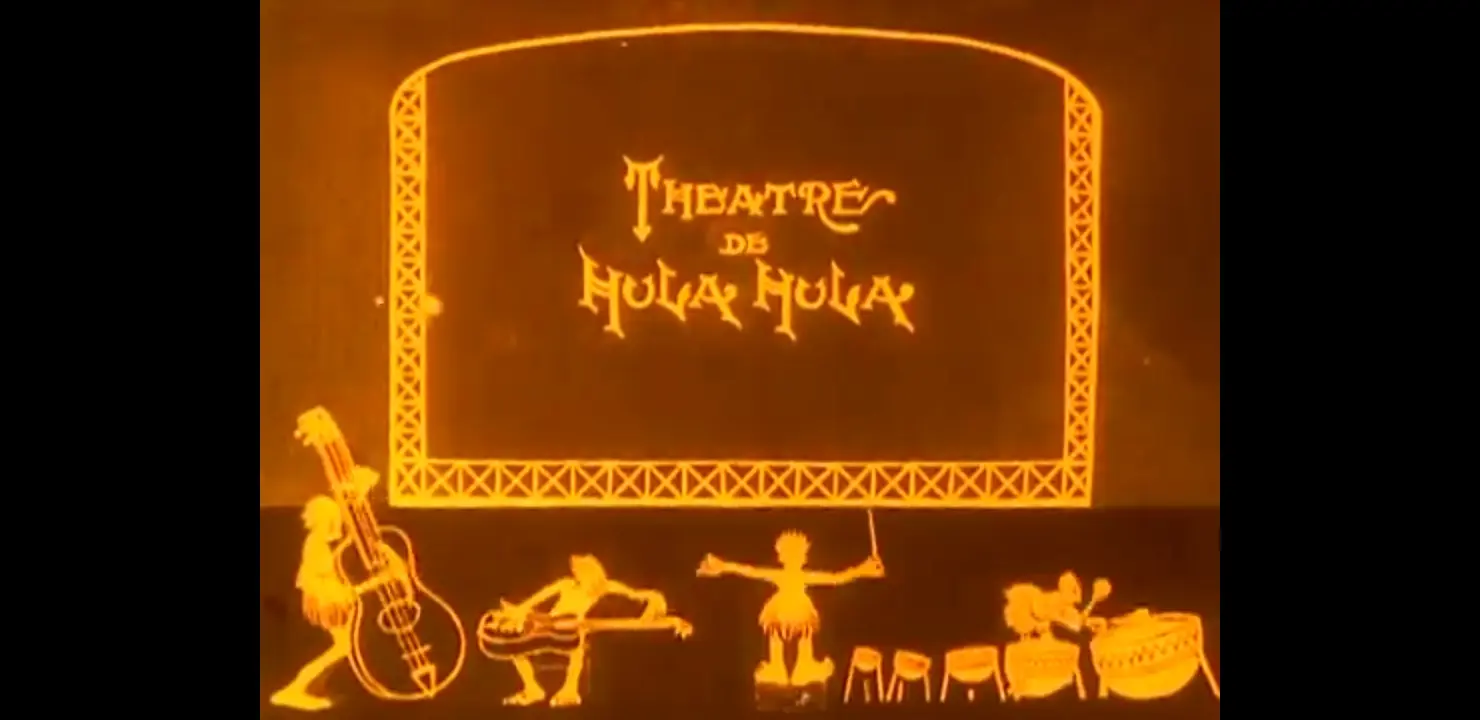
A definitive 3.9/10 rating for a film that redefined the boundaries of cult cinema. Le Theatre du hula hula remains a cornerstone of transgressive art.
Is this film worth watching today? Short answer: Yes, but only if you are a dedicated historian of the silent era. For the casual viewer looking for a narrative thrill, this will feel like a static museum exhibit rather than a living piece of media.
This film is specifically for those who find beauty in the grain of old celluloid and the evolution of human performance. It is absolutely not for anyone who requires dialogue, fast-paced editing, or a coherent three-act structure to stay engaged.
Before diving into the historical weeds, let us be direct about the film's impact. This film works because it captures a raw, unpolished moment of cultural exchange, showing how the Western world fetishized 'the exotic' through early camera lenses. This film fails because it lacks the technical dynamism found in contemporary works of 1920, often feeling more like a recorded stage play than a cinematic achievement. You should watch it if you want to understand the roots of the 'performance film' genre and how it compares to more narrative-heavy silent works like The Masquerader.
To answer the question of value, one must define what they seek from cinema. If you seek a journey, look elsewhere. If you seek a document, stay here. Le Theatre du hula hula is a brief, flickering candle in the dark room of film history.
It provides a direct look at the artifice of the 1920s. The costumes, the exaggerated movements, and the static camera placement all scream of a time when the industry was still figuring out its own language. It is a necessary watch for scholars, but a difficult one for the uninitiated.
The primary draw of the film is its title—the 'hula hula.' In 1920, this was not just a dance; it was a symbol of the 'other.' The film treats the performance with a mixture of reverence and voyeurism. Unlike the more grounded dramas like Still Waters, this short film leans heavily into the spectacle of the unknown.
The cinematography is remarkably simple. The camera sits at a mid-range distance, mimicking the perspective of a front-row audience member. There are no close-ups to emphasize emotion, and no tracking shots to follow the rhythm. This creates a strange sense of detachment. You are watching a performance, but you are never invited to be part of it. It is a cold, observational style that contrasts sharply with the warmth found in A Circus Romance.
The lighting is surprisingly flat. In many silent films of the era, such as Dämon und Mensch, we see the early use of shadow and light to create mood. In Le Theatre du hula hula, the lighting is utilitarian. It exists only to ensure the dancer is visible. This lack of visual depth is one of the film's biggest flaws, yet it also reinforces its status as a documentary-style capture of a theatrical event.
The acting—if one can call it that—is entirely physical. The dancer's movements are the 'script.' There is a specific moment halfway through where the dancer pauses, looking directly at the lens. It is a jarring break of the fourth wall that reminds the viewer they are being 'shown' something. This is a common trope in early 'trick' films and shorts, but here it feels more like a professional courtesy from the performer to the audience.
The pacing is brisk, as is the nature of short films from this period. However, within its short runtime, it manages to feel repetitive. The dance doesn't evolve; it simply exists. When compared to the narrative complexity of The Fatal Sign, this film feels like a step backward in terms of storytelling, but perhaps a step sideways in terms of cultural documentation.
When we look at other films released around the same time, like Manhattan or Anita Jo, we see a world in flux. While some directors were pushing the boundaries of what a camera could do, the creators of Le Theatre du hula hula were content to let the camera be a passive observer. It lacks the urban energy of the New York-centric films or the emotional weight of German Expressionism.
It shares more DNA with Looney Lens: Pas de deux in its focus on movement, but it lacks the playful experimentation with the lens itself. It is, quite simply, a straight recording. This honesty is its best quality. It doesn't pretend to be anything other than a view of a stage.
Pros:
1. Authentic 1920s costume and set design.
2. Short runtime makes it an easy historical 'snack.'
3. Provides a baseline for how far cinematography has come.
Cons:
1. Visually repetitive and static.
2. Zero character development or emotional stakes.
3. The 'exoticism' can feel dated and uncomfortable to modern sensibilities.
It is impossible to discuss this film without touching on the colonial gaze of early 20th-century France. The 'hula' presented here is likely a far cry from authentic Hawaiian tradition. It is a Parisian interpretation—a 'Theatre' version. This adds a layer of unintentional irony to the film. It is a performance of a performance. It is as much about French culture as it is about the dance itself.
In this way, it mirrors the social commentary found in The Poor Boob, albeit less intentionally. It shows what the public was willing to pay to see. They wanted a glimpse of the 'wild,' safely contained within the frame of a screen or the proscenium of a stage. The film is a cage for a culture it doesn't fully understand.
Le Theatre du hula hula is a fascinating failure. It fails as a 'movie' by any modern metric, yet it succeeds as a time capsule. It is a blunt instrument of a film. It hits one note and stays there. But that note is a pure, unadulterated sound from 1920.
If you are watching it to be entertained, you will be disappointed. If you are watching it to learn, you will be enriched. It lacks the polish of Marga, Lebensbild aus Künstlerkreisen, but it possesses a strange, haunting simplicity that is hard to forget. It is a ghost of a performance, flickering in the digital age. It works. But it’s flawed. And in that flaw, we find the truth of early cinema.
IMDb 5.8
1937
Community
Log in to comment.