DbcultAccessing Vault...
3.7/10
Senior Film Conservator
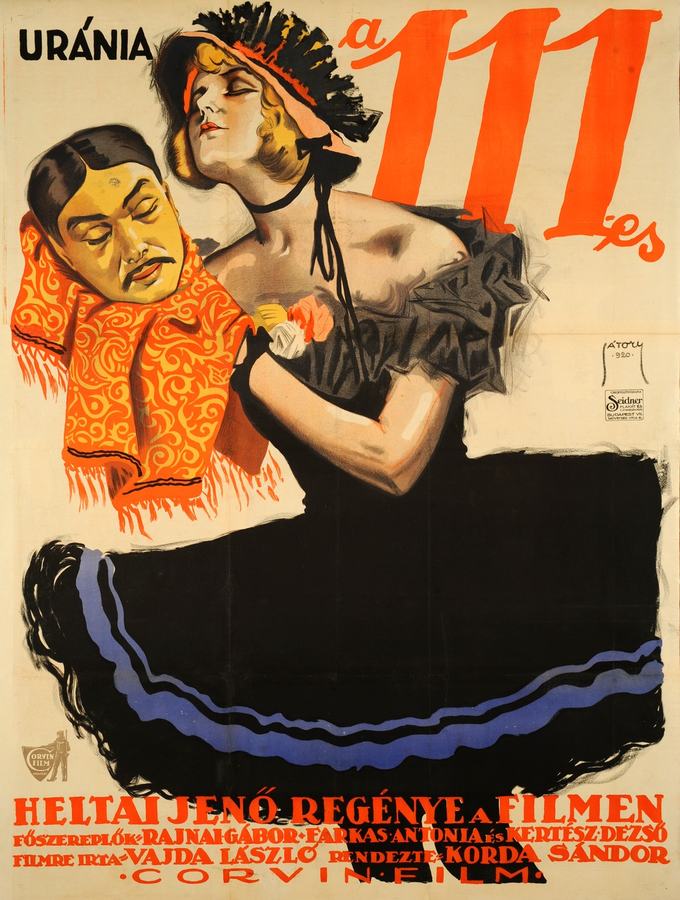
A definitive 3.7/10 rating for a film that redefined the boundaries of cult cinema. A 111-es remains a cornerstone of transgressive art.
The first time I watched A 111-es I kept misremembering it as a sound picture—so relentless is the clatter of wheels that the optical strip seems to vibrate with sonic memory. Hungarian audiences in 1920 had no such luxury; they leaned forward, ears starved, while the projector’s mechanical stutter became the train’s pulse. Ninety-something years later the illusion still works: you swear you hear pistons, even though the only audio is the dry rustle of celluloid passing through sprockets.
Director Pál Fejös—half surgeon, half poet—treats the locomotive as a horizontal cathedral. Low-angle shots of the boiler turn brass pipes into Gothic ribs; overhead lamps halo the lovers like votive candles. The camera itself hitches a ride, gliding on dollies bolted to the carriage floor, so every lurch of the train becomes a moral jolt. Compare this to the static respectability of Christa Hartungen or the stagy interiors of The Thirteenth Chair: Fejös stakes his drama on kinetics, on the conviction that modern love is inseparable from modern speed.
The dancer Mari (a combustive María Corda) boards with a single suitcase and a pair of legs insured by a vanished empire. Her compartment mate, János (the angular, saturnine Jenö Törzs), carries slide-rules instead of pistols, yet every graphite smudge on his cuff feels like a crime scene. They speak in the shorthand of people who have already slept together in their minds; the film’s first third is a master-class in erotic ellipsis—gloved fingers brushing lamp switches, ticket stubs traded like lockets of skin.
Enter the Countess (Bäby Becker in furs so voluminous they deserve separate billing). She claims to be fleeing White Terror reprisals, but her eyes are fixed on Mari with the predatory tenderness of someone rewriting her own diary. From here the narrative fractures into cubist triangulation: identities swapped, letters forged, a single gold sovereign that changes hands more times than a stripper’s G-string. The script—by Ladislaus Vajda and Jenö Heltai—owes less to conventional thriller mechanics than to Freud’s case studies: every object is fetish, every delay a parapraxis.
Cinematographer István Eiben shot the exteriors on frost-bitten mornings when the Danube exhaled steam like a dragon. The negative was then solarized—an avant-garde flourish rare for 1920—so the train’s plume turns into ectoplasmic neon. Inside, light ricochets off brass railings, scarring faces with diagonal scars of brightness that anticipate noir by two decades. You can trace the DNA of this look in later Stuart Webbs: Das Panzergewölbe, yet Fejös arrives there first, bootlegging German Expressionism into a Magyar vernacular.
Watch how Corda’s profile dissolves into the train’s rounded window: cheekbone and steel share the same curve, suggesting woman and machine are interchangeable parts of a single erotic engine. When she lifts her skirt to adjust a garter, the camera tilts thirty degrees—just enough to make the gesture feel like a heist, as if she were stealing our gaze and stashing it under the seat.
Corda, reputedly allergic to rehearsal, acts on instinct and amphetamine. She flits between registers—comedienne tragedienne, coquette mystic—sometimes within a single iris-in. Törzs counters her centrifugal blaze with a centripetal hush; his stillness is so absolute you could calibrate railway clocks to it. Becker, caught between them, weaponizes ambiguity: every line reading arrives in quotation marks, as though she were citing a self she hasn’t decided to become.
The supporting cast—Gábor Rajnay as a conductor who knows too many timetables, Jenö Balassa as a gendarme whose mustache droops like a spent candle—function as living punctuation. Their faces, half-lit by swinging lamps, embody the film’s governing anxiety: history is being rewritten nightly, and yesterday’s loyal functionary is tomorrow’s surplus carcass.
Made in the interregnum between Kun’s Red Terror and Horthy’s white reprisals, the film smuggles political trauma inside a lovers’ triangle. The gold hoard hidden under the coal is clearly monarchist booty, yet the screenplay refuses to bless any faction. Instead it proposes erotic anarchy: the only reliable currency is the momentary flush of skin on skin, everything else—crowns, regencies, border stamps—devalues overnight.
Compare this skepticism to the moral absolutism of Es werde Licht! 1. Teil, where redemption arrives via social gospel. Fejös offers no such balm; his lovers survive by continually re-inventing their crimes, like forgers frantically re-inking passports while the train barrels toward a frontier that keeps shifting.
Editing patterns mimic the galopp of Hungarian czardas: two-shot, close-up, exterior insert, repeat—each cycle faster, until the viewer feels strapped to the cowcatcher. The longest take lasts maybe eight seconds; most run three. Yet Fejös varies cadence by inserting single-frame flash-photos of peripheral objects—a gloved hand, a state seal—like Morse code from the unconscious. The effect is a stroboscopic ballet that predates Soviet montage and rivals the kinetic assault of Cross Currents made across the Atlantic the same year.
Mari’s agency scandalized censors: she negotiates fares, bribes guards, and at one point literally drives the locomotive while the men squabble over ideology. Yet the film complicates easy proto-feminist readings. Her power depends on performative femininity—tears as lubricant, lipstick as lock-pick. When she finally swaps her silk dress for the countess’s fur, the gesture reads less as upward mobility than as existential drag, an acknowledgment that identity under late capitalism (or its feudal echo) is cosplay all the way down.
A 4K restoration premiered last winter at the Budapest Cinematek, scanned from the only surviving nitrate print discovered in a Transylvanian cellar. The grayscale is so tactile you can taste coal dust. For the rest of us, a 1080p rip with optional English intertitles circulates among cine-clubs; search the hashtag #A111esRestored and follow the trail of rail nerds who subtitle out of love, not profit. Physical media addicts can pre-order the upcoming Blu from MephistoRegion, which promises a commentary by scholar Éva Forgács and a chamber-score reworking of Bartók’s Bagatelles for string quartet and prepared piano.
If the doomed trysts of The Manxman left you seasick, try Fejös’s landlocked vertigo. Those who admired the ocular obsession of Die Augen der Schwester will find its political twin here: both films posit sight as both weapon and wound. And anyone trawling for early examples of female road movies—before Thelma et Louise were gleams in Khouri’s eye—should buy a ticket for this clattering time machine.
A 111-es is less a museum relic than a hand-grenade with the pin half-pulled; it explodes the notion that silent cinema is quaint. Every dissolve feels like a trespass, every iris like a peephole drilled into your own repressed voyeurism. The train reaches its terminus, the lovers vanish into historical static, but the reverberation stays with you—an afterimage branded on the retina like sparks from a passing locomotive that refuses to stay in the past.
IMDb 5.6
1920
Community
Log in to comment.