Summary
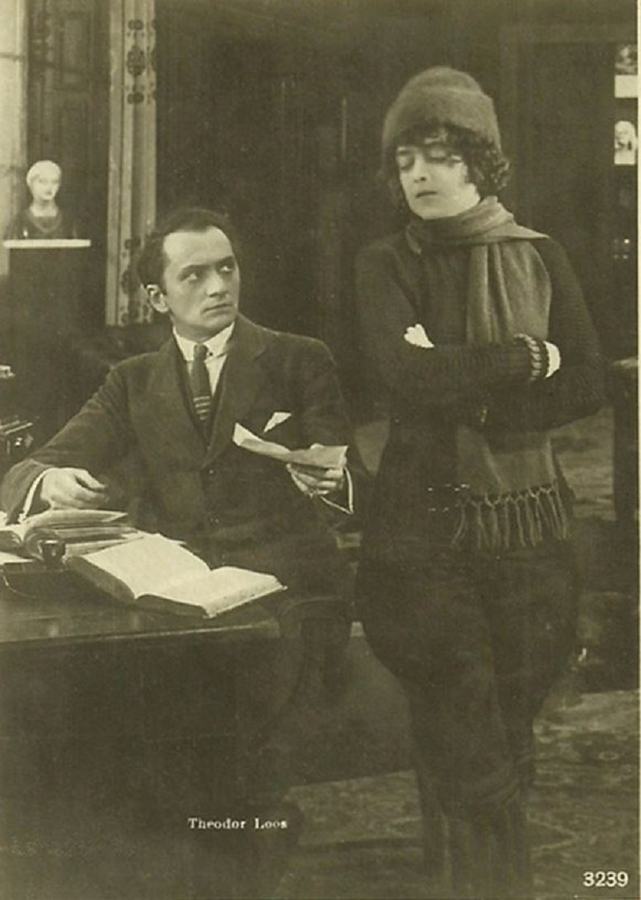
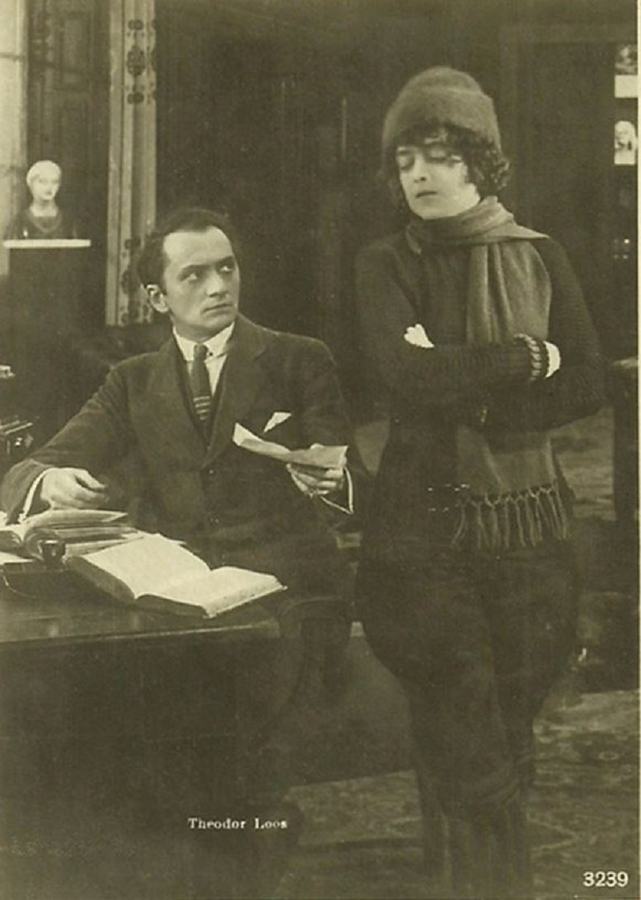
In the hush of a sanatorium where daylight drips like iodine across cracked tile, a war-shattered surgeon (Theodor Loos) returns to the spectral embrace of his childhood home—now a convalescent cloister run by his once-beloved sister (Rosa Porten). Her eyes, twin lagoons of unspoken trespass, reflect back every suppressed guilt that crawls beneath his medals. She keeps nightly vigils over a ward of mute, bandaged women whose faces have been erased by shells and scalpels; they drift through corridors in chalk-white gowns, their identities dissolved, their silence purchased by the state. The brother, summoned to graft new faces onto these living blanks, discovers that the raw material for reconstruction is harvested from his own lineage: ancestral portraits slashed, wax death-masks stolen, a library of faces bequeathed by a family that once trafficked in anatomical curiosities. Each graft he performs peels another layer from the siblings’ shared past: a childhood game of swapping identities beneath theater greasepaint, a mother who taught them that the soul resides in cartilage, a father who documented every blinking tic in glass-plate negatives now shelved in the cellar. When the first patient unveils her post-operative visage, the surgeon recoils—she wears the exact likeness of their mother at twenty-five, a resurrection in living epidermis. Night after night, the sister leads him deeper into the mansion’s catacombs where phonographs loop the hiss of battlefield hospitals and cinematographs project looping footage of his own surgeries, edited into occult mandalas. The boundary between donor and recipient liquefies: the surgeon’s reflection appears on the bodies of the mutilated, while his own features begin to flake like old wallpaper. In a final nocturnal rite, the sister straps him to the operating chair, swaps their eyes—literally, with antique cataract knives—and forces him to watch through her optic nerves the montage of every cruelty he ever inflicted under the banner of science. Dawn finds the staff arriving to an ostensibly routine ward: the surgeon, now wearing the sister’s gaze, signs discharge papers for a parade of faceless women who march into the fog bearing his original visage. The film closes on the siblings seated side by side on the sanatorium’s frozen fountain, their irises swapped, their mouths sealed with surgical thread, their shared heartbeat audible on the soundtrack like distant artillery.
Review Excerpt
"
The first time I encountered Die Augen der Schwester, it was a single 35 mm nitrate reel smuggled inside a hollowed-out medical dictionary. The celluloid smelled like iodine and old velvet; it practically whispered malpractice. What unspools is not merely a film but an act of post-mortem intimacy—German Expressionism’s answer to the Hippocratic Oath, performed with a bone-saw.
Rosa Porten, writing and starring, engineers a hall-of-mirrors narrative in which every reflection costs you a slice o..."