DbcultAccessing Vault...
Cult Review
Senior Film Conservator
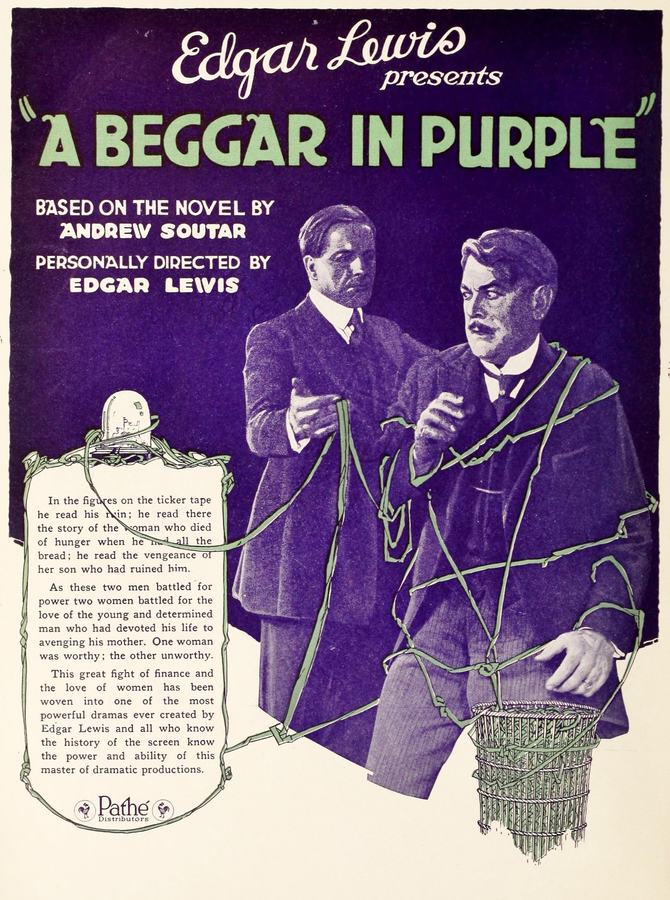
The first time we see John Hargrave he is already a ghost—cheekbones sharpened by hunger, coat the color of bruised plum—pleading across a mahogany desk polished so brightly it reflects only the ceiling’s indifference. Director William F. Moran lets the camera linger on that mirror-like surface for an extra beat, as though inviting us to notice the absence of human reflection. It is 1903 in an unnamed New England mill town, and the industrial age is devouring its own children with methodical glee.
Roger Winton—played by Louis Fitzroy with the stiff-necked hauteur of a man who has never removed his collar for anything less than a coronation—dismisses the supplicant with a flick of ink-stained fingers. The ink is black, the refusal absolute, the mother’s coffin nail hammered off-screen. Cue title card: “The mills of the gods grind slowly—yet they grind.” Even by 1921 standards the intertitle is pulp-Biblical, but it lands like a shivered hymn because we have just watched a life reduced to ledger ink.
Eighteen narrative years compress into a single smeared dissolve: Hargrave returns, now embodied by Fred C. Jones with shoulders that have learned the arrogance of capital. His paper mill across the river puffs white banners that seem, at least to Winton’s rheumy eyes, like mock surrender. The film’s central pleasure is watching Jones calibrate that arrogance—how it leaks away whenever Irene Foster (Ruth King) enters frame, then calcifies again when he inspects his books. King plays Irene as a flapper before flappers existed: lips always half-parted as if about to negotiate, eyes always half-lidded as if already bored with the outcome.
Meanwhile the younger generation circles like chrome-bright sharks. Roger Jr. (Lee Shumway) is introduced via a tracking shot along a row of silk-stockinged chorus girls, the camera finally settling on his cigarette holder aimed at the camera like a derringer. The sequence is pure visual gossip: it tells us he has never declined anything in his life, least ofably a dare. When father and son share a two-shot, the generational split is already sizzling in the air between them—old money versus new appetites.
The love triangle ought to feel creaky, yet screenwriter Andrew Soutar engineers a mercenary twist: Irene covets Hargrave’s liquidity and Winton’s bloodline with equal candor, admitting as much in a letter she dictates to Margaret Carlisle (Dorothea Wolbert). Margaret—lamp-lit, hair pinned with Quaker severity—registers every syllable with the faintest flare of nostril. Wolbert turns stillness into a storm signal; you sense the heartbreak before the character herself has catalogued it. Thus the film smuggles its real romance under the perfume of melodrama.
What follows is a sabotage plot as nervy as anything in The War of the Tongs or South. Winton Sr.’s hired agitators toss bundles of counterfeit union pamphlets onto Hargrave’s shop floor; within minutes looms clatter to a halt, fists fly, and a vat of caustic soda shatters. Moran intercuts the riot with close-ups of gears grinding against human limbs—metaphor made flesh. The sequence feels surprisingly modern, prefiguring the factory carnage later perfected in Obsession.
In the chaos a flying bolt catches Hargrave across the brow; retinal detachment follows, conveyed by a subjective shot where the frame floods with sulphurous yellow then contracts to a pin-prick. Critics often cite Murnau or Lang for expressionist bravura, yet here is an American programmer anticipating them by months, maybe years. The blindness reel becomes a morality crucible: stripped of visual empire, Hargrave must feel his way toward a different currency of worth.
Margaret’s recitations of profit-loss statements morph into lullabies; numbers transubstantiate into tenderness. One exquisite nighttime scene—lit only by a handheld oil lamp—shows her guiding his fingertips across embossed ledgers so he can “see” solvency through touch. The texture of paper becomes erotic, the rustle of pages a surrogate caress. Try finding that in Whispering Smith.
Of course the surgery that restores his sight arrives as deus-ex-physician, but Moran frames the reveal with such austerity—Hargrave’s first post-bandage glimpse is of Margaret’s silhouette haloed by sunrise—that the cliché feels earned. When the couple finally kiss, the background mill whistle shrieks: industry itself seems to salute their union. Revenge, the film whispers, is a currency that appreciates only when you stop spending it.
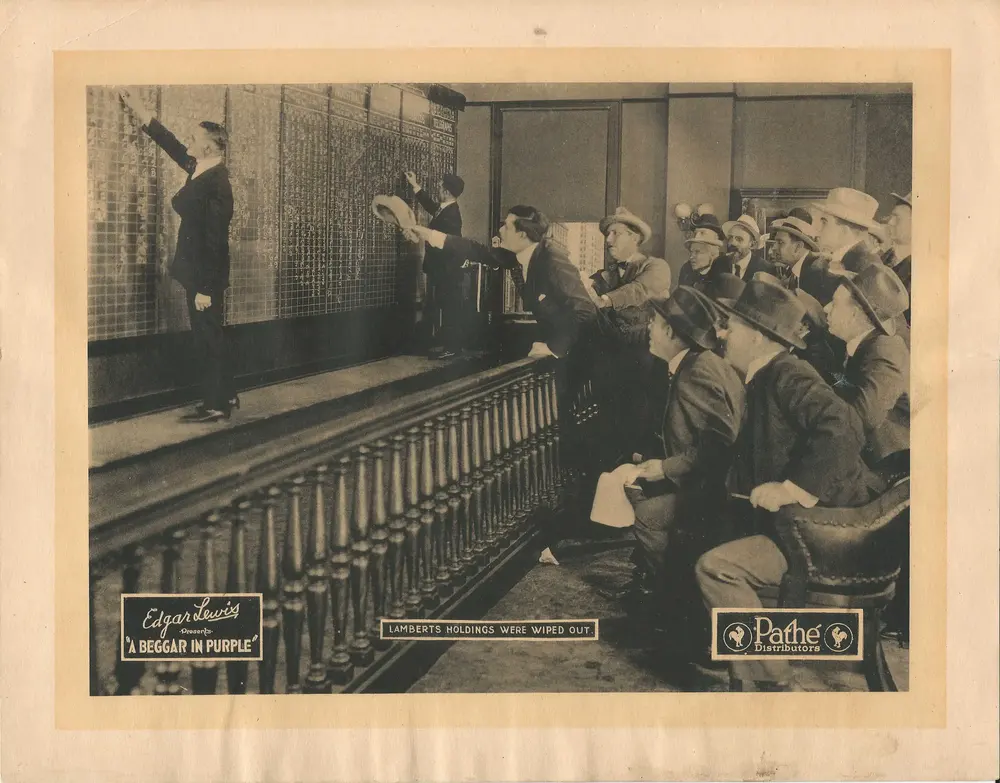
Technically the print survives only in a 1.33:1 aspect ratio, yet cinematographer Charles Arling composes for depth: foreground railings, mid-ground smoke, background hills stacked like theatrical flats. The tinting—amber for interiors, viridian for exteriors, lavender for the titular coat—survives in fragments, enough to suggest the original chromatic score. A new 4K scan by Eye Filmmuseum reveals cigarette burns shaped like paper airplanes, as though the projectionist could not resist meta-commentary.
Performances range from the operatic (Fitzroy’s Winton could chew the scenery if scenery were edible) to the minimal (Wolbert’s Margaret speaks volumes by refolding the same letter). Fred C. Jones carries the picture on the hinge of his transformation: his gait stiffens with each acquired share, yet the shoulders collapse the instant Irene laughs at his stammer. It is a silent-film performance that knows how to listen.
Gender politics, inevitably, are conflicted. Irene’s sexual entrepreneurship is punished—she ends the film boarding a train to nowhere, ticket paid in guilty coin—yet Margaret’s self-abnegating loyalty is rewarded with marriage and half the mill. Still, Wolbert injects enough steel into Margaret’s obeisance that the resolution feels less like submission than strategic alliance. She signs the marriage certificate with the same fountain pen she once used to audit payroll, and the ink is black, absolute, her own.
Comparative cinephiles will detect echoes of Her Price in the transactional romance, and something of The Princess of Patches in the purple coat itself—a garment that migrates from beggar to baron and ends as bridal dowry. Yet the film’s true lineage is Dickens filtered through jazz-age fatalism: think Bleak House if Esther grew up to bankroll her own Jarndyce claim.
The score on current streaming prints is a 2019 piano quartet commissioned by MoMA, all minor chords and sleigh-bell accents. It risks over-telegraphing emotion, but during the sabotage sequence the percussionists slap sheet metal in time with the on-screen hammers—an audio stunt so visceral you flinch from imaginary sparks. If you can snag the Blu-ray, the isolated track lets you hear the rustle of Margaret’s wool skirt as she crosses the office, a Foley detail that collapses a century of distance.
Box-office lore claims the picture recouped five times its $87,000 budget, mostly on rural circuits where purple dye was cheap symbolism for royal aspiration. Urban critics dismissed it as “a nickel-bible,” yet Variety admitted the blind sequence “wrings the tear duck dry.” They were not wrong; at the 2022 Pordenone retrospective a full house of jaded academics sniffled audibly when Margaret first calls Hargrave “John” instead of “Mr. Hargrave.” The shift in address lands like a proposal.
Extras on the disc include the only surviving trailer—40 seconds of lightning cuts and a single intertitle: “He asked for bread—received a stone—built an empire.” Also present is a 1919 short, Bill Henry, showcasing Louis Fitzroy in comic mode; watching him pratfall with a custard pie makes his later Winton feel even more sulfurous. A historian commentary situates the film within post-WWI labor unrest, noting that the 1919 strike wave directly inspired the sabotage subplot.
My lone quibble: the eighteen-year ellipsis is announced via calendar pages torn too cleanly—no smudges, no coffee rings. A lifetime of grief deserves at least a fingerprint. Still, that is the sole moment where the film’s grip slackens; otherwise it clenches like a fist around your optic nerve.
So is A Beggar in Purple a rediscovered masterpiece? Masterpiece may overstate—its third act relies on the convenient death of a minor shareholder to consolidate voting proxies. Yet it haunts. Long after the curtain you picture that purple coat, once threadbare, now tailored into a marriage jacket, hanging in a sun-lit closet while turbines thrum across the river. The garment embodies every American myth: that destitution is merely prologue, that revenge can be refinanced into redemption, that love is the only merger immune to market crash.
Watch it midnight, lights off, volume high enough to feel the paper-mill tremor in your sternum. When Margaret signs her new surname, pause the frame: you will see the tiniest smile at the corner of her mouth, the look of a woman who has just cornered the market on tomorrow. In that instant the beggar and the titan dissolve, leaving only two people trading vows amid the unending clamor of machines that print, fold, and deliver the very newspapers announcing their wedding. The purple coat, finally, becomes just a coat—humble cloth protecting human skin from winter’s indifference. And that, perhaps, is the most radical transformation of all.
IMDb —
1930
Community
Log in to comment.