DbcultAccessing Vault...
Cult Review
Senior Film Conservator
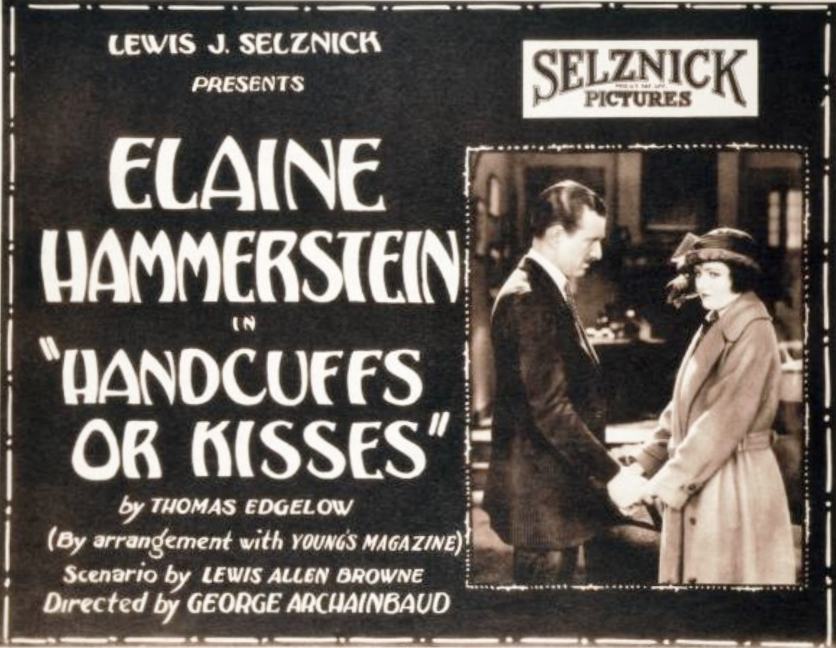
The year 1921 stood as a precipice for American cinema, a moment where the naive morality plays of the previous decade began to bleed into the sophisticated, often cynical social dramas of the Jazz Age. George Archainbaud’s Handcuffs or Kisses is a quintessential artifact of this transition, a film that weaponizes the tropes of Victorian melodrama to deliver a blistering indictment of the American penological system and the precariousness of female autonomy.
The film opens with a domestic betrayal that sets the stage for the protagonist’s descent. Lois Walton, portrayed with a haunting, wide-eyed vulnerability by Elaine Hammerstein, is not merely an orphan; she is a victim of a calculated social erasure. Her aunt, a figure of Dickensian malice, orchestrates her incarceration in a reformatory—a setting that Archainbaud renders with a stark, proto-expressionist gloom. Unlike the more whimsical treatments of delinquency found in Her Winning Way, this film treats the reformatory as a site of genuine trauma.
Inside the walls, the camera lingers on the faces of the inmates, a gallery of forgotten souls. The riot sequence is a masterclass in silent-era tension. The editing becomes frenetic, capturing the claustrophobia of the dormitory and the visceral fear of the girls. Lois’s silence after the riot isn't just a plot point; it’s a profound character study in the psychology of the oppressed. She refuses to speak not out of loyalty to her tormentors, but out of a paralyzing recognition that in this system, words are useless. This thematic weight reminds one of the somber tones found in Sacred Silence, where the absence of voice mirrors the absence of justice.
Enter Peter Madison. Played by Robert Ellis (though many eyes today are drawn to the early appearance of a young Ronald Colman), Madison represents the Progressive Era’s faith in legal reform. His investigation into the reformatory provides the film’s moral compass, yet Archainbaud is careful not to make his intervention too easy. The parole Lois receives is not a true liberation; it is merely a transfer of custody. This is a recurring motif in early 20th-century cinema—the idea that a woman’s life is a series of hand-offs between male-dominated institutions.
The transition from the bleak, monochromatic misery of the reformatory to the upscale home of the doctor is jarring. Here, the film takes a turn into the 'predatory domesticity' subgenre. The doctor, who should be a figure of healing, becomes a figure of threat. His advances toward Lois are filmed with a lingering, uncomfortable proximity that highlights the lack of safe spaces for a paroled ward of the state. This segment of the film mirrors the domestic instability explored in The Blindness of Divorce, suggesting that the 'home' is often as dangerous as the 'prison.'
Perhaps the most fascinating segment of Handcuffs or Kisses is the introduction of Miss Dell and her gambling house. Miss Dell, played with a sharp, calculating elegance by Julia Swayne Gordon, serves as a dark mirror to Lois’s aunt. While the aunt used the law to discard Lois, Miss Dell uses the law’s margins to exploit her. The gambling house is a den of artifice, a place where social standing is a currency and human lives are the stakes.
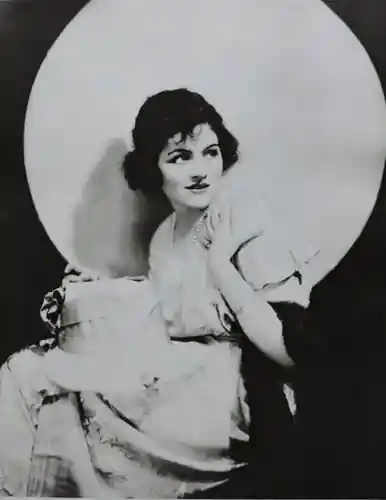
Lois’s role as a social secretary is a clever narrative device. It places her at the intersection of the underworld and the upper crust. The attempts to force her into a marriage with Leo Carstairs provide the film’s climactic tension. Carstairs is the archetype of the dissolute wealthy youth—a character type that would become a staple of the roaring twenties. The contrast between his hollow opulence and the genuine, albeit rugged, integrity of Madison creates a classic melodramatic conflict. It’s a thematic cousin to the class struggles depicted in Human Stuff, though Archainbaud’s direction gives it a more polished, urban sheen.
Visually, the film is a triumph of early 1920s lighting. The use of shadow in the reformatory scenes creates a sense of impending doom, while the high-key lighting in the gambling house emphasizes the superficiality of the environment. Archainbaud uses the frame to isolate Hammerstein, often placing her in the center of a crowded room where she remains spiritually alone. This visual isolation reinforces the film’s central thesis: that Lois is a woman without a country, caught between a state that hates her and a society that wants to consume her.
The performance of Elaine Hammerstein deserves a modern reassessment. While silent acting is often criticized for its histrionics, Hammerstein exhibits a remarkable restraint. Her reactions to the doctor’s advances and Miss Dell’s machinations are conveyed through subtle shifts in posture and the haunted look in her eyes. She carries the weight of the film’s social critique on her shoulders, making the audience feel the exhaustion of a soul that has been constantly on the run. This level of nuanced performance is what separates a standard melodrama from a work of lasting impact, much like the grit seen in The Wilderness Trail.
To watch Handcuffs or Kisses today is to recognize the enduring nature of its themes. The 'reformatory' may have changed its name, but the systemic failure of the foster care and penal systems remains a contemporary crisis. The film’s title itself is a provocative binary: the 'handcuffs' of state control or the 'kisses' of a marriage that might just be another form of bondage. When Madison claims Lois as his wife at the end, it is framed as a rescue, but a modern viewer cannot help but wonder if she is simply moving into another cage, albeit a gilded one.
This ambiguity is what makes the film so compelling. It doesn't offer easy answers. Even as it provides a 'happy' ending, the preceding eighty minutes of trauma suggest that the scars Lois carries will not disappear with a wedding ring. It lacks the simplistic optimism of Miss Crusoe or the escapist fantasy of Sea Sirens. Instead, it sits closer to the heavy realism of Zoya or the tragic overtones of If My Country Should Call.
In the vast landscape of silent cinema, many films are lost to the erosion of time or the shift in public taste. Handcuffs or Kisses survives as a potent reminder of the power of the medium to engage with difficult social realities. It is a film of textures—the cold stone of the prison, the silk of the gambling den, the steel of the handcuffs. It is a story of a woman’s resilience in a world designed to break her, and while it utilizes the language of 1921, its message is timeless.
Whether you are a devotee of Ronald Colman’s early career or a scholar of the social hygiene films of the silent era, this production is an essential watch. It bridges the gap between the moralizing of the past and the realism of the future, standing as a testament to Elaine Hammerstein's talent and George Archainbaud’s directorial vision. For those who enjoyed the narrative complexity of The Joyous Liar or the spectacle of Salambo, this film offers a more grounded, yet equally gripping, cinematic experience.
IMDb 7.2
1925
Community
Log in to comment.