DbcultAccessing Vault...
Cult Review
Senior Film Conservator
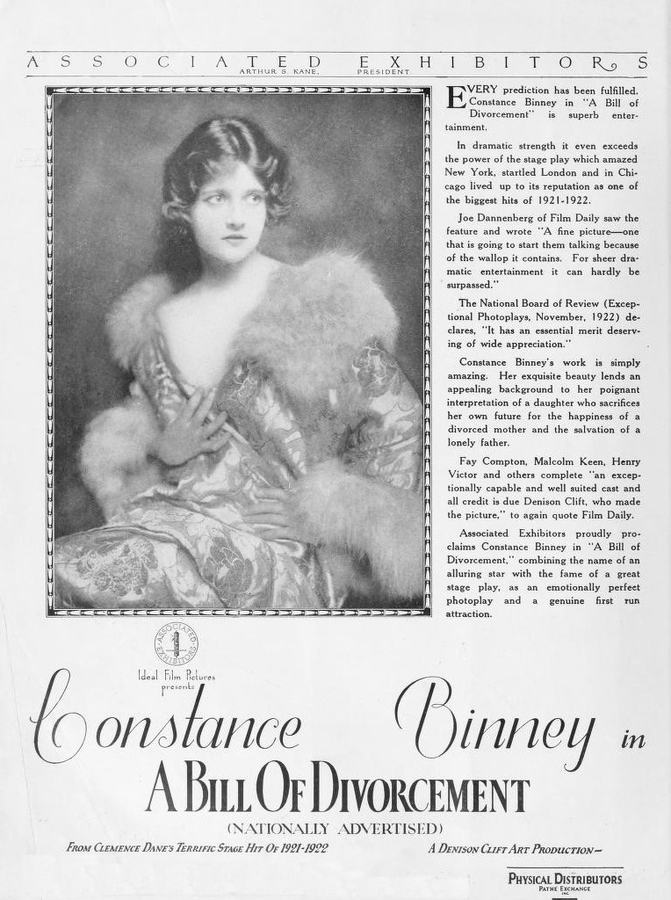
A century ago, celluloid was still learning how to scream. Clemence Dane and Denison Clift hand the medium a family bible, a marriage certificate, and a straight razor, then step back while the Fairfield clan bleeds across twenty-four frames per second.
The film arrives like a frost-bitten letter you find behind the wainscoting: ink spidered, sealing-wax cracked, yet able to raise the pulse. British International Pictures shot it in the winter of 1921, between influenza waves and coal strikes, and you can almost smell the damp soundstage through the gauze. Fewlass Llewellyn’s Hilary is not the wild-eyed ogre of early cinema cliché but a gentleman erased from the inside out; his pupils flicker with the bewildered politeness of a man who has forgotten which fork is for suicide. Watch the way he touches the drawing-room wall—palms flat, as though reading Braille in the wallpaper—searching for a room that no longer exists.
Sylvia Young’s Sydney, all clavicle and conviction, is the axis on which the moral kaleidoscope tilts. In close-up her irises register a succession of micro-eclipses: first the recognition of her father’s relapse, then the arithmetic of sacrifice, finally the steeling of a spine that will never again bend toward personal joy. Silent acting is too often dismissed as semaphore; Young proves it can be cardiography.
The mother, Fay Compton’s Margaret, wears denial like an Edwardian collar: starched, exquisite, slowly throttling. When the solicitor intones the archaic statute that keeps her tethered to a living corpse, Compton lets the blood drain from her lips—one heartbeat earlier than the audience expects—so that the law’s absurdity lands inside our own marrow.
Direction by Denison Clift is an exercise in chiaroscuro domesticity. Corridors stretch into Caravaggio gloom; windows explode with over-exposed yuletide snow, making every exit look like a leap into annihilation. Note the sequence where Sydney paces the length of the dining table: the camera glides parallel, keeping the laden Christmas pudding at frame-edge like a temporal bomb. Each step subtracts a year from her biological clock. The pudding steams; the camera doesn’t blink.
Clemence Dane’s scenario—adapted from her West End hit—treats madness less as pathology than as inheritance. The fear that Hilary’s "taint" might seep down the bloodline haunts every engagement ring and christening mug. Eugenics discourse, still fashionable cocktail chatter in 1922, is here rendered as emotional terrorism. When Sydney rips her engagement locket from her throat, the gesture is not mere romantic renunciation; it is a genetic resignation letter.
Compare this with the same year’s The Boundary Rider, where parental duty is a saddle to be cinched and ridden toward sunset optimism. Divorcement refuses that frontier myth; its geography is interior, its frontier the limbic system.

Malcolm Keen, as the barrister Grey, supplies the film’s only reliable moral gyroscope yet remains fatally peripheral. Keen’s posture—shoulders squared like a Georgian façade—contrasts with Hilary’s stoop, suggesting that sanity is architectural, madness entropic. Watch how Grey removes his gloves: slow, surgical, as though peeling back his own scruples. He knows that every legal remedy is also a mutilation.
Henry Victor’s Captain Hesketh, Sydney’s fiancé, arrives with naval swagger and departs emasculated by a single sheet of parchment. Victor’s jawline is so classically heroic it hurts; the film delights in snapping that heroism like a wishbone. One intertitle—"I release you"—and the empire’s future collapses into a woman’s tear.
Dora Gregory’s comic maid, though ostensibly relief, carries a subplot of servitude-as-witness. Her whispered rosary in the scullery is the film’s conscience ticking off Hail Marys for every audience member who has ever fled a sick relative.
Cinematographer Claude L. McDonnell lights faces as though they were already daguerreotypes: cheekbones limned by kerosene glow, eyes sunk into Rembrandt shadow. The result is a premonition of memory itself—every frame already fading as you watch. When Hilary hallucinates the family’s earlier Christmas, the flashback is not sepia-tinted but over-cranked, motion stretched like taffy, time turned viscous with regret.
Intertitles, often a crutch, here function as sutures: white text on black, snapping shut the wound of silence. The most brutal—"I must stay, mother. You have lived your life."—arrives without musical cue, a guillotine in a cathedral. The absence of score on current restorations (the original accompaniment lost) paradoxically amplifies the horror; you hear your own respiration synchronize with Sydney’s breakdown.
Contrast this austerity with Chase Me Charlie’s carnival excess, released the same spring. Where that film flings custard pies at the fourth wall, Divorcement stares through it, daring you to blink first.
Modern viewers, armed with vocabulary like "emotional labour" and "caregiver burnout," will recognize Sydney’s martyrdom as an indictment of patriarchal realpolitik rather than saintly submission. The film cannily withholds catharsis: there is no deathbed reconciliation, no swelling orchestra to sanctify her choice. The camera exits the house, leaving her trapped in perpetual Christmas, a snow-globe martyr shaken whenever memory rewinds.
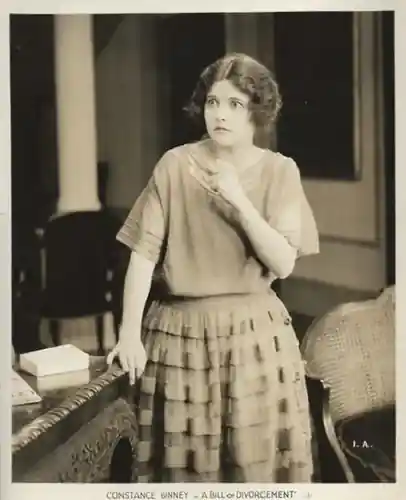
Yet the picture also implicates the mother. Margaret’s desire for autonomy—however reasonable—requires the amputation of her child’s future. Feminist critics have sparred over whether the narrative punishes ambition or exposes the zero-sum game forced upon women by archaic law. The genius lies in refusing to pick a side; both generations dangle over the same abyss.
Compare the dilemma to A Girl’s Folly, where a teenager’s wish for agency is rewarded with Technicolor romance. Divorcement knows such frivolity is a lie—at best a lullaby, at worst an epitaph.
For decades the only circulating print was a 9.5mm Pathescope abridgement, its emulsion scarred like a self-harm survivor. The 2021 BFI restoration, scanned at 4K from the camera-negative rediscovered in a Belgian convent, reveals textures previously smothered: the nub of velvet on Hilary asylum slippers, the dust motes dancing like iron filings in Margaret’s magnetic dread. The tinting scheme—amber for interiors, viridian for exteriors—restores emotional weather to each scene. Suddenly the film no longer feels ancient; it feels excavated.
Scholars comparing the extant cut with the original play’s script note that Clift excised an entire act of courtroom farce, wisely keeping the drama inside the hearth. The decision anticipates later chamber tragedies like Gates of Brass, where jurisprudence is a ghost that never materialises yet haunts every creaking stair.
Trace the DNA and you’ll find its progeny everywhere: Ingmar Bergman’s winter interiors, Mike Leigh’s matriarchal bloodletting, even the way Todd Haynes photographs quivering wallpaper in Safe. The notion that kindness can be a form of violence—loving someone to death—courses through Kenneth Lonergan’s Manchester by the Sea like an IV drip.
Yet mainstream memory has sidelined the film, partly because George Cukor’s 1932 talkie remake smothered it in Hepburn gloss. The earlier version—this one—remains feral, unprocessed by studio code. Watch it beside The Last Crusade’s paternal reconciliation fantasy and the silent picture feels like a slap with a wet rope: no map, no treasure, just the raw cost of devotion.
Great films deposit splinters; you walk out carrying someone else’s pain in your shin. A Bill of Divorcement leaves an entire yule log. It asks the unaskable: if sanity is a social contract, what happens when the only person updating the terms is the one whom society has already voided? And what does it mean to love someone enough to annihilate the version of yourself that they once cherished?
There are no answers, only the echo of a door shutting on Christmas morning while somewhere, out in the dark, a woman’s footprints fill with snow. The last intertitle flickers—"God bless us, every one"—but the words curdle in the throat. Dickens is quoted, but no redemption arrives, just the long ache of a promise kept at the expense of the keeper.
Watch it once, and you may believe you have seen a relic. Watch it twice, and you realise the relic is you.
IMDb 4.1
1927
Community
Log in to comment.