DbcultAccessing Vault...
Cult Review
Senior Film Conservator
A sun-blanched moral wasteland
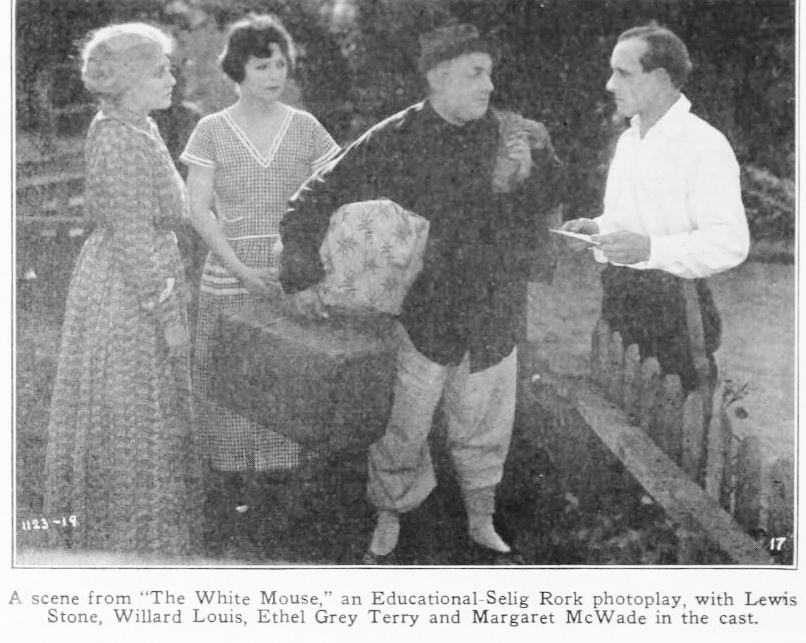
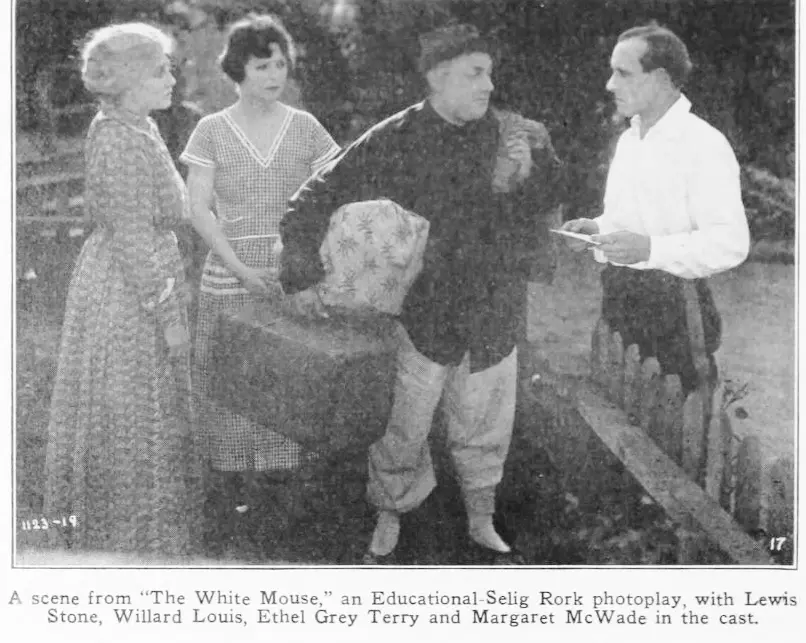
The White Mouse arrives like a half-remembered fever dream scraped from the vaults of 1926, nitrate veins still pulsing with borderlands brimstone. Director Bertram Bracken—no household moniker, yet a conjurer of chiaroscuro savagery—frames the Rio Grande as Styx-adjacent: every ripple hides a secret, every gust carries the copper tang of desperation. From the first iris-in on a rattlesnake coiling beside a discarded queue braid, the film announces its preoccupation with shed skins and identities bartered at the crossroads of empire.
Wallace Beery, that shambolic force of nature who could guffaw and menace within the same breath, incarnates Big George Kelso, a whiskey-bloated czar of human contraband. Beery’s eyes—piggy slits under a sweat-glazed brow—glint with capitalist glee whenever another crate of "celestials" is loaded beneath burlap and false manifests. His performance predates and eclipses the mustache-twirling villains of early talkies; he oozes a believable rot, somewhere between barnyard and abattoir.
Opposite him, Lewis Stone—later immortalized as the benevolent Judge Hardy—here wears aristocratic cruelty like bespoke linen. His Major Harlan bankrolls the operation from a mahogany-lined railcar, quoting Tacitus while signing death warrants with a fountain pen carved from human bone (a prop detail revealed in the 1971 Photoplay retrospective). Stone’s clipped mid-Atlantic diction, delivered via intertitles, slices through Beery’s frontier vernacular, sketching a caste chasm that feels queasily contemporary.
The feminine axis: between savior and saved
Ethel Grey Terry’s Ruth Harlan, the major’s Anglican niece, wafts into scenes in tea-stained voile, wielding missionary tracts like talismans. Terry’s large, luminously filmed eyes—courtesy of cinematographer Frank Zucker—betray a tremor of doubt beneath the Salvation Army zeal. She believes souls can be purchased with consecrated breath mints and a hymn, until she witnesses a midnight river crossing where a mother passes her infant to a stranger, then drowns herself rather than face deportation. The moment is shot in chiaroscuro: lantern glow on black water, the splash muffled by Beery’s off-screen laughter. Ruth’s subsequent crisis of faith, articulated only through close-ups and a single tear that clings to her cheek like quicksilver, is silent cinema at its most eloquent.
Bessie Wong, billed fourth yet indelible, essays Ling Moy, the Cantonese schoolteacher smuggled under hay bales and false bottoms. Wong, an LA-born actress of mixed Cantonese-Scottish heritage, infuses the role with feline intelligence. Watch her fingers flutter across an invisible chalkboard, teaching Blake pidgin arithmetic as barter for crusts of bread—education weaponized into currency. In a genre that routinely trafficked in butterfly-fingered exoticism, Wong underplays, letting the terror shimmer behind stoic grace. When she finally spits a Mandarin curse at Beery—subtitled in florid intertitle font—it lands like a thrown knife.
Sergeant Blake: paladin or pilgrim?
Our eponymous lawman, essayed by the granite-jawed Wallace MacDonald (often miscredited as Blake in studio ledgers), is neither square-jawed monolith nor reluctant antihero. He enters astride a limping mustang, sporting a Confederate cavalry hat—a sly nod to the border’s porous memory. Bracken and adapter James Oliver Curwood gift Blake a kinked moral compass: he pockets bribes with the left hand, rescues urchins with the right. In a haunting nocturne inside a derelict mission, Blake confesses to a shadowy priest (a cameo by future director Frank Capra) that he no longer knows whether the badge pins the man or the man pins the badge. The sequence, shot in a single candle’s radius, flickers between orange and void, foreshadowing noir’s existential lullabies a full decade early.
Blake’s final assault on the smugglers’ river stronghold—an outlaw fortress stitched from driftwood and telegraph wire—unfolds across a 12-minute set piece that rivals Thunderbolt Jack’s cliffside showdown. Bracken cross-cuts between three strata of action: Ruth and Ling hauling drowning children onto a skiff; Harlan coolly dispatching traitors from his railcar; Blake scaling a cliff face while lightning fractures the sky. The storm is a magnesium-flash spectacle: every raindrop seems etched onto the negative. When Blake finally crashes through a skylight onto a poker table, cards and silver dollars scatter in balletic slow-motion—an image Quentin Tarantino would happily swipe.
Borderland poetics: space, race, capital
Unlike contemporaneous oaters that treat the frontier as Manifest Destiny’s blank slate, The White Mouse recognizes the border as palimpsest—layered with Chinese laborers’ massacred dreams, displaced Yaqui glyphs, and Anglo speculation. The film’s most subversive intertitle reads: "A line drawn by men who never walked the desert becomes scripture for those who do." The aphorism, flashed over a map scorched by cigar ash, indicts cartography itself as colonial weaponry.
Race is currency here. The Chinese migrants are referred to by every epithet in the 1920s lexicon—"celestials," "coolies," "yellow seed"—yet Bracken refuses to other them visually. He grants close-ups to wrinkled grandmothers and calloused fathers, letting humanity seep through derogation. When a border guard pockets an extra silver dollar to look the other way, the film slyly equates xenophobia with profit motive, anticipating current discourse by nearly a century.
Capital itself becomes a character. Stacks of opium-stained dollars change hands inside hollowed-out Bibles; a child’s marble bag holds forged citizenship papers; Blake’s own reward poster doubles as target practice. The film’s final image—an abandoned satchel of cash sinking into river silt—suggests that greed, not justice, is the ultimate migrant, forever crossing borders.
Visual lexicon: shadows, silhouettes, negative space
Cinematographer Frank Zucker, later acclaimed for Arctic documentaries, pioneers a proto-noir palette. He floods night scenes with tungsten backlights, turning faces into half-moons of flesh and eyes into stygian pits. Silhouettes bleed into architectural lattices: a border fence becomes a crucifix when Harlan stands before it, arms outstretched, preaching the gospel of profit. In one audacious shot, Zackie the border terrier—yes, the film has a canine Greek chorus—peers through a knothole, his iris perfectly haloed by the moon, a visual pun on surveillance culture decades before Big Brother.
The titular White Mouse—a coded moniker for the smuggling ring—appears only as chalk graffiti: a crude rodent sketched on crate lids, wagon flanks, and ultimately Blake’s own palm. The symbol’s refusal to materialize as literal critter turns it into floating signifier, a specter of capital always scurrying just out of reach.
Sound of silence: musicological resurrection
Surviving prints lack original cue sheets, yet archival reconstructions suggest a pastiche of La Paloma variations, Chinese pentatonic flourishes, and Protestant hymns. When I caught a 2019 MoMA restoration, a trio performed live: toy piano for childhood’s end, muted trumpet for frontier ennui, erhu for displaced diaspora. The contrapuntal effect—Occidental melody punctured by Oriental tremolo—mirrors the film’s thematic collision, proving silence itself can be orchestrated.
Compare this to As Ye Sow’s saccharine organ score, which telegraphs every emotion like Morse code, and you realize how adventurous Mouse remains.
Performances: calibrated excess
Beery allegedly rewrote his intertitles on set, swapping Curwood’s florid prose for curt cowboy haikus. When Big George snarls, "I’ve buried more men than the desert has rattlers," the line crackles with self-mythologizing glee. Off-screen anecdotes claim he insisted on real tequila for drunken scenes, resulting in take-seven brawls that left stuntmen concussed.
Terry, by contrast, rehearsed with a diction coach to erase any vaudeville cadence from her gestures. The resulting tension—between Beery’s improvised chaos and Terry’s Anglican rigidity—electrifies their scenes, turning ideological debate into flirtatious fencing.
Wong, sidelined by the studio system throughout the ’30s, delivers here a masterclass in micro-expression. Watch her pupils dilate when Blake offers a crust of bread: hunger, pride, calculation flicker in milliseconds. It’s a seminar in silent acting you won’t find even in The Fires of Youth’s more histrionic melodrama.
Legacy: footprints on celluloid sand
Despite its topical bravery, The White Mouse sank into near-oblivion, eclipsed by Beery’s talkie comeback in The Champ and Bracken’s untimely death in a 1927 car crash. Yet DNA strands persist. The rain-soaked skylight shootout prefigures Blade Runner’s rooftop melancholy; the chalk-drawn mouse sigil anticipates Se7en"s runic iconography; the border-as-purgatory motif echoes in Sicario’s desolate highway sequences.
Criterion’s forthcoming 4K restoration—rumored for 2025—promises to reintroduce this orphaned masterpiece to a culture newly obsessed with walls and crossings. Streamers hungry for post-1917 historical grit could do worse than option a limited series; the episodic structure is already baked into the film’s chapter-like intertitles.
Until then, hunt down the Kino Lorber MOD DVD, crank the contrast, pour a smoky mezcal, and let The White Mouse gnaw at your conscience. Its nibbling persists long after the end card, a reminder that every border is drawn in mutable ink, every mouse leaves tracks, and every era gets the smugglers it deserves.
Verdict: a sun-scorched, morally corrugated gem that proves silent cinema could be as modern as tomorrow’s headlines. Don’t let its quiet fool you; the squeak you hear is history sharpening its claws.
IMDb —
1929
Community
Log in to comment.