DbcultAccessing Vault...
Cult Review
Senior Film Conservator
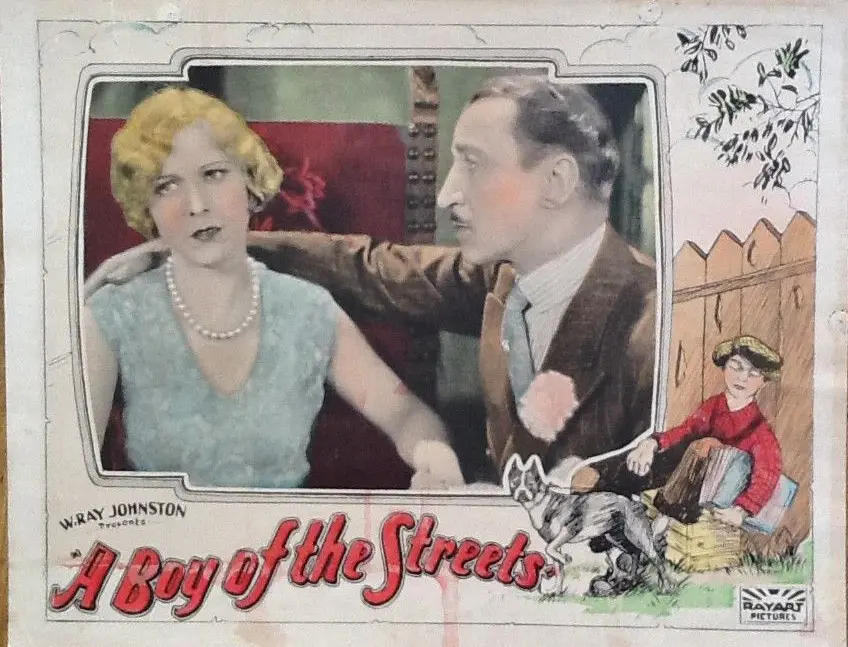
Is A Boy of the Streets worth watching today? The short answer is a qualified yes, particularly for those with an appreciation for silent-era cinema and a tolerance for its narrative conventions. This film is undeniably for cinephiles, historians, and viewers seeking a glimpse into early cinematic storytelling focused on moral redemption; it is decidedly not for audiences expecting rapid-fire plots, complex character psychology, or modern production values.
Released at the cusp of the sound era, A Boy of the Streets is a fascinating artifact. It’s a crime drama wrapped in a melodrama, a testament to the storytelling capabilities of its time, even as it grapples with themes that remain resonant. It works. But it’s flawed. This isn't a forgotten masterpiece, but it’s far from forgettable for the right audience.
Before we delve deeper, let’s get to the heart of what makes this film tick—and where it falters.
At its heart, A Boy of the Streets is a morality play, thinly veiled as a crime drama. We are introduced to Ned Dugan (Charles Delaney), a safe-cracker whose illicit skills are paradoxically driven by a noble ambition: to rescue his younger brother, Jimmy, from the pernicious influence of the city streets. This singular motivation grounds Ned’s character, making his criminal acts comprehensible, if not justifiable, in the eyes of the audience. He isn't a villain; he's a man trapped by circumstance, seeking a way out for his kin.
The plot, penned by Arthur Hoerl and Charles T. Vincent, ingeniously weaves coincidence into destiny. Ned’s final, ill-fated job – to steal papers for a crooked politician – leads him directly to the home of Mary Callahan (Betty Francisco). It is here, in a moment of heightened tension, that Ned discovers his injured brother is under Mary’s compassionate care. This revelation isn't just a plot device; it's the fulcrum upon which Ned’s entire moral compass pivots. The silent close-ups on Delaney’s face as he processes this discovery convey a world of internal conflict, far more effectively than any dialogue could.
Mary’s decision not to expose Ned is the true catalyst for his transformation. It’s a moment of radical grace, an act of faith in a man who, by all appearances, deserves only condemnation. This act of quiet defiance against societal norms is, for me, the film's most powerful beat. It’s a bold choice, and one that elevates the film beyond simple genre fare. It suggests that true redemption isn’t earned through punishment, but through the opportunity for a second chance, offered by an unexpected hand.
From this point, the narrative shifts from crime to consequence and, ultimately, to retribution. Ned’s subsequent actions—undermining the politician, securing Mary’s father’s freedom, and protecting her brother—are not merely repayments of a debt. They are active declarations of his new moral alignment. It’s a clean, almost too-perfect arc, but within the conventions of silent melodrama, it resonates deeply. The simplicity of the narrative is, in fact, one of its greatest strengths; it allows the emotional beats to shine without getting bogged down in intricate subplots.
The success of any silent film hinges entirely on the expressive capabilities of its cast, and A Boy of the Streets largely succeeds due to its lead performers. Charles Delaney as Ned Dugan is particularly compelling. He possesses a rugged charm that makes his criminal past believable, yet his eyes convey a profound weariness and an underlying decency. His transformation isn't sudden; it's a gradual unfolding, communicated through subtle shifts in posture, gaze, and the way he interacts with Mary and Jimmy.
Consider the scene where Ned is caught by Mary. Delaney’s initial reaction is a mix of panic and resignation, quickly giving way to a flicker of something akin to shame when he sees Jimmy. This layered performance prevents Ned from becoming a one-dimensional character. He’s not just a 'boy of the streets'; he’s a man burdened by them, striving for something better. His performance reminded me, in its earnestness, of some of the more straightforward heroes found in films like A Daughter of the Law, where moral rectitude triumphs over adversity.
Betty Francisco as Mary Callahan provides the necessary counterpoint to Ned's hardened exterior. Her portrayal is one of quiet strength and unwavering compassion. She’s not a damsel in distress; she’s an active agent in Ned’s redemption. Her decision to spare Ned is conveyed with a serene conviction that speaks volumes. It’s a testament to Francisco’s skill that she can embody such profound moral authority without uttering a single word. Her presence imbues the film with its moral center, making her the true hero of the story, not merely a love interest.
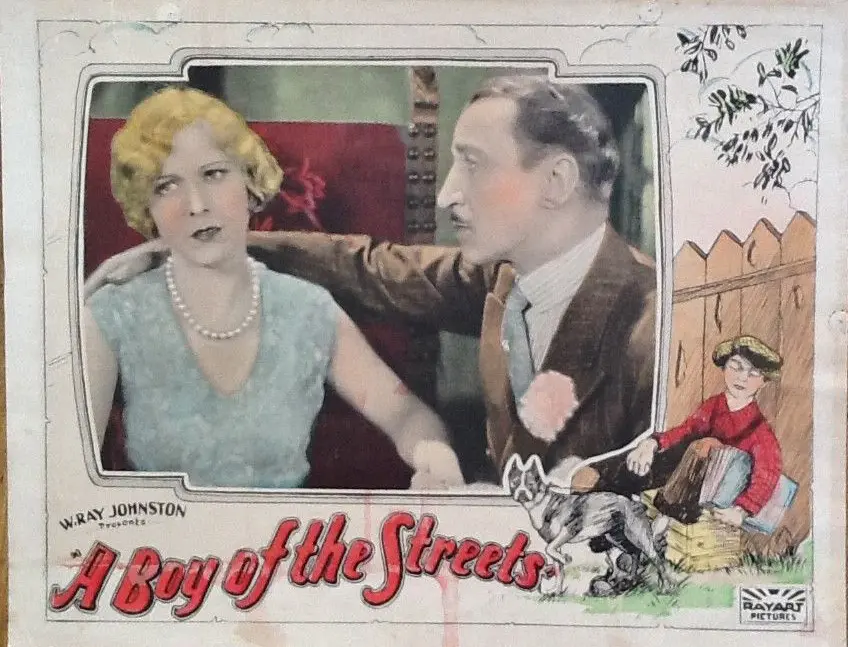
The supporting cast, while less developed, serves their purpose. The crooked politician, though a stock character, embodies the systemic corruption Ned is fighting against. Johnnie Walker as Jimmy, Ned’s younger brother, provides the emotional anchor, a visual representation of Ned’s motivation. The interactions, though brief, between Ned and Jimmy are crucial in establishing the stakes and Ned's deep-seated protective instincts.
The direction, while uncredited for a specific individual in some records, demonstrates a clear understanding of silent film aesthetics. The use of intertitles is economical, allowing the visuals to carry the brunt of the storytelling. This is particularly evident in the way the film establishes the contrast between Ned’s world and Mary’s. The opening scenes of the city are often grimy, with stark lighting and shadowed alleyways, immediately immersing the viewer in Ned's harsh reality. These visual cues are essential in establishing the stakes of his desire to escape.
Conversely, Mary's home is depicted with softer lighting, a sense of order, and warmth, even if humble. This visual dichotomy isn't subtle, but it's effective. It highlights what Ned is fighting for and the kind of sanctuary he hopes to create for Jimmy. The camera work, while not groundbreaking, is functional and serves the narrative well. There are effective close-ups that emphasize key emotional moments, such as Ned’s internal turmoil or Mary’s compassionate gaze, allowing the audience to connect directly with the characters’ inner lives.
One particularly astute observation is how the film uses physical space to denote character shifts. Ned's movements from the shadowy streets to the relative light of Mary's home, and then his purposeful stride as he confronts the politician, visually chart his moral progress. It’s a simple but powerful technique that leverages the visual medium to its fullest, proving that effective storytelling doesn’t always require elaborate set pieces or complex camera movements.
This is where A Boy of the Streets will likely divide modern audiences. The pacing is deliberate, even by silent film standards. Scenes are allowed to unfold at a measured tempo, giving the viewer ample time to absorb the visual information and emotional beats. For those unfamiliar with silent cinema, this can feel slow, even tedious. There are moments where a contemporary film would cut away, but A Boy of the Streets lingers, trusting the audience to engage with the expressions and actions on screen.
The tone is classic melodrama, replete with clear-cut heroes and villains, moments of high drama, and a strong moralistic undercurrent. While some might find this simplistic, it’s crucial to remember the context of its production. Silent films often functioned as moral lessons, and A Boy of the Streets adheres to this tradition. The emotional highs and lows are pronounced, designed to evoke strong, clear reactions from the audience. The villainous politician, for instance, is painted with broad strokes, his motives purely self-serving, making Ned’s eventual triumph all the more satisfying.
While the melodrama might seem quaint to some, it’s also undeniably effective in its earnestness. There’s a sincerity to the storytelling that bypasses cynicism. It asks the audience to believe in the possibility of redemption, in the power of good over evil, and in the strength of human connection to change a life. And in this, it largely succeeds, even if the journey feels a bit longer than we're used to.
Yes, A Boy of the Streets is worth watching today, but with a significant caveat. It requires an open mind and an appreciation for the historical context of its creation. It's not a film to put on for casual background viewing. It demands engagement with its unique form of storytelling.
For those who are fascinated by the evolution of cinema, it offers invaluable lessons. The performances, especially Delaney's, showcase the power of non-verbal communication. The narrative, while simple, is robust in its thematic exploration of redemption and sacrifice. It’s a window into a bygone era of filmmaking, rich with its own conventions and charms. You won't find modern special effects or intricate plot twists, but you will find a sincere, heartfelt story.
A Boy of the Streets is not a film that will redefine your understanding of cinema, nor will it likely top any 'best of' lists for the casual viewer. However, for those willing to meet it on its own terms, it offers a surprisingly potent and earnest tale of moral transformation. Its strengths lie in its clear emotional storytelling and the committed performances of its lead actors, who manage to convey a rich inner life without the benefit of spoken dialogue.
It's a testament to the enduring power of simple narratives and the visual poetry of silent film. While its deliberate pace and melodramatic flourishes might be an acquired taste, the core message of redemption and the impact of unexpected kindness remains timeless. It’s a film that quietly asserts its place in cinematic history, not with a roar, but with a sincere, heartfelt whisper. Give it a chance, and you might find a forgotten gem that reminds you of the foundational elements of storytelling.
IMDb 5.7
1936
Community
Log in to comment.