DbcultAccessing Vault...
Cult Review
Senior Film Conservator
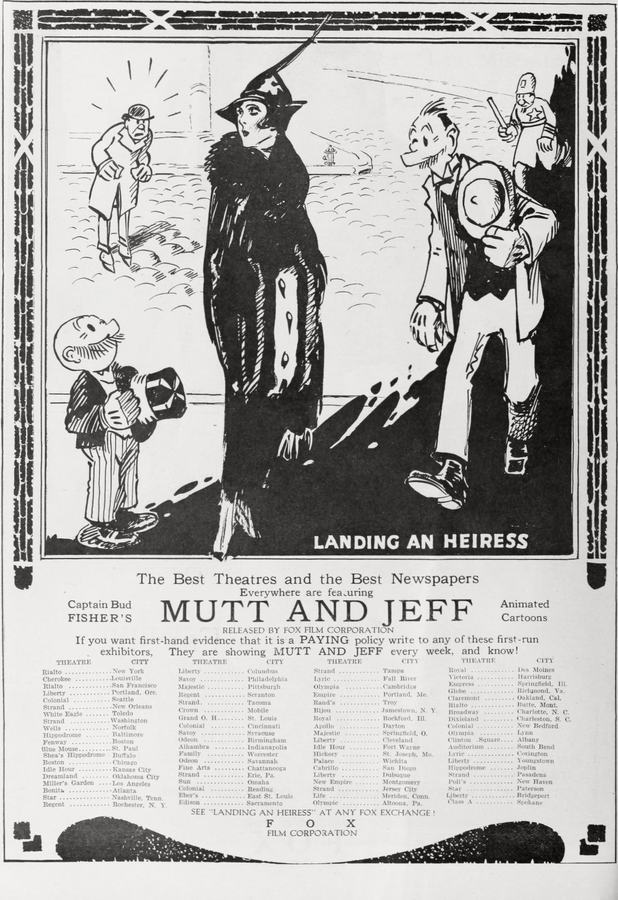
To witness Landing an Heiress is to peer through a dusty, yet remarkably clear, window into the primordial soup of American cinematic comedy. Bud Fisher, a name synonymous with the early proliferation of the comic strip, translates his ink-stained wit into a medium that was, in 1915, still grappling with its own identity. This film is less a narrative and more a rhythmic experiment in social friction. Fisher doesn't just write and perform; he imposes a cartoonist's logic upon the physical world, creating a space where gravity and social etiquette are equally susceptible to collapse.
The film’s central conceit—the pursuit of wealth through matrimonial conquest—is a trope as old as the medium itself, yet Fisher breathes a particular brand of neurotic energy into it. Unlike the more somber explorations of wealth found in The Money Master, 'Landing an Heiress' treats capital as a punchline. The protagonist's maneuvers are not those of a calculating villain, but rather those of a desperate peripatetic, bouncing between the walls of a society that views him as an unwelcome anomaly. There is a palpable sense of the 'outsider' looking in, a theme that resonates through the ages, though here it is dressed in the oversized shoes and frantic gestures of the silent era.
Fisher’s direction, though rudimentary by modern standards, possesses a startling clarity of intent. He understands that the frame is a cage, and his performance is a constant struggle to escape its boundaries. This creates a tension that is absent in more traditional dramas of the period. For instance, while The Family Honor might lean into the sentimental weight of its title, Fisher’s work is refreshingly devoid of such emotional baggage. He is interested in the mechanics of the gag, the way a misplaced foot or a misunderstood glance can dismantle a carefully constructed persona of wealth.
Technically, the film serves as a fascinating specimen of transitional aesthetics. We see the influence of the stage, certainly, but there is an emerging awareness of depth and movement that would later define the decade. The lighting is harsh, almost clinical, which serves to highlight the exaggerated facial expressions that Fisher employs. It is a style of acting that demands total physical commitment, a far cry from the nuanced naturalism we expect today, yet it possesses a raw, visceral power. In comparison to the more avant-garde sensibilities found in Zakovannaya filmoi, 'Landing an Heiress' is grounded in the literal, yet its relentless pace gives it a surrealist edge.
Fisher’s genius lies in his ability to weaponize the mundane. A simple staircase becomes a mountain of social obstacles; a dinner table is a minefield of etiquette. This is where the film transcends its simple 'gold-digger' plot and becomes a commentary on the performance of class.
When we look at contemporary works like The Vital Question, we see a cinema preoccupied with the moral consequences of one's actions. Fisher, conversely, seems to suggest that in the pursuit of an heiress, morality is a luxury one cannot afford. His character is driven by a singular, almost primal need for stability, portrayed through the lens of absurdity. This lack of moralizing makes the film feel surprisingly modern. It doesn't ask us to judge the protagonist; it asks us to witness his inevitable failure with a sense of gleeful recognition.
The film also shares an interesting DNA with Mules and Mortgages, specifically in its obsession with the physical manifestations of debt and desire. In both films, the body is the primary site of conflict. Whether it's dodging a creditor or impressing a socialite, the movement is frantic, unceasing, and ultimately futile. This kinetic desperation is a hallmark of Fisher’s style, a bridge between the static panels of his comic strips and the flowing narrative of the screen.
It is worth noting that the 'heiress' herself is less a character and more a catalyst—a MacGuffin in silk and lace. This is a common thread in early cinema, where female characters often served as the stationary point around which the male protagonist’s chaos revolved. In One of Our Girls, we see a slightly more nuanced take on the female role within social hierarchies, but Fisher stays true to his caricaturist roots. He isn't interested in interiority; he is interested in the collision of types. The heiress is the 'Goal,' and the protagonist is the 'Interference.'
This reduction of character to function allows the film to move at a breakneck speed. There is no time for the contemplative pacing of something like Khleb. Every second must be filled with action, every frame must contribute to the escalating hilarity of the situation. It is a masterclass in economy of storytelling, even if that story is a cynical one.
Viewing 'Landing an Heiress' today requires a certain degree of historical empathy. We must look past the grain and the occasionally jarring cuts to see the sheer audacity of what Fisher was attempting. He was one of the first to realize that the language of the comic strip—the exaggeration, the focus on physical consequence, the archetypal characters—was perfectly suited for the silent screen. In many ways, this film is a precursor to the more sophisticated slapstick of Keaton or Chaplin, yet it retains a jagged, unpolished charm that is entirely its own.
The film’s relationship with mortality and failure, though played for laughs, echoes the darker themes found in Das Spiel vom Tode. There is a sense that the protagonist’s failure is not just a comedic beat, but a fundamental truth of his existence. He is trapped in a cycle of aspiration and pratfalls, a Sisyphean figure in a bowler hat. This underlying melancholy is what gives the film its staying power, elevating it above mere period curiosity.
In the grand tapestry of 1915 cinema, where films like The Seventh Sin or The Gates of Gladness sought to explore the heights of human emotion and the depths of moral failing, 'Landing an Heiress' stands as a defiant monument to the ephemeral. It celebrates the moment—the perfectly timed fall, the precisely captured expression of dismay. It doesn't seek to change the world; it seeks to mock it, one social climber at a time.
Fisher’s contribution to the medium cannot be overstated. By bringing his comic sensibilities to the screen, he helped define the visual grammar of comedy for decades to come. Whether we are looking at the romantic entanglements of Akit ketten szeretnek or the atmospheric dread of The Haunted Manor, we can see traces of the direct, unpretentious storytelling that Fisher championed. He understood that at its core, cinema is about movement, and 'Landing an Heiress' is a film that never stops moving, even as its hero remains perpetually stuck in place.
As the credits roll—or rather, as the final title card fades—we are left with a sense of the sheer fragility of the social ladder. The heiress remains landed or unlanded, the protagonist remains hopeful or defeated, but the laughter remains constant. It is a testament to Bud Fisher’s vision that over a century later, the sight of a man trying and failing to transcend his station through sheer, clumsy willpower remains as poignant and hilarious as ever. It is a quintessential piece of silent film history, a chaotic, brilliant, and deeply human artifact of an era that was just beginning to discover the power of the moving image.
Finally, considering its peers such as Joan of the Woods or the dramatic weight of Kildare of Storm, 'Landing an Heiress' offers a necessary levity. It reminds us that even in the midst of grand cinematic ambitions, there is always room for a well-placed kick in the pants and a cynical wink at the audience. It is, in every sense of the word, a classic.
IMDb 7.1
1923
Community
Log in to comment.