DbcultAccessing Vault...
Cult Review
Senior Film Conservator
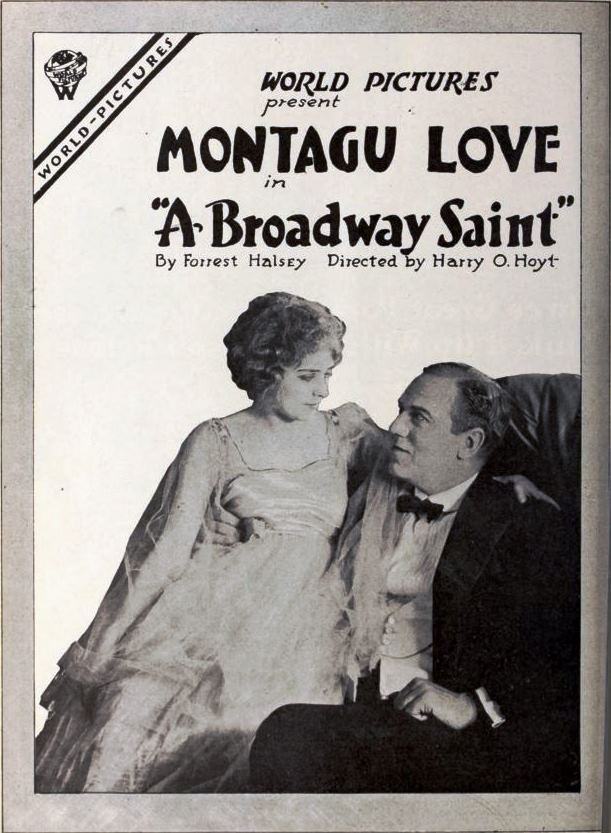
In the pantheon of silent cinema, the 'city slicker' is often a figure of predatory intent or slapstick incompetence. Yet, in A Broadway Saint, Giles Warren and Forrest Halsey present us with Dick Vernon, a character whose metropolitan identity is one of invisibility rather than ostentation. Living in a cheap boardinghouse, Vernon represents the proto-modernist anxiety of the urban dweller—a man seeking a sense of self in the reflections of the silver screen. When he retreats to Boonsburg, he isn't looking for a vacation; he is looking for a genre. He wants the bucolic romance of The Little Girl Next Door, but he finds himself trapped in a social comedy of errors that feels closer to the cynical observations found in A Girl's Folly.
The brilliance of the film’s first act lies in its depiction of Boonsburg not as a sanctuary of innocence, but as a panopticon of parochial judgment. Dick’s 'city fashions' act as a lightning rod, drawing the ire of the town’s elders and the predatory curiosity of its youth. This creates a fascinating tension: the protagonist is searching for a simplicity that the setting itself refuses to provide. The townspeople are just as performative as any Broadway ensemble, their lives governed by the rigid scripts of small-town morality and the frantic pursuit of the 'other.' It is within this crucible that Vernon encounters Mazie Chateaux. Estelle Taylor’s portrayal of Mazie is a masterclass in layered performance; she is a woman playing a role within a role, a burlesque dancer stranded in a world that would condemn her if it knew her true vocation. This dynamic echoes the thematic depth of The Rise of Susan, where identity is a fluid, often dangerous, currency.
The narrative takes a sharp, almost surreal turn with the sudden wealth of Uncle Galt. George Bunny plays Galt with a boisterous, slightly manic energy that serves as a perfect foil to Dick’s stoicism. The condition of the inheritance—that Dick must live the 'high life'—is a fascinating commentary on the transactional nature of joy in the post-Victorian era. Dick is essentially being paid to be a hedonist, a role that he finds utterly exhausting. This inversion of the 'rags to riches' trope provides a rich vein of satire. While most characters in films like The Four-Flusher are desperately clawing their way into the upper echelons of society, Dick is a reluctant aristocrat, pining for the quietude of his boardinghouse existence.
The 'all-night party' sequence is the film’s visual and thematic centerpiece. Here, the cinematography captures the frantic, almost desperate energy of the New York nightlife. It is a bacchanal of necessity, a staged riot designed to satisfy the expectations of a benefactor. This scene highlights the mendacity of the social ladder; the partygoers are as much a part of the machinery of Galt’s wealth as the money itself. It is a stark contrast to the somber tones of The Promise, focusing instead on the absurdity of forced revelry. The sea blue hues of the nocturnal lighting (if we imagine the tinting of the era) would have contrasted sharply with the warm, yellow glow of the morning to follow.
The climax of A Broadway Saint eschews the typical melodramatic confrontation in favor of a quiet, domestic revelation. When Uncle Galt discovers Mazie in Dick’s apartment, the audience expects a scandal. Instead, we are presented with the image of Mazie preparing breakfast. This scene is pivotal; it strips away the burlesque artifice and the 'city slicker' pretension. In the cold light of day, the 'Saint' and the 'Sinner' are revealed to be merely two people seeking a semblance of normalcy. The innocence Galt perceives in Mazie is both a misunderstanding and a profound truth. She is not the virginal country girl of Dick’s dreams, nor is she the decadent performer of Galt’s fears. She is simply Mazie.
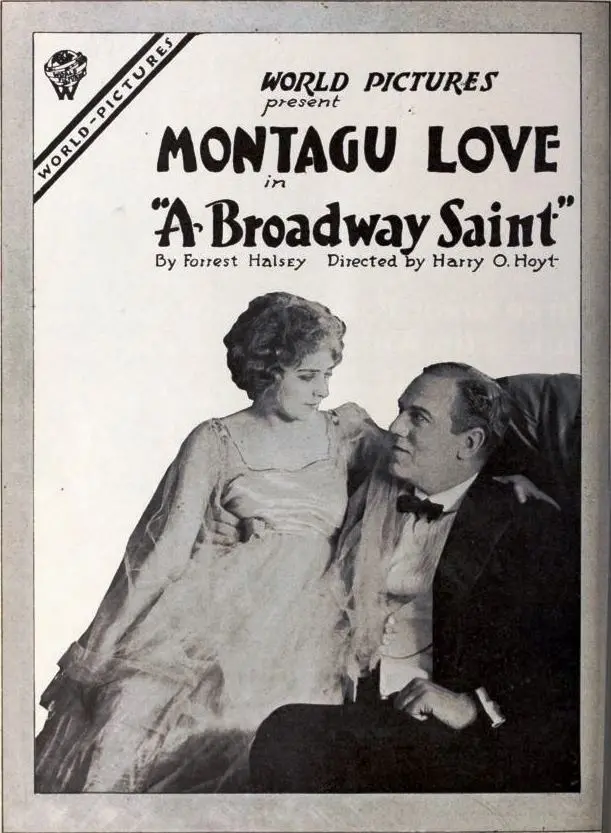
The performances by the supporting cast, including the formidable Emily Fitzroy and the versatile Montagu Love, provide a robust framework for this social satire. Fitzroy, in particular, excels at portraying the rigid social gatekeepers that Dick so desperately wishes to avoid. The chemistry between George Bunny and the rest of the cast ensures that the film’s humor never feels forced, even when the plot leans into the improbable. The film’s pacing, managed by the steady hand of the director, allows for these character moments to breathe, avoiding the frantic editing that plagued lesser contemporary productions like Nobody Home.
Looking back from a century’s distance, A Broadway Saint stands as a sophisticated critique of the American obsession with binary identities: city vs. country, saint vs. sinner, wealth vs. virtue. It suggests that these categories are not only fluid but often entirely fabricated for the benefit of an audience—whether that audience is a group of Boonsburg gossips or a millionaire uncle. The film shares a certain DNA with Merely Mary Ann in its exploration of class and perception, yet it possesses a sharper, more satirical edge.
The technical aspects of the film, from the set design of the Boonsburg boardinghouse to the opulent NYC apartment, serve to reinforce these themes. The physical spaces reflect the psychological states of the characters; the cramped quarters of the opening scenes mirror Dick’s repressed nature, while the sprawling, chaotic party space reflects the external pressures of his new wealth. This visual storytelling is a testament to the sophistication of the Giles Warren and Forrest Halsey collaboration. They understood that the environment is as much a character as the actors themselves, a concept also expertly handled in The Girl from Outside.
In the final analysis, the marriage that concludes the film is not a surrender to convention, but a pragmatic embrace of a shared reality. Dick and Mazie find each other not through the perfection of their masks, but through the exhaustion of wearing them. It is a rare silent film that finds its happy ending in the mundane act of cooking breakfast, suggesting that the true 'high life' is not found in a million-dollar inheritance, but in the quiet companionship of someone who knows your secrets and likes you anyway. This nuanced take on romance and social status elevates the film far above its contemporaries like Your Obedient Servant or The Big Sister, marking it as a significant, if overlooked, work of early American cinema.
The legacy of A Broadway Saint is one of gentle subversion. It invites us to laugh at the absurdity of our own social performances while acknowledging the very human need for connection that drives them. Whether viewed as a historical artifact of 1919 or a timeless commentary on the artifice of identity, the film remains a compelling and visually rich experience. It reminds us that even in the heart of the most frantic metropolis, or the most judgmental small town, a 'saint' can be found—usually when they think no one is watching, and they're just trying to get a decent cup of coffee.
IMDb —
1918
Community
Log in to comment.