DbcultAccessing Vault...
Cult Review
Senior Film Conservator
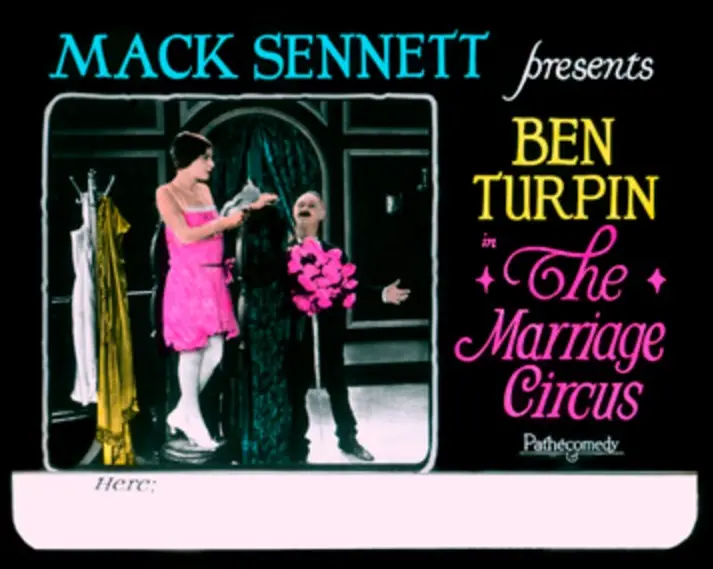
Is 'The Marriage Circus' worth watching today? Short answer: yes, but with significant caveats that demand a specific taste and historical appreciation. This film is primarily for ardent silent film enthusiasts, cinephiles interested in the early works of Frank Capra, and those who appreciate the foundational slapstick comedy of Ben Turpin. It is decidedly not for viewers seeking modern pacing, sophisticated narrative arcs, or high-fidelity visual and auditory experiences. To approach 'The Marriage Circus' with contemporary expectations is to fundamentally misunderstand its purpose and place in cinematic evolution.
This 1917 silent feature, a whirlwind of exaggerated emotion and relentless physical comedy, offers a unique window into the nascent days of filmmaking. It’s less a meticulously crafted narrative and more a vibrant tapestry of escalating gags, all stitched together by the iconic, cross-eyed genius of Ben Turpin. For those willing to adjust their viewing lens, it’s an entertaining, if sometimes baffling, experience.
The narrative of 'The Marriage Circus' is, to put it mildly, a vessel for chaos rather than a carefully constructed story. We open on Ben, played with characteristic absurdity by Ben Turpin, poised for what he believes will be marital bliss. This illusion shatters spectacularly when Madeline, his intended, quite literally 'busts' his heart by rejecting him at the altar for another suitor. The immediate aftermath of this betrayal is where the film truly finds its footing, or rather, loses it in the most entertaining way possible.
Ben's response is not quiet despair, but a grand, almost operatic flight. He flees the church not on foot, but on horseback, invoking a 'Ben Hur' level of dramatic escape. This moment, a clear nod to the epic scale of popular entertainment even in 1917, sets the tone for everything that follows. It's an act of pure, unadulterated melodrama filtered through a comedic lens, a testament to the era's love for broad strokes.
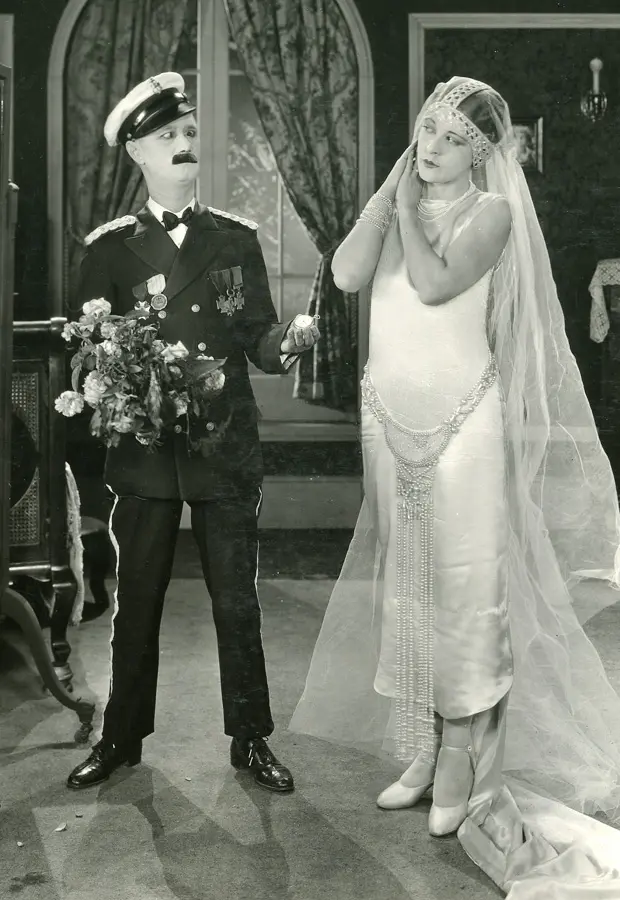
The ensuing pursuit by the wedding party, crammed into a procession of cars, is where the 'circus' truly begins. It's a masterclass in early chase choreography, a kinetic ballet of vehicles and frantic expressions. The film doesn't just present a chase; it revels in the sheer absurdity of it. Each car seems to have its own mini-drama unfolding, adding layers to the visual cacophony. What makes this even more layered is the simultaneous abduction of the actual bride by another admirer during this very chase. This secondary kidnapping, almost an aside to Ben's primary heartbreak, underscores the film's commitment to piling on the ludicrous.
The climax of this tangled web of flight and pursuit arrives in a stroke of pure, improbable luck. Ben's runaway horses, seemingly operating on their own comedic agenda, collide with the taxicab carrying the abducted bride. It’s an accidental rescue, a moment where unconscious heroism trumps any deliberate intent. This twist is the film's most ingenious narrative device, tying together disparate threads through sheer, unadulterated chance. The plot, therefore, serves less as a logical progression and more as a series of escalating comedic opportunities, each more preposterous than the last.
Considering the collaborative writing effort involving Felix Adler, Frank Capra, Vernon Smith, and Al Giebler, it's fascinating to dissect how these varied creative inputs coalesced into the final product. The direction, while attributed to Adler, undoubtedly carries the fingerprints of a collective vision focused on maximizing physical comedy. This is an early, raw form of cinematic storytelling, where the camera's primary purpose is to capture action in its most dynamic state.
The chase sequences are particularly noteworthy. They showcase a nascent understanding of how to build tension and excitement through movement and spatial relationships. While rudimentary by today’s standards, the wide-angle shots of cars and horses hurtling across the landscape effectively convey speed and confusion. There’s a palpable sense of kinetic energy that permeates these scenes, a testament to the filmmakers' ability to orchestrate complex physical gags without the benefit of modern editing or special effects.
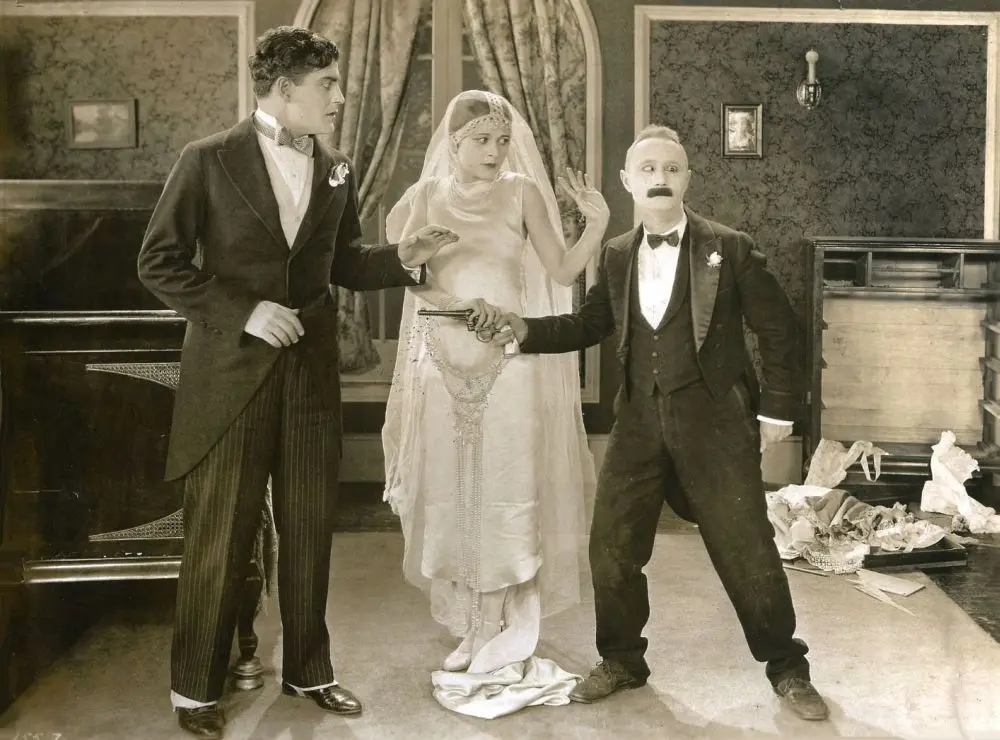
The film's visual language is dictated by the necessities of silent cinema: exaggerated gestures, clear sightlines for gags, and a reliance on physical space to tell the story. The cinematography, though basic, is functional and often surprisingly effective in conveying the film's frantic pace. The use of natural light and outdoor locations gives the chase an authentic, almost documentary-like feel, even amidst the absurdity. One particularly impressive shot captures the horses' gallop from a low angle, emphasizing their power and the speed of Ben's escape. This attention to dynamic framing, even in 1917, demonstrates a burgeoning understanding of cinematic impact.
What's perhaps most striking is the film's ability to maintain clarity amidst such widespread pandemonium. Despite multiple characters, vehicles, and simultaneous events, the audience rarely loses track of the primary action or the comedic intent. This speaks volumes about the directorial choices, ensuring that each gag, no matter how brief, lands with impact. It’s a foundational lesson in visual storytelling, one that many later filmmakers, including Capra himself, would undoubtedly build upon.
The heart and soul of 'The Marriage Circus' undoubtedly lie in the performance of Ben Turpin. His iconic, perpetually cross-eyed gaze isn't just a physical quirk; it's a comedic superpower. Turpin uses his unique physiognomy to great effect, conveying bewilderment, despair, and manic determination with just a glance. His initial reaction to Madeline's rejection is a masterclass in silent film acting – a subtle crumpling of his usually confident demeanor before exploding into his dramatic flight.
Turpin's physical comedy is broad, yet precise. Every fall, every frantic scramble, every exaggerated flail is executed with a timing that belies the apparent randomness. His 'Ben Hur' moment, astride two horses, is not just a visual gag but a declaration of character. It tells us everything we need to know about Ben's propensity for over-the-top reactions. He isn't just running away; he's making a statement, a comedic spectacle out of his own heartbreak.
The supporting cast, including Madeline Hurlock as the fickle bride and the various members of the wedding party, all play their parts with the necessary theatricality of the era. Their reactions are often as exaggerated as Turpin's actions, creating a symphony of silent screams and wide-eyed astonishment. While their characters are largely archetypes – the jilted lover, the new beau, the frantic pursuers – they commit fully to the comedic premise. The ensemble's collective pursuit of Ben, with their increasingly desperate expressions, adds a layer of shared absurdity to the proceedings.
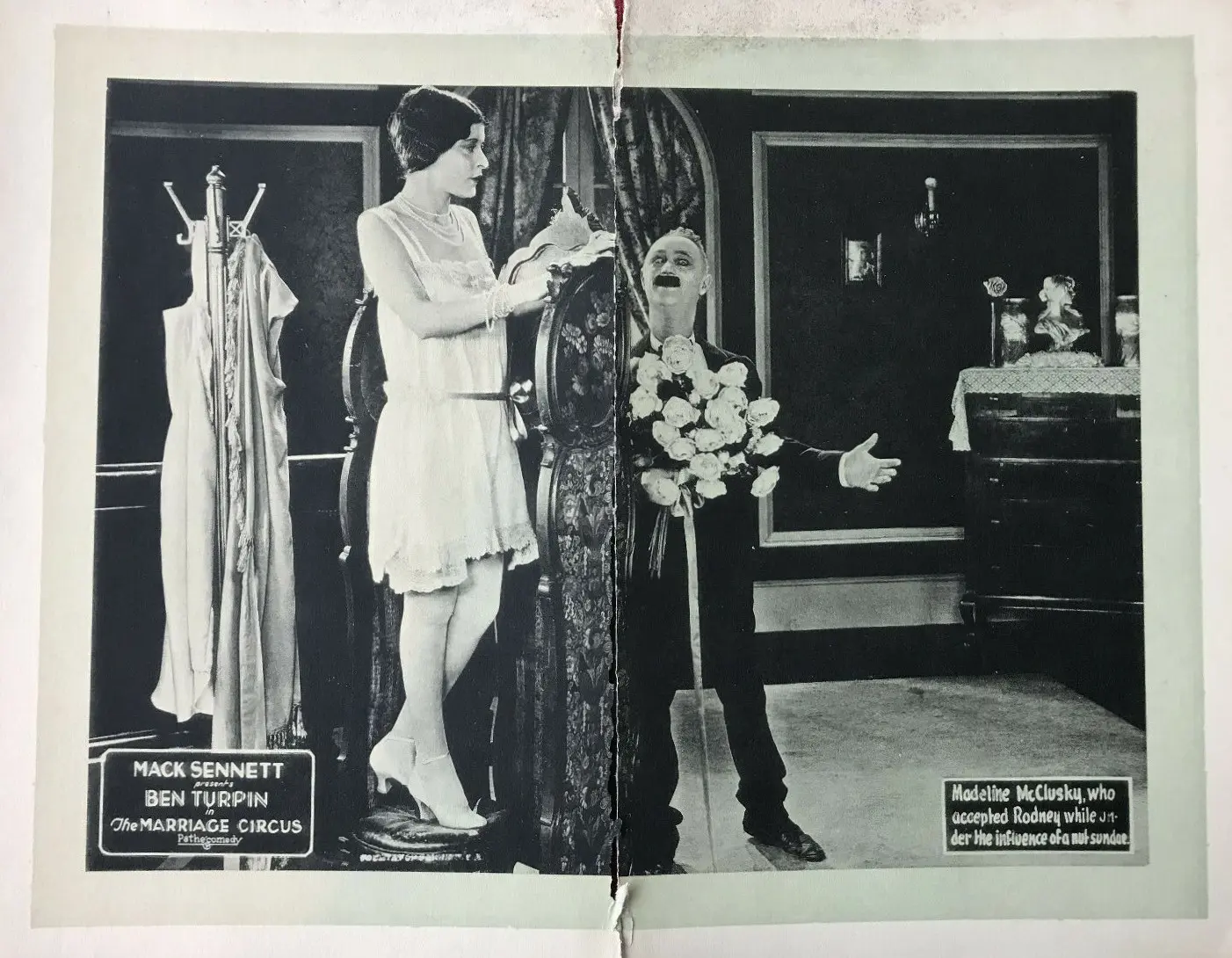
One particularly charming aspect is the way the film utilizes the entire body for expression. Without dialogue, actors had to convey every emotion, every intention, through movement and facial contortion. The frantic hand-waving, the dramatic lunges, the comical falls – these are not just incidental actions but integral parts of the storytelling. Turpin, in particular, demonstrates a profound understanding of how to communicate complex emotional states through simple, yet powerful, physical gestures. His performance alone is a compelling reason to seek out this film.
The pacing of 'The Marriage Circus' is nothing short of relentless. From the opening scene, the film rarely pauses for introspection or quiet moments. It’s a sprint from one gag to the next, a rapid-fire succession of comedic incidents designed to keep the audience engaged through sheer momentum. This frenetic energy is a hallmark of early silent comedies, which often relied on a constant stream of action to maintain interest in the absence of spoken dialogue.
The film's tone is overtly farcical and light-hearted, even when dealing with themes of heartbreak and abduction. There’s no real sense of danger or genuine despair; every setback is merely a setup for the next comedic opportunity. This unwavering commitment to levity is one of its strengths, ensuring that the film never bogs down in unnecessary drama. It understands its purpose: to entertain through exaggerated situations and physical humor.
The almost anarchic structure, where plot points seem to emerge from thin air to serve a gag, contributes to this feeling of ceaseless motion. The abrupt shift from Ben's heartbreak to a full-blown chase, then to a secondary abduction, and finally to an accidental rescue, all occur within a relatively short runtime. This compression of events, while making the narrative feel somewhat disjointed, also prevents the film from ever becoming boring. It’s a testament to the filmmakers’ understanding of how to maintain audience attention in an era where cinematic language was still being invented. The film moves with an undeniable propulsion, carrying the viewer along on its wave of absurdity. It works. But it’s flawed.
IMDb 5.9
1929
Community
Log in to comment.