DbcultAccessing Vault...
Cult Review
Senior Film Conservator
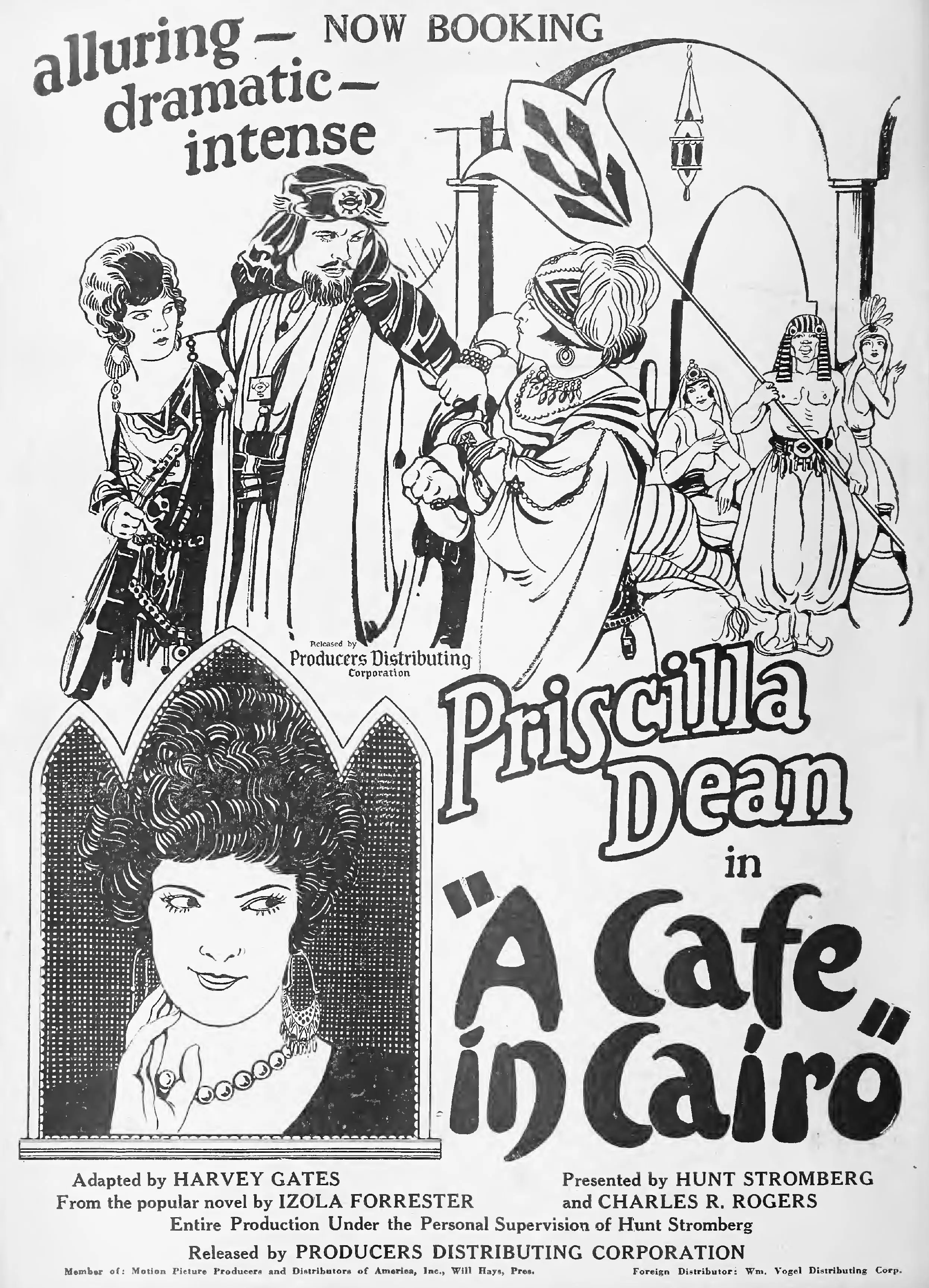
Stepping into the cinematic landscape of 1919, one encounters A Cafe in Cairo, a film that, even a century later, still resonates with a certain exotic allure and a potent blend of romantic melodrama and political intrigue. Penned by the imaginative duo of Harvey Gates and Izola Forrester, this silent-era gem plunges viewers into a world where cultural identity, loyalty, and forbidden love collide against the simmering backdrop of British-occupied Egypt. It's a narrative tapestry woven with threads of personal struggle and international espionage, making for a compelling, albeit often tragic, human drama.
At the heart of this intricate tale is a young woman, portrayed with characteristic intensity by the formidable Priscilla Dean, whose casting alone promised a certain gravitas to the proceedings. Dean, a star known for her strong, often defiant female characters, brings a nuanced vulnerability to her role as a European orphan raised by an Arab family. This unique upbringing forms the bedrock of her internal conflict. She is a woman caught between two worlds, her European heritage a stark contrast to the Arab customs and familial bonds that have shaped her entire existence. The film deftly explores the psychological complexities of such an identity, presenting her not as a mere pawn, but as a sentient being grappling with profound questions of belonging and allegiance. Her arranged marriage to an influential sheik, a powerful figure in the region, further solidifies her immersion into this culture, yet it also sets the stage for her ultimate rebellion.
The role demands a delicate balance of innocence and burgeoning awareness, a tightrope walk that Dean navigates with remarkable skill for the period. Her expressive eyes and subtle gestures, crucial tools in silent cinema, convey the weight of her upbringing and the dawning realization of her constrained future. One might draw thematic parallels to films like Mr. Wu (1919), which similarly delved into cultural clashes and the tragic consequences of forbidden relationships across societal divides, albeit with a more overtly melodramatic and often stereotypical portrayal of 'the other.' However, A Cafe in Cairo seems to strive for a deeper exploration of the protagonist's personal dilemma, rather than simply using her as a plot device for cultural commentary.
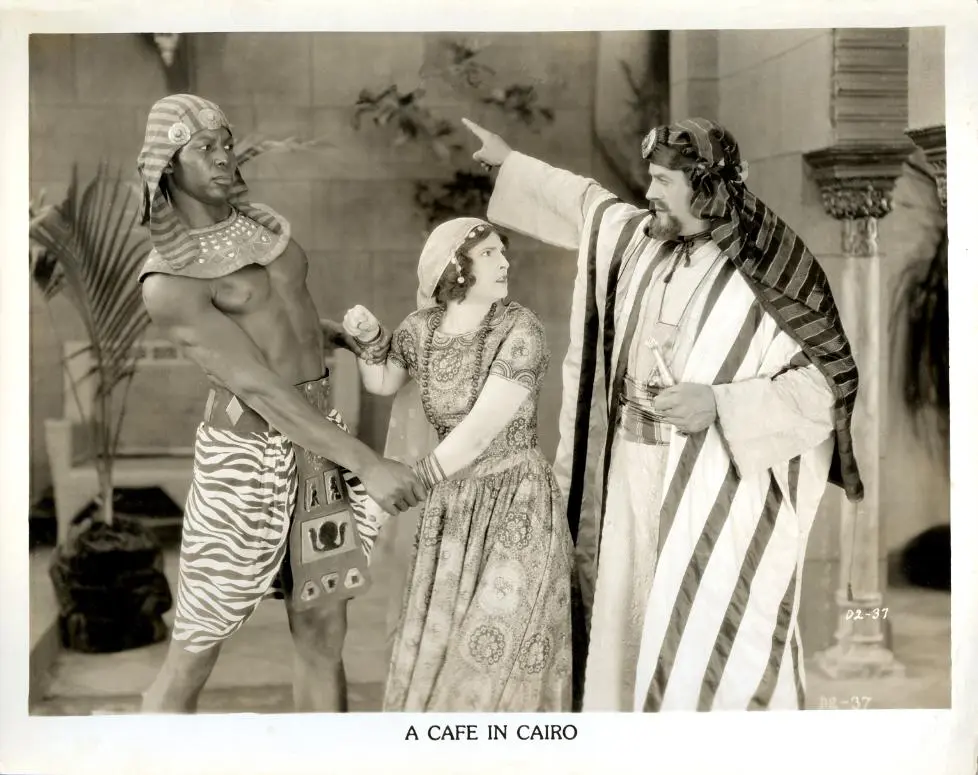
The sheik, portrayed with a compelling blend of authority and menace by an actor like Carl Stockdale or Vicente Oroná, is no mere romantic rival; he is a shrewd political operator. His decision to leverage his future bride's perceived naivety to pilfer crucial documents from a British secret agent introduces the thrilling element of espionage. This plot thread firmly anchors the narrative within the broader geopolitical currents of the era, where imperial powers vied for influence in strategic regions. The very notion of a 'secret agent' suggests a world rife with covert operations and high-stakes maneuvering, a stark contrast to the domestic drama of an arranged marriage.
The film excels in building suspense around this central mission. The audience is privy to the sheik's machinations, making the protagonist's unwitting involvement all the more poignant. Her task is fraught with peril, not just for herself but for the delicate balance of power in the region. The British agent, played by Robert Ellis, initially appears as merely a target, a means to an end. Yet, as the narrative progresses, his character evolves, becoming the catalyst for the protagonist's emotional awakening and subsequent defiance. The tension between their respective national allegiances and their burgeoning personal connection forms the dramatic core, highlighting the human cost of political games.
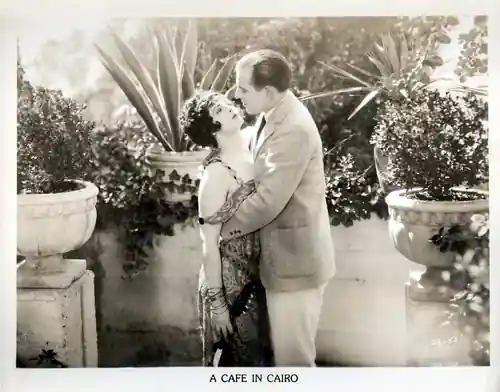
It is the blossoming romance between the protagonist and the British agent that truly elevates A Cafe in Cairo beyond a simple spy thriller. This is a love born of proximity and shared vulnerability, a connection forged in the shadow of deceit. As they spend time together, the initial professional distance dissolves, replaced by a deep emotional bond. The film, through the expressive performances of Dean and Ellis, manages to convey this burgeoning affection without the aid of spoken dialogue, relying instead on lingering glances, subtle gestures, and the powerful language of silent cinema's close-ups.
This love story is not without its dramatic complications. The protagonist's refusal to steal the documents, driven by her newfound affection and moral compass, is a pivotal moment of agency. It signifies her conscious choice to break free from the manipulative grip of the sheik and to prioritize her heart over her imposed duty. However, the plot ingeniously complicates this act of rebellion: the documents go missing anyway, implicating her despite her innocence. This narrative twist is a stroke of genius, ensuring that her betrayal, whether perceived or real, still incites the sheik's fury and propels the story into a spiraling vortex of consequences. The ensuing "complications" promise a thrilling climax, as the lovers must navigate political accusations, personal danger, and the wrath of a scorned, powerful man.
For a film of 1919, the visual storytelling of A Cafe in Cairo would have been paramount. The setting of Cairo itself, with its bustling markets, ancient architecture, and vibrant culture, offers a rich tableau for cinematic exploration. While specific details of the film's cinematography are difficult to ascertain without viewing, one can surmise that efforts would have been made to convey the exoticism and atmosphere of the locale through elaborate set designs, costuming, and perhaps even location shooting or clever use of archival footage. The titular cafe, for instance, would likely have served as a central hub for intrigue and romantic encounters, a visual metaphor for the intersection of different cultures and agendas.
The expressive acting of the silent era cast, particularly Priscilla Dean, would have been crucial in conveying the nuanced emotions and plot developments. Each gesture, each facial expression, had to carry the weight of dialogue. The use of intertitles, carefully crafted by writers Harvey Gates and Izola Forrester, would have provided essential exposition and character thoughts, guiding the audience through the complex narrative of loyalty, betrayal, and love. Compared to more overtly comedic films of the era like The Scarecrow (1921), which relied on physical comedy, A Cafe in Cairo would have leveraged the dramatic potential of visual symbolism and heightened emotional performances to captivate its audience.
Beyond the central trio, the film boasts a diverse supporting cast, including John Steppling, Ruth King, Larry Steers, Marie Crisp, Harry Woods, and Evelyn Selbie. In silent cinema, these actors were vital in creating a believable world and propelling the narrative forward, often through distinct character types. Steppling, known for his character roles, might have played a wise elder or a conflicted ally. Ruth King and Marie Crisp could have embodied figures of support or opposition, perhaps as members of the Arab family or as fellow agents. Larry Steers and Harry Woods often took on roles of authority or henchmen, potentially adding to the sheik's retinue or the British delegation. Evelyn Selbie, with her ability to portray strong, often dramatic women, could have been a pivotal secondary character, perhaps a confidante or a rival.
The narrative, crafted by Harvey Gates and Izola Forrester, demonstrates a sophisticated understanding of dramatic structure for its time. They weave together threads of romance, political intrigue, and personal awakening into a cohesive, escalating plot. Forrester, in particular, was a prolific writer of the era, known for her ability to create compelling female characters and intricate plots, as seen in her other works. Gates also contributed to numerous scenarios, often favoring adventure and drama. Their collaboration here evidently yielded a story that was both emotionally resonant and dramatically engaging, capable of holding an audience's attention through its twists and turns. The precision with which they construct the protagonist's dilemma and the subsequent fallout of her choices is commendable, establishing a strong foundation for the visual interpretation by the director.
A Cafe in Cairo, despite its age, touches upon themes that remain perennially relevant. The struggle for self-determination against societal or familial expectations, the moral ambiguities of political maneuvering, and the transformative power of love are all deeply explored. The film's portrayal of a woman caught between cultures, forced to choose between loyalty to her upbringing and the dictates of her own heart, offers a timeless narrative of personal liberation. This theme of a woman challenging traditional roles finds echoes in other films of the period, such as Bobbie of the Ballet, which explores female agency in a different social context, or even The Tempting of Justice, where moral choices are central to the protagonist's journey.
The setting itself, a 'cafe in Cairo,' serves as more than just a backdrop; it's a crucible where these diverse elements converge. Cafes have historically been melting pots of ideas, clandestine meetings, and public display, making it an ideal symbolic space for a narrative steeped in both romance and intrigue. This film, therefore, stands as a testament to the enduring power of silent cinema to convey complex human emotions and intricate plots, even without the spoken word. It reminds us that the foundational elements of compelling storytelling – character, conflict, and resolution – transcend technological advancements and cultural shifts.
In a broader sense, the film contributes to the rich tapestry of early cinematic depictions of 'the Orient,' a subgenre that often grappled with themes of exoticism, colonialism, and cross-cultural romance. While some of these portrayals could be simplistic or stereotypical, films like A Cafe in Cairo attempted to infuse these settings with genuine human drama and moral complexity. The film's exploration of betrayal, not just of a sheik but of deeply ingrained cultural expectations, positions it as a significant piece of its era's cinematic output, offering insights into societal values and narrative conventions of the time.
Ultimately, A Cafe in Cairo emerges as a captivating historical artifact, a silent film that speaks volumes through its intricate plot, compelling performances, and timeless themes. It's a journey into a bygone era of filmmaking, yet its core narrative of love, loyalty, and the quest for personal freedom resonates with an audience even today. For those interested in the evolution of cinematic storytelling, the nuances of silent era acting, or the rich history of films exploring cross-cultural relationships and political intrigue, this work by Gates and Forrester, brought to life by Priscilla Dean and her co-stars, remains a fascinating, if perhaps elusive, piece of film history. Its intricate web of romance and espionage reminds us that the human heart, when truly awakened, can defy even the most formidable of external pressures and expectations. It is a testament to the enduring power of narrative to explore the complex interplay between individual desire and the grander currents of history.
IMDb 5.4
1932
Community
Log in to comment.