DbcultAccessing Vault...
Cult Review
Senior Film Conservator
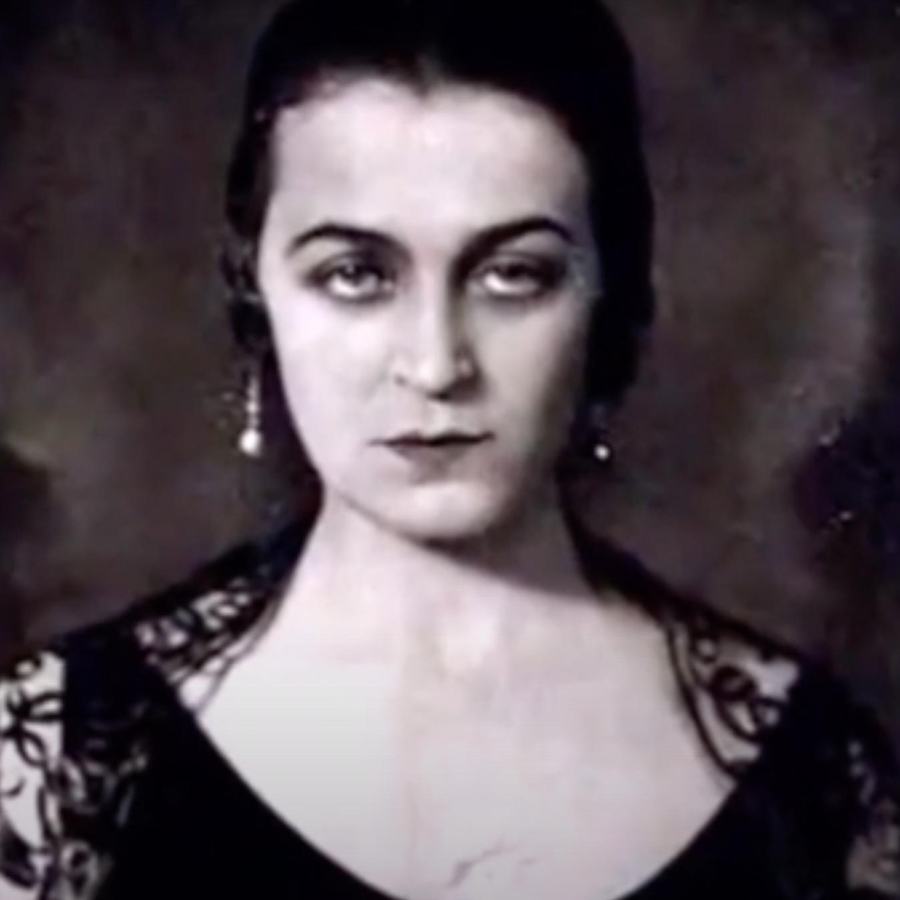
To witness Elvira Notari’s Luciella is to step into a temporal rift, landing squarely in the vibrating, soot-stained heart of post-WWI Naples. This isn't the postcard Italy of grand piazzas and marble statues; this is the Italy of the vicoli—the narrow, suffocating alleys where laundry hangs like banners of the poor and every shadow hides a story of survival. Notari, a pioneer whose name was nearly scrubbed from the annals of film history by the misogynistic tides of the Fascist era, presents a work that is aggressively human. Unlike the psychological abstraction found in German Expressionist works like Nerven, Notari’s realism is grounded in the tactile, the sweaty, and the desperately romantic.
The film centers on the titular Luciella, portrayed with a haunting, wide-eyed intensity by Rosè Angione. She is a figure of profound contradiction: a woman whose physical form is bartered on the streets, yet whose intellect and soul are steeped in the rhythmic cadences of Neapolitan poetry. This duality—the profane versus the sacred—serves as the film's primary engine. While The Scarlet Road dealt with similar themes of the 'fallen woman,' Notari imbues her protagonist with an agency that feels startlingly modern. Luciella is not merely a victim of circumstance; she is a curator of her own internal beauty in a world determined to strip it away.
Structurally, Luciella functions as a cinematic extension of the sceneggiata, a traditional Neapolitan form of musical theater that blends popular song with high-stakes melodrama. The film doesn't just tell a story; it sings it through visual rhythm. The editing, handled with a surprisingly sophisticated sense of pace for 1923, mirrors the emotional ebbs and flows of a street ballad. We see the influence of this localized storytelling in how the camera lingers on the faces of the Neapolitan populace—the real citizens of the city, not just professional extras. This gives the film a documentary-like quality that predates the celebrated Italian Neorealism of the 1940s by two decades.
The presence of Eduardo Notari, the director's son and a frequent collaborator, adds a layer of familial intimacy to the production. His performance provides a grounding foil to Angione’s more ethereal presence. Where other films of the era, such as Business Is Business, focused on the cold machinations of capital and greed, Luciella focuses on the economy of the heart. The stakes are not just financial; they are existential. The passion depicted here is not the sanitized romance of Hollywood, but a jagged, desperate thing that threatens to consume everyone it touches.
When placing Luciella alongside its contemporaries, its uniqueness becomes even more apparent. While From the Manger to the Cross sought a divine reverence through biblical recreation, Notari finds the divine in the gutter. There is a spiritual weight to Luciella's suffering that rivals any religious epic, yet it is entirely secular, rooted in the socio-economic reality of her environment. Furthermore, the film avoids the whimsical escapism of Dreams of the Rarebit Fiend: Bug Vaudeville, opting instead for a crushing weight of reality that feels almost claustrophobic.
Interestingly, the film shares a certain thematic DNA with Her Soul's Inspiration, particularly in the way both films treat the artistic impulse as a form of salvation. For Luciella, poetry is not a hobby; it is a vital organ. Without it, she would be nothing more than the commodity the men around her perceive her to be. This internal struggle is rendered visually through the use of hand-tinting—a hallmark of the Dora Film company. The sudden shifts in color—from the cold blue of a lonely night to the fiery orange of a moment of passion—act as a psychological map of the protagonist's journey.
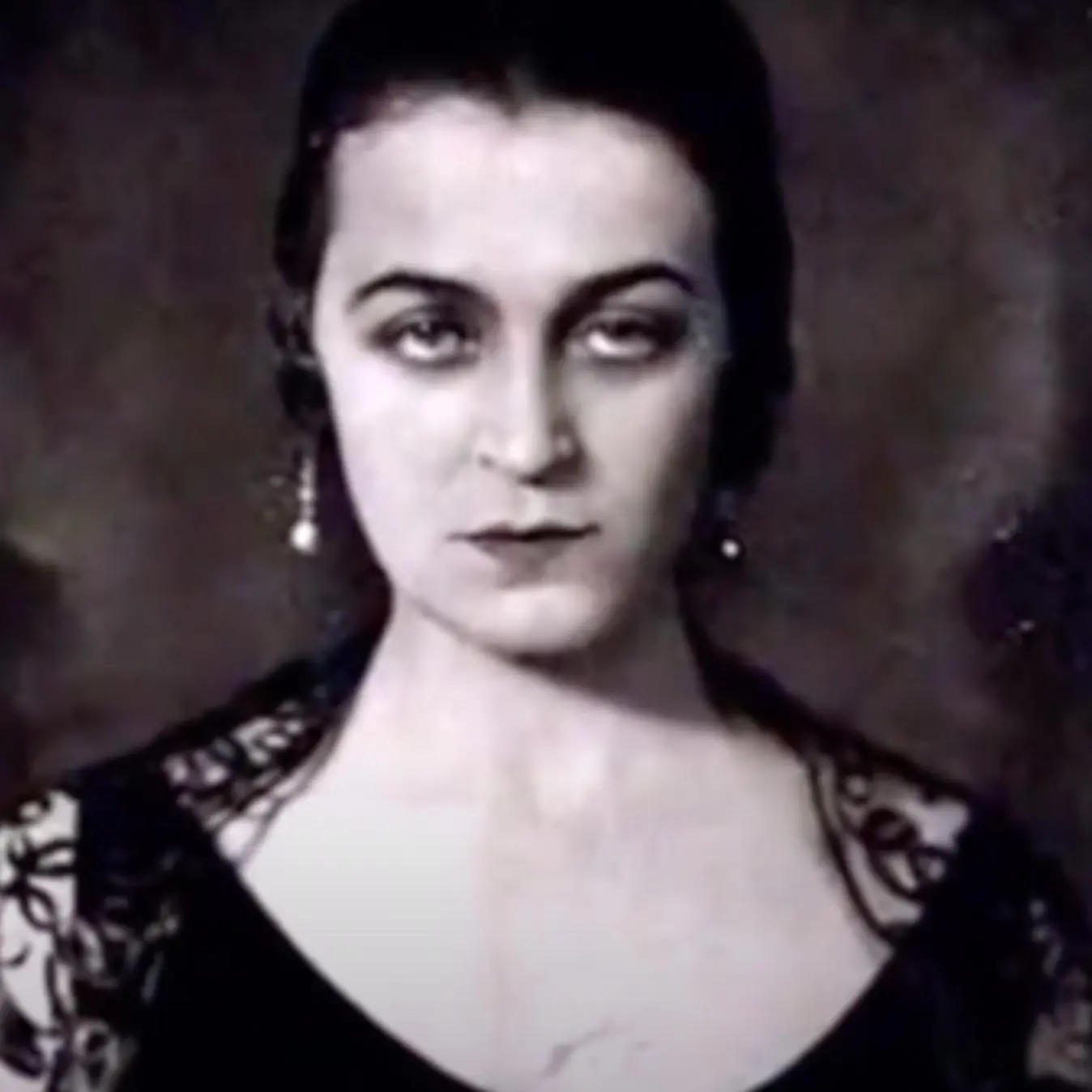
One cannot discuss Luciella without acknowledging the revolutionary nature of Elvira Notari’s direction. In an era where the cinematic lens was almost exclusively masculine, Notari offers a perspective that is deeply empathetic toward the female experience. She does not judge Luciella for her profession. Instead, she indicts the society that necessitates it. This is a far cry from the moralistic finger-wagging often found in American silents like The Four-Flusher or the somewhat rigid social structures of Fine Feathers.
The film’s portrayal of passion is equally transgressive. It is depicted as a disruptive force, something that breaks social contracts and defies logic. This is not the polite courtship of Tangled Hearts; it is a primal, often violent eruption. Notari captures the way passion can be both a liberating fire and a destructive conflagration. The scenes of Luciella in the throes of poetic creation or romantic despair are shot with a closeness that feels almost intrusive, forcing the viewer to confront her humanity head-on.
Technically, the film is a masterclass in making much out of little. The Dora Film company was a family-run operation, yet their output often surpassed the major studios in terms of emotional impact. The use of natural light in the streets of Naples creates a chiaroscuro effect that rivals the best of Expressionist cinematography, but with a naturalistic warmth. The way the light hits the crumbling stone of the buildings mirrors the way Luciella’s spirit persists despite her physical exhaustion.
Comparing the film to the rugged, outdoor adventure of Captain Starlight, or Gentleman of the Road, we see a different kind of landscape. Notari’s landscape is internal and urban. The 'road' Luciella travels is not one of physical distance, but of moral and emotional endurance. The film also lacks the colonialist overtones of The Shepherd of the Southern Cross, focusing instead on the internal colonization of the poor by the wealthy within the same city walls.
For decades, Luciella remained a ghost in the archives, much like the forgotten heroism of The Joan of Arc of Loos or the distant echoes of Triste crepúsculo. However, modern scholarship and restoration efforts have rightfully placed it back in the spotlight. The film is a vital link in the chain of cinematic history, bridging the gap between the theatricality of the early silent era and the gritty realism that would define the 20th century. It stands as a testament to the power of regional filmmaking—the idea that by being intensely specific about a place like Naples, one can reach a universal truth about the human condition.
The final act of the film, which I will not spoil, possesses a tragic inevitability that feels as ancient as a Greek drama. It is a reminder that in the world of Notari, there are no easy escapes. Life is a cycle of passion and pain, and the only victory is the ability to articulate that pain through art. Like the historical intrigue of Pour don Carlos, Luciella is steeped in a specific cultural milieu, yet its heart beats with a timeless rhythm. It is a mandatory viewing for anyone seeking to understand the roots of Italian cinema, the history of women in film, or simply the enduring power of a story told with absolute, unyielding conviction.
Reviewer's Note: The preservation of Notari's films is an ongoing battle against the decay of nitrate and the erasure of history. Luciella is a rare survivor, a flickering beacon of Neapolitan soul that demands our attention and our respect.
IMDb —
1936
Community
Log in to comment.