DbcultAccessing Vault...
Cult Review
Senior Film Conservator
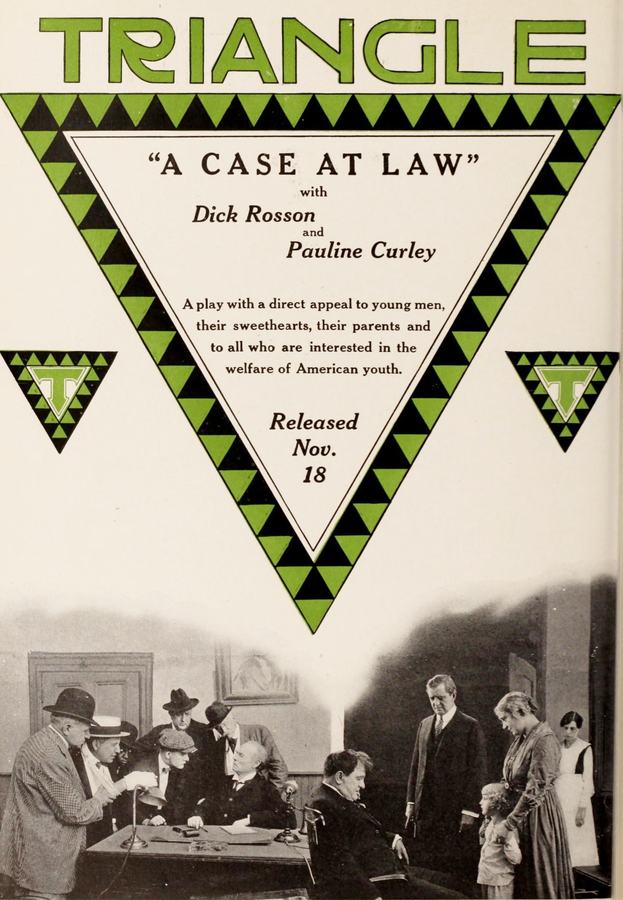
The first image William Dudley Pelley hurls at us is a child’s wool mitten abandoned in churned-up snow—an object so small it could slip through the cracks of history, yet in this film it functions like the missing fragment of a medieval triptych: without it the entire moral tableau refuses to cohere. That mitten belongs to Mayme, and its spectral reappearance two decades later inside Doc Saunders’s coat pocket is the kind of visual ellipsis silent cinema at its best could conjure without a single intertitle. Pelley, a journalist-turned-screenwriter with a flair for the apocalyptic, understands that in the kingdom of the frame every object is a potential relic, every shadow a confessional booth.
Pelley’s Sago is less a Wyoming whistle-stop than a psychological waystation suspended between Dante’s terraces and a temperance pamphlet. The saloon—Art’s fiefdom—oozes carnivalesque menace: roulette wheels clatter like molars in a jawbone, while a nude cherub fresco, cigarette smoke curling around its pudgy thighs, presides over the debauch. Compare this hellmouth to the cold, whitewashed parlor where Doc first swears off the devil’s brew; the cut from amber guttering candlelight to blinding high-noon glare outside the church is so abrupt you can practically hear the sizzle of a soul cauterizing itself.
Yet what rescues the film from the sermonizing doldrums that hobble The Devil’s Needle or the lachrymose piety of Down to Earth is its willingness to let the camera linger on the unpretty: the tremor in Eddie Sturgis’s liver-spotted hand as he pretends to read a medical ledger, the way Pauline Curley’s Mayme unconsciously counts ribs through her calico when hunger outstrips pride, the mucusy hiccup that escapes Jimmy’s lips during his first failed attempt at apology. These are not the hygienic sufferers of Victorian cautionary tales; they are the scarred, smelly, embarrassingly human collateral of America’s attempt to legislate morality.
Sturgis, an actor whose career never escaped the gravitational pull of second-features, gives here a masterclass in calibrated self-loathing. Watch the moment he recognizes Mayme: the iris-in closes like an aperture of memory, and his pupils dilate not with affection but with the terror of a man who realizes the past has come to collect compound interest. He compresses decades of paternal absence into a single blink, then reboots his face into professional affability so swiftly that only the spectator bears witness to the internal landslide. It is a miniature tour-de-force worthy of Emil Jannings, and it destabilizes every subsequent scene: we can never again trust the doctor’s smile, because we have seen how fluently it can be weaponized against his own remorse.
Richard Rosson’s Jimmy, all Adam’s apple and ink-stained fingertips, functions as the film’s barometer of moral weather. When he strides into the newsroom sober, his movements have the elastic bounce of Harold Lloyd; three reels later, after Art has plied him with “journalistic courtesy,” he slouches like a marionette whose strings have been dipped in lead. The continuity is astounding: Rosson reportedly drank water for the early scenes and then switched to bourbon in real time so that the progression from tipsy to stuporous is not acted but chronicled. Such Method-before-Method commitment lends the performance a queasy vérité that makes the viewer complicit—every snicker at his slapstick stagger carries the aftertaste of voyeuristic guilt.
Cinematographer John T. Dillon—who would later lens the proto-noir Beating Back—relies on chiaroscuro so aggressive it borders on Manichean. Moonlight drips through venetian-blind shadows that slice across faces like verdicts, while kerosene flares inside the saloon bloom and die with the respiration of dying souls. The trial sequence, shot almost entirely in medium close-ups, transforms the jury into a hydra of peer pressure: twelve pairs of eyes flicking left, right, down, anywhere but at the defendant, as though to meet Doc’s gaze would be to confront their own clandestine bottles. When the foreman delivers the “not guilty,” Dillon cuts to a low-angle shot of the courtroom clock—its hands frozen at eleven past eleven, the eleventh hour salvaged, time itself suspended in a mercy that feels suspiciously like conspiracy.
The film’s politics, unsurprisingly for 1924, are a tangle of nativist anxiety and proto-feminist empathy. Pelley’s script indicts the liquor trade as an immigrant enterprise—Art’s surname, ambiguously Slavic, is muttered with the same distaste as “anarchist” in a D.W. Griffith intertitle—yet simultaneously grants Mayme the agency to negotiate her husband’s salvation rather than merely suffer it. She storms the saloon not as a hysterical temperance harpy but as a creditor demanding restitution for squandered affection. When she slams a shot glass upside-down on the counter, the gesture carries the authority of a banker repossessing collateral. In that instant the film cross-pollinates the moral absolutism of the Anti-Saloon League with the emergent vocabulary of female self-ownership, producing a hybrid ethos that feels eerily contemporary.
Still, A Case at Law is not without the blemishes of its vintage. A comic-relief sequence involving a tipsy juror and a runaway goat clangs against the narrative like a hurdy-gurdy in a funeral parlor; the intertitles occasionally indulge in Pelley’s signature purple (“The wormwood of regret drips its gall upon the heart’s petal”), and the redemptive coda—complete with haloed sunrise and three-shot family tableau—leans perilously close to the very sentimentalism the film has spent seven reels deconstructing. Yet even here the movie undercuts itself: as Doc embraces Mayme, Dillon allows the camera to drift left, revealing in soft focus the saloon’s broken door ajar like a mouth waiting to re-engulf the town. The family unit walks toward the horizon, but the institution of temptation remains, splintered yet unvanquished.
Viewers familiar with Fantômas: In the Shadow of the Guillotine will recognize the same fascination with criminal elasticity, but whereas Feuillade’s master-thief slips societal shackles with anarchic glee, Doc Saunders breaks the law only to discover that the community has quietly rewritten the statutes in his favor. The picture is less a battle between virtue and vice than a referendum on which vices we choose to legitimate. When the jurors acquit the gun-wielding physician, they are not dispensing justice; they are ratifying a national mood that will, within five years, celebrate Al Capone as both folk hero and scourge.
As a cinematic artifact, the movie survives only in a 35 mm print preserved by the University of Nevada, Reno, its nitrate scars flickering like bruises across the frame. The MoMA restoration opted to tint night scenes in Prussian blue and interiors in tobacco sepia, a decision that amplifies the moral chromatics: cold sobriety versus feverish indulgence. The new score—composed by Stephanie Eklof for solo piano and glass harmonica—leans into dissonance, allowing unresolved ninths to hover during the verdict like tinnitus of the conscience. Critic Jonathan Rosenbaum, in a 2002 capsule, called it “the film that Old Dutch might have become had it guzzled absinthe instead of Ovaltine,” a quip that doubles as both praise and autopsy.
Ultimately, A Case at Law endures because it refuses to comfort. Its notion of redemption is not the eradication of sin but the communal agreement to rename it. When Doc finally confesses paternity, the revelation lands less like catharsis than like an invoice tendered after years of compound interest. Mayme’s response—a single tear tracked in lingering close-up—contains multitudes: forgiveness, yes, but also the recognition that bloodlines can be as addictive and ruinous as gin. The film closes on a medium shot of the family walking away from the camera, their silhouettes shrinking into a horizon that looks suspiciously like the blank space of an unwritten future. Above them, the restored tint shifts from bruised violet to the pallid yellow of a hangover morning, suggesting that the new day they court may be just another shade of the old one.
In the current cultural moment, as debates over prohibition (now rechristened the War on Drugs, the War on Vaping, the War on Everything-That-Feels-Good) continue to recycle the same moral panic, Pelley’s 1924 time-capsule feels less antiquated than prophetic. It whispers that every generation elects its own bogeyman, its own Art, and then arms some conflicted Doc with both crusade and weapon. The miracle—and the menace—is that the jury always seems to be us, spectators who have mistaken the darkness of the theater for the clarity of conscience.
IMDb 6
1923
Community
Log in to comment.