DbcultAccessing Vault...
Cult Review
Senior Film Conservator
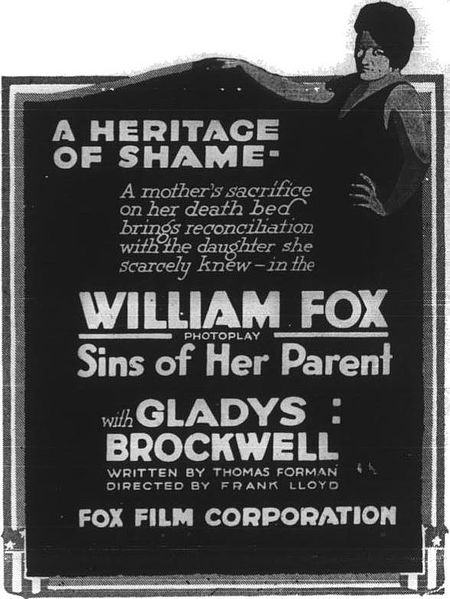
Stepping back into the hallowed, often dimly lit, annals of silent cinema often feels like an archaeological expedition. Each unearthed reel, each flickering frame, offers a glimpse into a world both familiar and utterly alien, where storytelling relied on the sheer power of visual narrative, emotive performances, and the evocative strains of a live orchestra. Among these rediscovered treasures, Tom Forman and Frank Lloyd's 1920 drama, Sins of Her Parent, emerges as a particularly compelling artifact, a film that, despite its age, resonates with a surprising modernity in its exploration of societal constraints, personal sacrifice, and the inescapable tendrils of a hidden past. It's a narrative woven with threads of melodrama, certainly, but beneath the surface lies a profound commentary on the limited choices afforded to women in a bygone era, and the seismic ripple effects of those choices across generations.
The film plunges us headfirst into the suffocating reality of Valerie Marchmont, portrayed with an aching intensity by the formidable Gladys Brockwell. Valerie is trapped, not by bars, but by the invisible, yet iron-clad, societal expectations of a Southern aristocracy. Her 'shotgun marriage' to Arthur Heatherway is less a union of hearts and more a forced transaction, a desperate measure to uphold appearances and quell scandal. The very notion of a 'shotgun marriage' speaks volumes about the punitive social codes of the time, where a woman's reputation, once tarnished, could condemn her to a life of ignominy. Valerie’s spirit, however, refuses to be entirely extinguished. Her decision to abandon her infant daughter, Adrian, is not born of malice, but of a desperate, almost primal, need for self-preservation, a yearning for an existence beyond the suffocating confines of her imposed reality. It's a choice that immediately sets the tragic trajectory for the film, a 'sin' that will echo through the years, shaping destinies with an unforgiving hand. This difficult choice, the ultimate sacrifice of motherhood for personal freedom, immediately sets Sins of Her Parent apart, lending it a thematic weight that transcends simple melodrama.
Years later, the narrative shifts, introducing us to Adrian Gardiner, Valerie's daughter, now a poised young woman utterly oblivious to the tempestuous origins of her life. Adrian's blossoming romance with Richard Carver, a scion of respectability, promises a future of stability and happiness. Yet, this idyllic vision is abruptly shattered by Richard's father, Robert, a man whose rigid adherence to social convention and lineage acts as an insurmountable barrier. Robert demands to know Adrian's parentage, a request that, in the context of the film's universe, is entirely reasonable yet devastatingly ironic. Adrian's inability to provide this crucial information—a consequence of Valerie's desperate flight—casts a shadow over her suitability, effectively denying her a place within the rigid social stratification that governs their lives. This theme of a hidden past impacting present happiness is a recurring motif in silent cinema, notably explored in films like Hans hustrus förflutna (A Wife's Past), which similarly delves into the disruptive power of a woman's former life resurfacing to haunt her present. But in Sins of Her Parent, the burden is placed squarely on the innocent shoulders of the child, amplifying the tragic dimensions of Valerie's initial sacrifice.
"The past, like a persistent shadow, stretches across the present, often obscuring the brightest hopes of the innocent." - A critical reflection on the film's core theme.
Richard Carver, however, is not a man easily deterred. His love for Adrian is portrayed as a force capable of transcending societal prejudice, propelling him on an improbable quest into the rugged, untamed wilderness of Alaska. This geographical shift is crucial, serving as a stark visual and thematic contrast to the genteel, yet stifling, Southern landscape from which Valerie fled. Alaska, with its dance halls and saloons, represents a frontier of raw survival and moral ambiguity, a place where social conventions are looser, and identities can be forged anew, or indeed, lost entirely. Here, Valerie has found a precarious, anonymous existence, a life far removed from the Southern belle she once was. It's a testament to the film's ambition that it transports its audience from the drawing rooms of Virginia to the rough-and-tumble frontier, showcasing a breadth of setting often reserved for grander epics like Soldiers of Fortune, albeit with a focus on internal, rather than external, conflict.
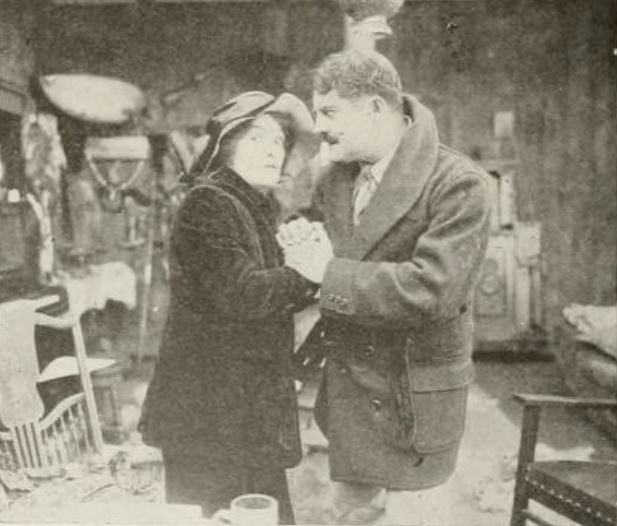
Richard's arduous journey culminates in his discovery of Valerie, a moment charged with dramatic tension. But the reunion is immediately marred by tragedy: he is shot by Jim McNeil, the possessive and volatile saloon owner, a character who embodies the lawless, dangerous spirit of the frontier. McNeil, portrayed by Jim Farley, represents the darker side of Valerie's chosen exile, a consequence of her desperate flight from a gilded cage into a more brutal, yet perhaps more honest, freedom. This sudden act of violence underscores the perilous nature of the world Valerie now inhabits, a stark reminder that escaping one set of chains often means encountering another. The sequence is a masterclass in silent film suspense, building to a dramatic crescendo that leaves the audience breathless.
The news of Richard's injury draws Adrian and Robert Carver to Alaska, setting the stage for the film's most potent dramatic revelation. The long arm of coincidence, a frequent but effective device in silent narratives, orchestrates a fateful encounter. Robert Carver, upon seeing Valerie, recognizes her instantly as the vanished wife of his old friend, Arthur Heatherway. This moment is exquisitely handled, a silent gasp of recognition that unravels years of carefully constructed deception and brings the past crashing into the present. The irony is palpable: the very man who forbade the marriage due to Adrian's unknown lineage now holds the key to her identity, and in doing so, unwittingly endorses the union. It’s a powerful narrative twist that speaks to the interconnectedness of lives, and the often-unforeseen ways in which our histories intertwine. This kind of dramatic recognition, where long-lost identities are revealed, finds parallels in the intricate plots of films like Forgiven; or, the Jack of Diamonds, though Sins of Her Parent imbues it with a deeper, more tragic resonance.
With Robert's blessing, the path to Adrian and Richard's marriage is cleared, a moment of fleeting triumph and joy. Yet, the celebration is tragically short-lived. The film, in its final, devastating act, refuses to offer a simple, saccharine resolution. Instead, it delivers a brutal, almost Greek tragedy of an ending. Valerie and Jim McNeil, bound by their shared, tumultuous existence in the Alaskan dance hall, engage in a violent confrontation that results in their mutual demise. It's a shocking, visceral climax that underscores the unforgiving nature of the choices made and the lives lived on the fringes. Valerie's death is not just a tragic end, but arguably her ultimate act of sacrifice, a final severing of the past that allows her daughter to step into a future unburdened by her 'sins.' It's a stark reminder that some debts can only be paid with the ultimate price, a theme that resonates with the moral complexities explored in films like The Reckoning.
The title itself, Sins of Her Parent, is a powerful indicator of the film's central preoccupation: the legacy of parental choices and their indelible mark on subsequent generations. Valerie's 'sin' is not one of inherent evil, but of desperation, a woman yearning for autonomy in a world that denied it. Her journey from Southern belle to Alaskan dance hall girl is a testament to the lengths one might go to escape an unbearable fate, even if it means sacrificing the most profound of bonds. Gladys Brockwell’s portrayal of Valerie is nothing short of magnificent. Her expressive face, a canvas for profound sorrow, fierce determination, and weary resignation, carries the emotional weight of the narrative. She embodies the archetype of the fallen woman seeking redemption, a figure often seen in silent dramas, but here imbued with a raw, empathetic humanity.
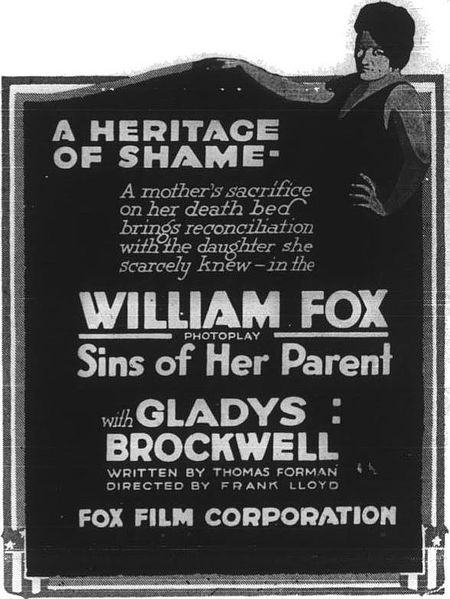
The film also provides a fascinating glimpse into the social mores of the early 20th century. The rigid class distinctions, the importance of lineage, and the unforgiving judgment of society are all laid bare. Robert Carver's initial refusal to sanction Adrian's marriage due to her unknown parentage is not merely an act of snobbery, but a reflection of a deeply ingrained social hierarchy where bloodlines dictated destiny. The contrast between the genteel South and the lawless Alaskan frontier further highlights the film's exploration of freedom versus societal constraint. Valerie's flight to Alaska is a symbolic journey from one form of imprisonment to another, perhaps less comfortable, but undeniably more authentic. This geographical and social juxtaposition echoes the romantic tensions found in films like The Cowboy and the Lady, where different worlds collide in the pursuit of love.
"In the silent era, a single glance, a subtle gesture, could convey volumes of unspoken emotion, and Brockwell's Valerie is a masterclass in this nuanced art." - An appreciation of silent acting.
The direction by Tom Forman and Frank Lloyd is commendable, particularly in their ability to maintain narrative momentum across disparate settings and a complex timeline. They deftly handle the film's melodramatic elements, grounding them in believable human emotion rather than allowing them to devolve into caricature. The cinematography, while perhaps not groundbreaking for its time, effectively utilizes lighting and composition to enhance the mood, from the opulent, yet stifling, interiors of the Southern estate to the stark, rugged landscapes of Alaska. The close-ups of Gladys Brockwell are particularly effective, allowing her nuanced performance to shine through, conveying depths of despair and defiance with remarkable clarity. The pacing, a crucial element in silent film, is expertly managed, building suspense and emotion with deliberate, impactful rhythm.
In an era where films like The Alien explored themes of otherness and societal acceptance, Sins of Her Parent positions Valerie as an outsider twice over: first within her own marriage, then as a woman living on the fringes of society in Alaska. Her journey is one of constant reinvention and survival, a testament to the resilience of the human spirit even when confronted with overwhelming odds. The film's conclusion, though tragic, offers a strange form of catharsis. Valerie's final act, whether intentional or accidental, frees her daughter from the shadow of her past, allowing Adrian to forge her own destiny unburdened by the 'sins' that preceded her. It's a poignant, if devastating, resolution that avoids easy answers, opting instead for a more complex and ultimately more satisfying exploration of sacrifice and redemption.
Ultimately, Sins of Her Parent stands as a compelling example of silent era storytelling, a film that leverages its dramatic premise to explore universal themes of identity, choice, and consequence. It’s a testament to the enduring power of classic cinema to resonate across decades, offering not just entertainment, but a window into the social fabric and moral dilemmas of a bygone age. For aficionados of silent film and those curious about the roots of cinematic drama, this film is an essential viewing, a somber yet beautiful reminder of the intricate tapestry of human experience, perpetually woven with threads of love, loss, and the indelible echoes of our past actions.
IMDb 6.9
1929
Community
Log in to comment.