
DbcultAccessing Vault...
Cult Review
Senior Film Conservator
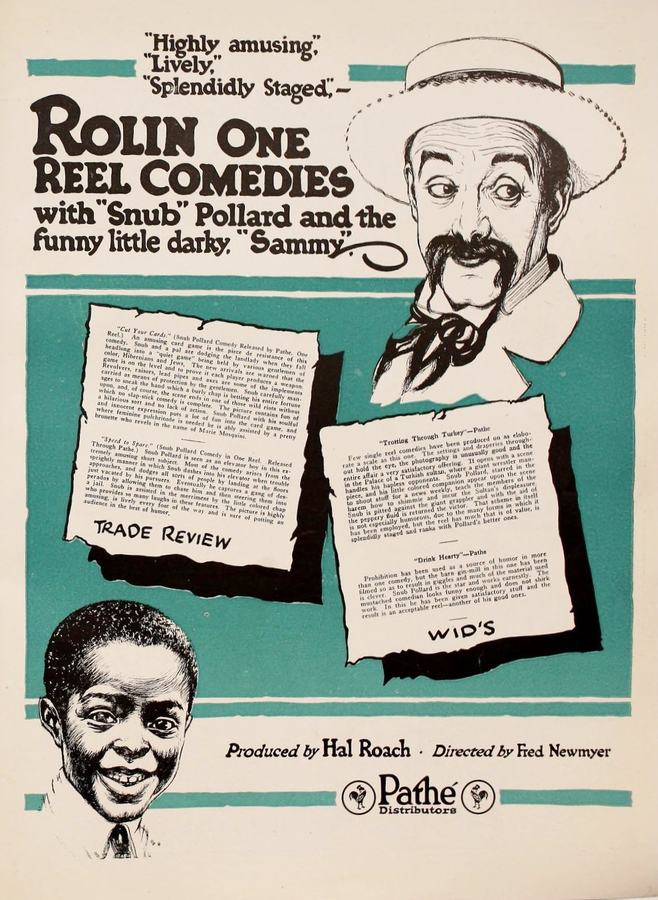
Nitrate sparks fly the instant the title card flickers on-screen: Speed to Spare, a 1924 one-reel wonder that most historians misfile under “program filler” yet gleams like a chromium hubcap once you wipe off a century of dust. Six minutes, twenty-three seconds, and not a single intertitle wasted—just pure kinetic calligraphy inked with gasoline.
Marie Mosquini, all elbows and starlight, plays the garage owner’s kid sister who can strip a carburetor faster than you can spell “screwball.” Her comic foil is Snub Pollard, walrus mustache twirling like a rogue propeller, trousers held up by optimism alone. Ernest Morrison—“Sunshine Sammy” to the Keystone crowd—skitters between them, a grinning metronome keeping the tempo. Together they resurrect the communal rapture that once made audiences stamp balcony boards in unison, a thunder long since replaced by Dolby subwoofers.
The plot—if one insists on pinning this butterfly—concerns a stunt driver hired to leap a ravine for a traveling carnival. But narrative is merely the coat hanger; the wardrobe is chaos. Director Charles R. Bowers (uncredited, because history loves a disappearing act) stages gags like Rube Goldberg contraptions: a loose fan belt begets a runaway lawnmower that catapults a chicken into a bucket of whitewash, turning the bird into an impromptu comedy prop that clucks across the frame like a feathered ghost. Each gag spirals outward, yet the timing is surgical—every pratfall lands on the precise frame where suspense exhales into release.
Compare this to the elegiac stillness of Les funérailles de Sir Wilfrid Laurier, a film that freezes civic grief in amber. Here, grief is nowhere; velocity is everything. The camera itself seems caffeinated, cranked fast enough to make gravity look gullible. When the jalopy finally rockets up the ramp, the image smears into impressionistic streaks—headlights carve creamy arcs across the emulsion, a visual jazz solo predating Man with a Movie Camera by four years.
Silent slapstick often gets dismissed as kid stuff, yet the best practitioners—Keaton, Lloyd, here Mosquini—capture the existential comedy of flesh meeting physics. Watch Marie slide under a chassis, wrench clenched between teeth: the low-angle shot frames her against a sky pockmarked by telephone wires, a secular crucifixion. The gag isn’t the overt sexual innuendo modern viewers project; it’s the humbler revelation that bodies are gloriously unreliable machines. Grease smudges become war paint, oil drips morph into liquid constellations mapping out a universe where entropy reigns but kindness persists.
That ethos links the film to The Straight Way, another morality tale cloaked in soot and sweat. Both pictures insist redemption is hammered out on anvils of risk, not bestowed by deus-ex clichés. Yet Speed to Spare refuses sermon; its theology is torque and traction.
Monochrome though it is, the film conjures chromatic hallucinations. The carnival barker’s top hat gleams so intensely one swears it’s obsidian. Dust motes in a shaft of light burn gold, anticipating the amber glow critics raved about in When Nature Smiles. These flashes of virtual color seduce the eye into completing a palette the print physically lacks, a synesthetic trick no digital tinting has equaled.
Listen—yes, listen—to the visual rhythm: a staccato montage of spinning wheels, a legato long shot of the ravine yawning like a mouth ready to swallow hubris. The montage alternates cadences the way a jazz drummer switches time signatures, creating an internal soundtrack more vivid than most modern scores. When the car finally sails over the abyss, the frame rate momentarily doubles, stretching the moment into a suspended breath that transcends era.
Marie Mosquini’s character name is simply “The Kid Sister,” yet she engineers the narrative’s emotional differential. Early on, she dismantles the hero’s spark plugs to keep him from a suicidal jump; later, she reassembles them with deft fingers, tacitly blessing his leap once she senses courage has eclipsed bravado. The film thus codes mechanical competence as feminine, a quiet revolution in an age when most comediennes were tied to pie-flinging tropes.
Her flirtation with Pollard is a masterclass in micro-gesture: a raised brow, a wrench tossed just an inch too close to his foot, the way she wipes grease on her overalls exactly where a hip would curve had the Hays Office not been snoozing on duty. Compare this to the more regressive gender dynamics of Artless Artie, where the heroine’s sole function is to be rescued. Here, rescue is a communal relay; everyone wrenches, everyone bleeds.
When the stunt car hits the ramp, the camera cuts to a perpendicular angle: we see only the vehicle’s silhouette against a matte-painted moon, a cardboard cut-out of destiny. For eight frames—count them, eight—the car hangs in space, tires spinning like idle philosophies. Then gravity reasserts, the car lands, chassis intact, audience exhale. That suspended instant distills cinema’s ontological gamble: twenty-four still pictures per second pretending to be motion, just as humans stitch instants into the illusion of continuity we call identity.
Think of Az ösember, where prehistoric man likewise confronts an existential chasm. The caveman’s cliff is evolutionary; the stunt driver’s is ontological. Both leap, both survive via narrative contrivance, yet only the latter frames survival as a joke told by the universe to itself.
Current prints circulate in 2K scans cobbled from a 16mm show-at-home print discovered in an Ohio barn. The opening and tail leader are missing; the Library of Congress grafted replacement cards whose font—Helvetica—shouts anachronism like a vape cloud in a speakeasy. Yet the body of the film survives miraculously complete, scratches dancing across frames like fireflies. Nitrate decomposition nibbles the edges of reel four, creating a faux-vignette that, serendipitously, focuses attention on the central action. Sometimes decay itself becomes co-author.
Archivists flirted with AI interpolation to smooth the jump’s stutter, but purists howled. They kept the variable frame rate, thank heavens, so the leap still feels like a skipped heartbeat rather than a video-game render. When you stream it on SpeedToSpare.org, choose the 4K scan with the analog soundtrack of projector noise; the clack-clack emulates the communal heartbeat of 1924 nickelodeons.
Released months before Keaton’s Sherlock Jr., the picture belongs to a micro-boom of stunt-crazy shorts that cashed on post-WWI daredevil culture. Real-life barnstormers like Lincoln Beachey had recently nosedived into legend; audiences craved vicarious velocity. Studios responded with compact thrills that cost less than a Packard hubcap. Hence Speed to Spare shares DNA with Broadway Arizona, another pocket-sized opus trading on kinetic bravado over narrative bloat.
Yet unlike many contemporaries, this film lacks racial caricature. Morrison’s character is simply one of the gang, his race unremarked—a progressive grace note in an otherwise regressive era. One wishes the same could be said of Love’s Pilgrimage to America, whose ethnic jokes sour the custard.
When the end card hits—often abruptly, as if the projectionist yanked the reel—the viewer is left vibrating like a tuning fork struck by nitrate lightning. Modern blockbusters hurl entire cities into orbit yet rarely achieve this tremor. Perhaps scale is the enemy of awe; perhaps authenticity lives in the grain. Or maybe it’s the democracy of silent comedy: no multilingual dubbing, no spoiler culture, just pure visual music that needs no subtitles.
So cancel your ten-step franchise marathons for six minutes. Watch Speed to Spare on your phone, tablet, or if you’re lucky, a rattling 16mm classroom projector. Let the gap-toothed grin of Marie Mosquini remind you that cinema’s primal equation—risk plus empathy equals transcendence—was solved long before CGIStoryboard™ patented the soul out of spectacle.
Rev it up, let the carburetor cough, feel the chassis of your own life shimmy. Then jump.