DbcultAccessing Vault...
Cult Review
Senior Film Conservator
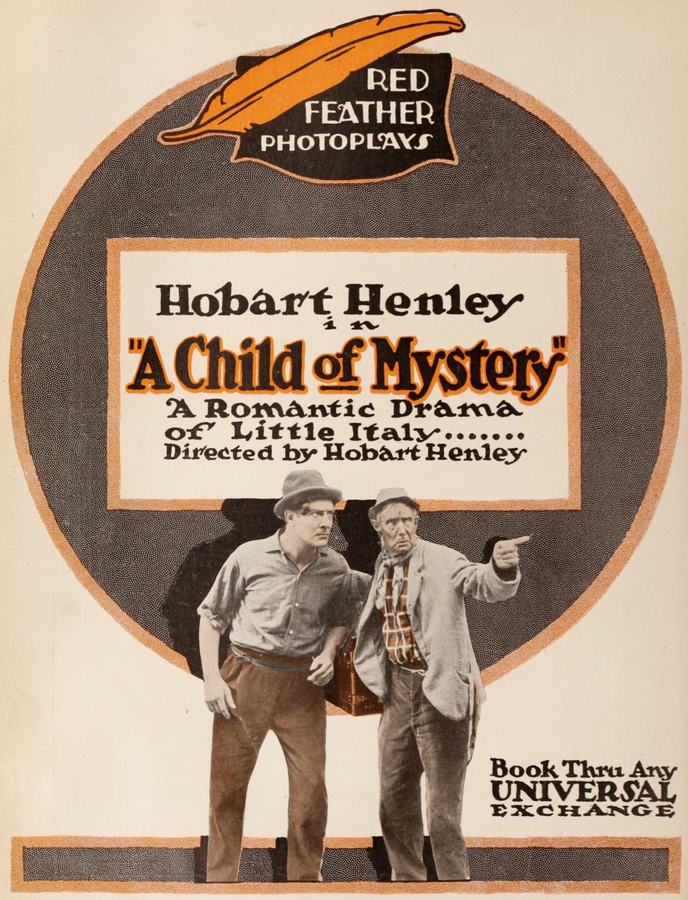
The cinematic landscape of early 20th-century America, a burgeoning canvas for narratives both grand and intimate, found a compelling voice in Willard Mack's silent drama, A Child of Mystery. This film, far from being a mere relic of its era, emerges as a fascinating artifact, weaving together threads of social stratification, illicit romance, and the menacing shadow of organized crime into a rich, often breathless, melodrama. It invites us not just to observe, but to immerse ourselves in a world where innocence collides with malevolence, and destiny, however convoluted, ultimately prevails.
At the core of this intricate narrative is Carlotta, portrayed with a delicate blend of vulnerability and burgeoning charm by Gertrude Selby. We first encounter her amidst the bustling, vibrant, yet undeniably impoverished milieu of 'Little Italy,' a setting that serves as both refuge and crucible. Her existence is one of humble street performance, earning a meager livelihood alongside Giuseppe, a violinist embodied with soulful resignation by Thomas Jefferson, and their remarkably intelligent simian companion, Rags. This initial tableau establishes a stark contrast to the opulence that soon beckons Carlotta, highlighting the profound social chasm that defines much of the film's dramatic tension. The depiction of 'Little Italy' itself, while perhaps filtered through the lens of early Hollywood's often-simplistic ethnic portrayals, nonetheless grounds the narrative in a tangible, if romanticized, urban reality.
Carlotta's world is irrevocably altered by the arrival of Tom, a wealthy and charismatic young man played by Paul Byron. His immediate fascination with Carlotta, a fascination born of both her beauty and her perceived exoticism, sets in motion a chain of events that will unravel family secrets and challenge the very foundations of her identity. Tom's invitation to a prestigious charity ball is more than just a social gesture; it is a symbolic bridge between two disparate worlds, a dangerous crossing that Giuseppe, burdened by a hidden past and present threats, instinctively resists. His desperate attempts to shield Carlotta from Tom's influence underscore the film's undercurrent of paternal protectiveness and foreshadow the deeper mysteries yet to unfold.
The true antagonist, however, emerges from the shadows in the form of Michael Gavotti, a chillingly effective portrayal by Alfred Allen. Gavotti is no mere street thug; he is a leader of the nefarious 'Black Handers,' a criminal organization whose reach extends far beyond the confines of 'Little Italy.' His sinister control over Giuseppe, a control rooted in fear and perhaps a shared, unspoken history, adds layers of complexity to the old violinist's character. Gavotti's decree that Carlotta must not engage with Tom is not just a matter of social propriety; it is an assertion of power, a declaration of ownership over a young woman whose true lineage holds the key to his illicit schemes. The Black Hand, a pervasive fear in early 20th-century immigrant communities, is effectively utilized here as a tangible, menacing force, far more insidious than the typical cinematic villain. This element of organized crime, reminiscent of other silent era thrillers grappling with societal ills, provides a visceral tension that permeates the entire film, perhaps even more effectively than in narratives like The Woman Pays, where personal vendetta often eclipses broader criminal enterprise.
Despite Gavotti's threats and Giuseppe's warnings, the lure of the charity ball proves irresistible for Carlotta. Tom, persistent and genuinely smitten, persuades her to attend during Giuseppe's absence, a decision that ignites the film's central conflict. This clandestine arrangement is observed by multiple parties: Tony, a fruit vendor played by Hobart Henley, who harbors a deep, unrequited love for Carlotta, and, more ominously, Gavotti's ever-watchful men. Tony's jealousy, though understandable, is quickly overshadowed by the chilling efficiency of Gavotti's operation. Carlotta is abducted, plunging Giuseppe and Tony into a shared despair that transcends their individual affections for her. This shared grief, however, also forges an unlikely alliance, as Tony, driven by love and a desire for justice, reveals a crucial piece of information: Carlotta is not Giuseppe's biological daughter. This revelation transforms the narrative from a simple romance into a full-blown mystery of parentage, adding significant emotional weight.
The plot then takes a delightful, almost whimsical turn with the unexpected heroism of Rags, the monkey. His seemingly random appearance near a mysterious building provides the crucial clue that allows Giuseppe and Tony to track Carlotta down and execute a daring rescue. This element injects a touch of levity and charm into an otherwise intense narrative, demonstrating Willard Mack's skill in balancing different tones. The subsequent decision by Carlotta to attend the charity ball, accompanied by Tony, reinforces her burgeoning independence and sets the stage for the dramatic convergence of the film's two primary plotlines.
Parallel to Carlotta's perilous journey, another narrative unfolds concerning Judge Andrews (Mark Fenton) and his wife (Nanine Wright). They are a couple burdened by a profound sorrow: the disappearance of their granddaughter, a child born of a tragic romance between their runaway daughter and an Italian count. This granddaughter, after the untimely deaths of both parents, had been left in the care of an Italian friend – a detail that subtly points towards Giuseppe's involvement. The Black Handers, seizing upon this vulnerability, have extorted the Andrews, promising the return of their beloved kin on the very night of the charity ball. This subplot, a classic 'lost heir' trope found in countless melodramas from The Dead Secret to The Children Pay, is handled with a quiet intensity, building anticipation for the inevitable revelation.
The climax of A Child of Mystery is a masterclass in silent film melodrama. Gavotti, thwarted in his initial plans, resorts to brutal torture to extract Carlotta's whereabouts from Giuseppe, a scene that underscores the villain's depravity. His revelation that she is at the charity ball propels the narrative to its thrilling peak. At the ball, the Andrews are instantly struck by Carlotta's uncanny resemblance to their deceased daughter, a moment of profound recognition that transcends mere coincidence. This visual cue, a powerful tool in silent cinema, effectively communicates the emotional weight of a long-lost connection without the need for dialogue.
However, the reunion is tragically cut short by Gavotti's audacious second abduction of Carlotta, this time from the very heart of high society. What follows is a relentless, pulse-pounding chase sequence, uniting Tom, Tony, and Judge Andrews in a common cause. This unlikely triumvirate, representing different facets of society and personal connection to Carlotta, symbolizes the broader fight against injustice. The pursuit culminates in a violent confrontation within Gavotti's lair, a chaotic tableau where most of the criminal gang, including Gavotti himself, meet their demise. The swift and decisive end to the Black Hand's reign of terror provides a satisfying, if somewhat brutal, catharsis for the audience, reaffirming the triumph of good over evil.
The resolution is as heartwarming as it is conclusive. Carlotta is taken home by the Judge and Tom, where Mrs. Andrews is overjoyed to finally embrace her long-lost granddaughter. The film deftly ties up all loose ends, revealing Carlotta's true identity and bestowing upon her the social standing she was born into. Her subsequent marriage to Tom, the wealthy suitor who initiated this tumultuous journey, provides a classic fairytale ending, signifying the harmonious integration of her past and present. Yet, the film doesn't forget her humble beginnings. Carlotta, now Mrs. Tom, seeks out Giuseppe and Tony, sharing her joy and acknowledging their unwavering devotion. This final act of remembrance and gratitude elevates the narrative beyond simple romance, emphasizing the enduring bonds of loyalty and affection that transcend class and circumstance. It's a poignant moment that resonates with the emotional depth found in similar narratives of enduring friendship, like Mrs. Wiggs of the Cabbage Patch.
Willard Mack's writing demonstrates a keen understanding of melodramatic conventions, skillfully balancing suspense, romance, and social commentary. The dual plotlines, initially distinct, are woven together with increasing intricacy, culminating in a satisfying convergence. The pacing, crucial for silent films, is expertly managed, ensuring that the audience remains engaged through the various twists and turns. The film avoids the sluggishness that sometimes plagued features of this era, maintaining a brisk momentum that keeps the dramatic stakes consistently high. The use of visual storytelling, a hallmark of silent cinema, is particularly effective here, with Carlotta's striking resemblance to the Andrews' daughter serving as a powerful, wordless revelation. The performances, too, are noteworthy. Gertrude Selby imbues Carlotta with an appealing innocence that makes her journey compelling, while Thomas Jefferson's Giuseppe is a portrait of quiet suffering and steadfast loyalty. Alfred Allen's Gavotti stands out as a genuinely menacing figure, a necessary counterpoint to the film's more virtuous characters. Even Rags, the monkey, contributes significantly, proving that sometimes the smallest characters can have the biggest impact on the plot.
A Child of Mystery, while perhaps not as widely known as some of its contemporaries, stands as a testament to the enduring power of classic storytelling. It is a film that, despite its age, continues to resonate with themes that remain universal: the search for identity, the struggle against injustice, and the triumph of love and family. It reminds us that even in the most humble of beginnings, a hidden nobility can reside, waiting for the right circumstances to be unveiled. For enthusiasts of early cinema, particularly those drawn to intricate plots and compelling character arcs, this film offers a rewarding experience, showcasing the artistry and emotional depth that defined the silent era. Its blend of mystery, romance, and social commentary places it firmly within the tradition of captivating melodramas, standing proudly alongside other engrossing tales of its time like The Savage Woman or even the more allegorical Dzieje grzechu in its exploration of human folly and redemption. It's a narrative that, once encountered, lingers in the mind, much like the echoes of Giuseppe's violin in the bustling streets of 'Little Italy.'

IMDb —
1927
Community
Log in to comment.