DbcultAccessing Vault...
Cult Review
Senior Film Conservator
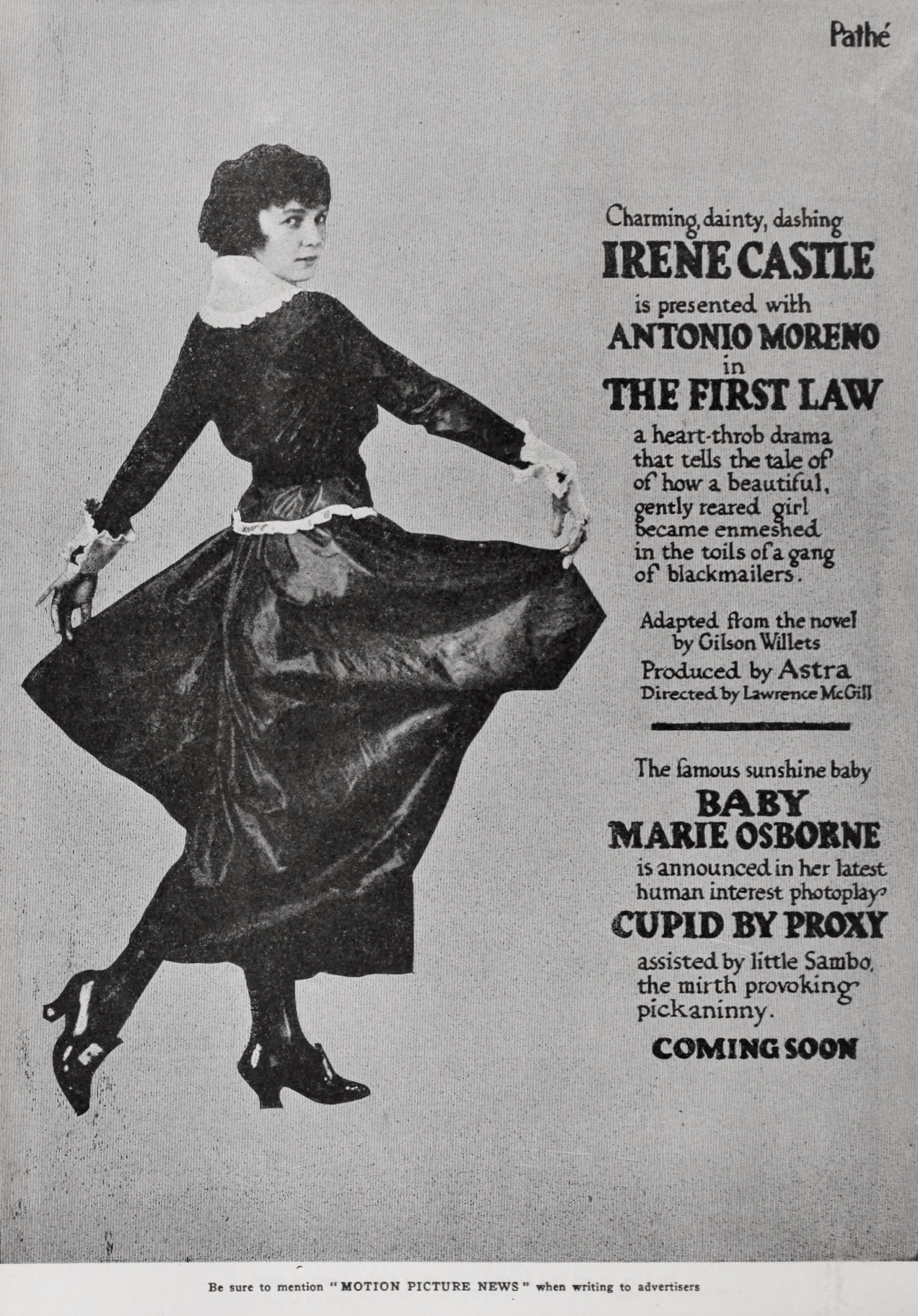
The 1918 cinematic landscape was a crucible of transition, where the simplistic morality plays of the previous decade began to yield to more intricate explorations of psychological duress and societal entrapment. The First Law, directed by Lawrence McGill, stands as a quintessential artifact of this evolution. It is a film that weaponizes the domestic sphere, transforming the sanctuary of the home into a theater of blackmail and existential dread. At its epicenter is Irene Castle, an actress whose ethereal grace—honed on the dance floors of high society—provides a stark, poignant contrast to the gritty, noir-adjacent machinations of the plot. Unlike the more traditional gothic undertones found in Jane Eyre, this film anchors its 'mad wife/secret husband' trope in the cold, hard realities of American capitalism and legal corruption.
The narrative momentum is fueled by a relentless series of causalities. We begin with the ruin of a patriarch, a theme common in the era's cinema, yet here it serves as a prologue to a much more harrowing descent. Norma Webb is not merely a victim of circumstance; she is a woman navigating a legal system designed to disenfranchise her. Her secret marriage to the man who ruined her father is a masterstroke of dramatic irony. It positions her as both the heir to her father's misfortune and the unwilling partner to its architect. This thematic doubling—where the husband is both the predator and the legal master—creates a claustrophobic tension that the film sustains with remarkable efficacy.
Antonio Moreno, playing the philanthropist Hugh Godwin, offers a performance of quiet, steadfast masculinity. In many ways, his character represents the 'Law of Love' that the title implies, yet he is kept in a state of perpetual ignorance by Norma’s fear. The chemistry between Castle and Moreno is palpable, even through the flickering grain of a century-old negative. While Castle was often criticized for her limited dramatic range, in The First Law, her restraint works in her favor. She portrays Norma as a woman perpetually on the verge of collapse, her every movement dictated by the invisible threads of the blackmailer. This performance echoes the vulnerability seen in Lena Rivers, yet Castle imbues the role with a sophisticated urbanity that makes her plight feel distinctly modern.
The supporting cast, particularly the 'scoundrel' husband and the corrupt detective, serve as the dark mirrors to Hugh’s idealism. The detective is a fascinating precursor to the 'dirty cop' archetype that would later define the film noir genre. His exploitation of Norma’s trauma is not merely a criminal act; it is a systemic critique. He represents the 'Law' in its most perverted form—a tool for personal gain rather than justice. This cynical view of authority is a surprising element for a 1918 production, suggesting a growing disillusionment with institutional integrity in the post-WWI era.
When we examine The First Law alongside contemporary works like Husband and Wife or Castles for Two, we see a recurring preoccupation with the sanctity and the fragility of the marital bond. However, The First Law is significantly more violent in its resolution. The act of Norma shooting her husband is a radical departure from the passive suffering of many silent heroines. Even though the film later 'absolves' her by having the detective deliver the fatal blow, the initial act of rebellion remains a potent image of female agency. It is a moment where the 'First Law' of nature—self-preservation—overrides the statutory laws of the state.
The film’s pacing is a masterclass in escalating stakes. The transition from a domestic drama to a high-stakes thriller involving industrial espionage (the 'financial secrets' Hugh possesses) broadens the scope of the narrative. It moves the conflict from the personal to the societal. This expansion of stakes is reminiscent of Alias Mrs. Jessop, where identity and social standing are the primary currencies. Yet, The First Law feels more visceral, more tethered to the physical threat of violence.
Visually, the film utilizes the limited technology of its time to create an atmosphere of pervasive gloom. The interiors of the boarding house are shot with a sense of encroaching shadows, mirroring Norma’s psychological state. The use of close-ups on Castle’s face allows the audience to witness the internal struggle between her love for Hugh and her terror of exposure. This visual storytelling is essential in a medium without dialogue, and McGill proves himself a capable orchestrator of emotion. The scene where the husband enters Norma’s room is particularly noteworthy for its use of lighting to heighten the sense of menace—a technique that would be refined in later European works like The Vampires: The Terrible Wedding.
Furthermore, the film's screenplay, penned by Roy Somerville and Gilson Willets, avoids the overly florid title cards that plagued many of its contemporaries. The dialogue is sparse, allowing the physical performances to carry the narrative weight. This economy of language enhances the film's realism, making the melodramatic plot points feel more grounded. The writers understood that in a story about secrets, what is left unsaid is often more powerful than what is articulated.
The resolution of The First Law is a fascinating study in moral gymnastics. To allow Norma and Hugh a 'happily ever after,' the narrative must dispose of the first husband and the blackmailer in a way that leaves Norma’s hands relatively clean. The choice to have the detective murder the husband—who was only wounded by Norma—is a convenient plot device that satisfies the censorship requirements of the time. It ensures that the heroine is not a 'murderess' in the eyes of the law, even if her intent was lethal. This type of narrative maneuvering is seen in many films of the era, such as Triumph or To Him That Hath, where divine or poetic justice intervenes to save the protagonist from the consequences of their actions.
Yet, the psychological trauma Norma endured cannot be so easily erased by a well-timed arrest. The film ends on a note of happiness, but for the modern viewer, there is a lingering sense of the cost of that happiness. Norma’s journey is one of profound suffering, and her ultimate 'freedom' is built on a foundation of corpses. This complexity is what makes The First Law a compelling watch over a century later. It doesn't just offer a simple story of good vs. evil; it explores the gray areas where survival and morality collide.
In the broader context of silent cinema, The First Law serves as a bridge between the Victorian sensationalism of the 19th century and the hard-boiled realism of the 20th. It lacks the experimental audacity of Nye dlya deneg radivshisya or the epic scale of Battaglia dall'Astico al Piave, but it excels in its focused, intimate portrayal of a woman under siege. It is a film that understands the power of the 'secret' as a narrative engine, a trope that would later be explored with even greater cynicism in The Clean-Up.
For those interested in the history of the star system, this film is an essential document of Irene Castle’s screen career. It proves that she was more than just a fashion icon or a dancer; she possessed a screen presence that could command a serious dramatic narrative. Her collaboration with Antonio Moreno, a man who would go on to become one of the great 'Latin Lovers' of the silent screen, adds an extra layer of historical interest. Together, they navigate a plot that feels like a precursor to the domestic thrillers of Alfred Hitchcock or the melodramas of Douglas Sirk.
Ultimately, The First Law is a film about the weight of the past and the impossibility of truly escaping it. It suggests that while the 'First Law' of self-preservation might allow one to survive, it is only through confession and the destruction of one's tormentors that one can truly live. The film’s blend of melodrama, crime, and romance creates a uniquely compelling experience that transcends its historical limitations. It is a work that deserves to be remembered alongside other explorations of social duty and personal desire, such as The Millstone or By Power of Attorney.
As the credits roll—or would have rolled in the theaters of 1918—one is left with the image of Norma Webb, a woman who walked through fire and emerged on the other side, albeit scarred. The film’s title remains its most haunting element: what is the First Law? Is it the law of the land, the law of the heart, or the primal law of survival? By the end of this harrowing journey, the answer seems to be a complex, painful mixture of all three. For any cinephile looking to understand the roots of the psychological thriller, The First Law is an indispensable chapter in that history, offering a sophisticated, albeit dark, look at the human condition under pressure.
A cinematic relic that pulses with the anxieties of its age, proving that even in 1918, the shadows of the past were never truly dead.
IMDb 6.4
1927
Community
Log in to comment.