DbcultAccessing Vault...
Cult Review
Senior Film Conservator
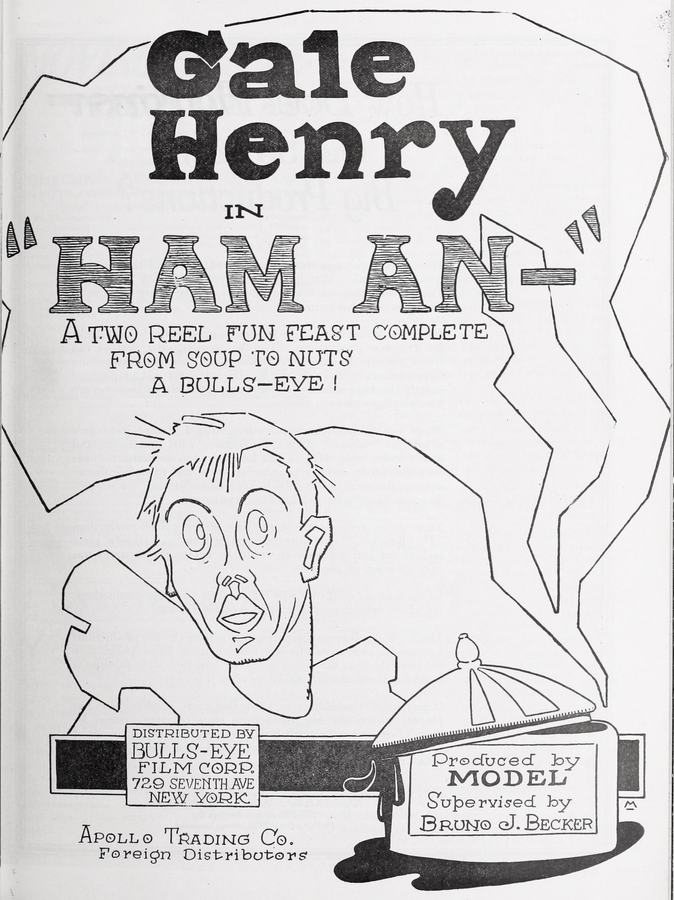
Stepping back into the nascent days of cinema, one encounters a fascinating tapestry of storytelling, where ingenuity often compensated for technological limitations. Among these early cinematic endeavors, a particular gem, Ham an-, emerges not just as a historical artifact but as a vibrant testament to the enduring power of comedic performance and the universal appeal of human foibles. Directed by and starring the incomparable Gale Henry, alongside a spirited ensemble including Billy Franey, Eddie Baker, and Hap Ward, this 1915 production, penned by Henry herself with Bruno C. Becker, offers a delightful glimpse into a bygone era of slapstick and situational humor. Its premise, deceptively simple—Gale as the proprietor of a lunch cart—unfurls into a rich narrative tapestry woven with threads of entrepreneurial struggle, quirky character interactions, and the delightful chaos that only early silent comedies could so masterfully orchestrate.
The brilliance of Ham an- lies in its ability to transform the mundane into the magnificent, or at least, the uproariously funny. Gale Henry, a force of nature in early cinema, imbues her character with an irrepressible energy that is both endearing and utterly captivating. Her lunch cart, christened 'Gale's Grub Hub' (one imagines), is not merely a mobile kitchen; it is a microcosm of society, a stage upon which the daily dramas of hunger, human interaction, and commercial rivalry play out with gusto. The film, though brief by modern standards, packs an astonishing amount of narrative and character development into its runtime, demonstrating a sophisticated understanding of comedic pacing and visual storytelling that belies its age.
At the heart of this comedic whirlwind is Gale's relentless pursuit of culinary triumph, or at least, survival. Her signature 'Ham an'-' special, a sandwich whose ingredients and preparation methods are often as mysterious as they are delicious, serves as both the literal and metaphorical centerpiece of her operation. It's a dish that embodies the spirit of the era: resourceful, unpretentious, and occasionally, gloriously unpredictable. The visual gags surrounding the preparation and serving of these culinary creations are pure gold, highlighting Henry's physical comedy prowess. One can almost taste the dubious yet undeniably intriguing ham, a testament to the film's evocative power even without sound.
The supporting cast, each a master of their craft, elevates the narrative from a simple sketch to a full-fledged comedic spectacle. Billy Franey, with his unmistakable visage, plays Silas Grumbles, the perpetually disgruntled patron whose complaints about the ham's texture or the coffee's temperature are as much a part of Gale's daily routine as the morning rush. Grumbles isn't merely a customer; he's a comedic foil, a barometer for Gale's resilience, and a source of endless exasperation. His commitment to complaining, despite his continued patronage, is a brilliant comedic paradox, a character type that resonates even today. This dynamic provides a continuous undercurrent of tension and release, a staple of effective situational comedy.
Eddie Baker’s portrayal of Patrolman O'Malley adds another layer of delightful friction. O'Malley, the embodiment of local authority, frequently casts a suspicious eye upon Gale's unconventional methods. His attempts to enforce minor health ordinances or traffic regulations often lead to hilarious cat-and-mouse sequences, where Gale's quick wit and even quicker feet allow her to circumvent bureaucratic hurdles with audacious flair. Baker’s stoic, by-the-book demeanor provides the perfect counterpoint to Henry’s effervescent chaos, creating a classic comedic pairing of order versus anarchy. The subtle glances and exaggerated gestures of silent film actors like Baker are crucial here, conveying volumes without a single spoken word.
However, the true antagonist, and perhaps the catalyst for the film's most elaborate comedic set pieces, is Hap Ward’s 'Hot Dog Harry.' Harry, a slick, modern vendor with a shiny new cart and aggressive marketing tactics, represents the encroaching forces of commercial competition. His attempts to sabotage Gale's business—from trying to poach her customers with flashy signs to outright attempts at industrial espionage (like trying to steal her secret ham recipe, which, unbeknownst to him, is more about improvisation than a culinary formula)—provide the narrative with its central conflict. Ward plays Harry with a delightful blend of smarmy ambition and bumbling incompetence, making him a villain audiences love to see thwarted. The rivalry between Gale's homespun charm and Harry's cutthroat tactics is a timeless comedic trope, here executed with a fresh, early cinematic vigor.
The visual language of Ham an- is a masterclass in silent film comedy. The film’s narrative unfolds through a series of expertly choreographed physical gags, exaggerated expressions, and ingenious use of props. One particularly memorable sequence involves a disastrous ham supply mix-up, where Gale accidentally receives a theatrical prop (a rubber ham) instead of her usual fare. This leads to widespread customer confusion, with Silas Grumbles delivering his most vociferous complaint yet, his face a contorted mask of indignation, a moment of pure comedic gold that resonates with the physical humor found in films like Look Out Below, another early comedy that reveled in the absurdities of everyday life.
The film’s climax, a frantic chase sequence through the bustling city streets, is a marvel of early cinematic action-comedy. Gale's rickety cart, Hot Dog Harry's flashy contraption, and Patrolman O'Malley on foot, all converge in a symphony of near-misses and escalating mayhem. The rubber ham, a seemingly innocuous prop, plays a pivotal role in exposing Harry's deception, leading to a satisfying resolution where Gale's tenacity and accidental heroism triumph. This kind of escalating chaos, where seemingly minor mishaps snowball into grand, hilarious spectacles, is a hallmark of the era, perfected by many, but executed with particular panache here. It’s reminiscent of the intricate comedic construction seen in serials like Beatrice Fairfax Episode 10: Play Ball!, where each episode built upon previous comedic or dramatic stakes.
The cinematography, though rudimentary by today's standards, is remarkably effective in conveying the energy and dynamism of the urban environment. The camera often frames the action in wide shots, allowing the audience to appreciate the full scope of the physical comedy and the vibrant backdrop of city life. Close-ups are used judiciously to highlight specific reactions, particularly the exaggerated expressions of the actors, which were essential for conveying emotion and intent in the absence of spoken dialogue. The editing maintains a brisk pace, ensuring that the comedic momentum never flags, propelling the audience from one hilarious predicament to the next with effortless grace.
Beyond the laughter, Ham an- subtly explores themes of resilience, the challenges of entrepreneurship, and the enduring human spirit. Gale's character is not merely a purveyor of sandwiches; she is a symbol of the underdog, of the individual striving to make a living against formidable odds. Her resourcefulness in the face of adversity, her ability to turn misfortune into opportunity, and her unwavering optimism are qualities that resonate deeply. This is a film about the dignity of labor, even when that labor is fraught with comedic peril. It shares a thematic kinship with other films of the era that celebrated the common person's struggle and triumph, perhaps even echoing the subtle social commentary found in films like The Heiress at Coffee Dan's, where everyday settings become stages for larger human dramas.
The film also offers a charming, albeit humorous, commentary on the burgeoning consumer culture and the cutthroat nature of competition. Hot Dog Harry's modern approach, contrasted with Gale's more traditional, perhaps slightly chaotic, method, highlights the tension between innovation and established practices. It’s a gentle satire on the relentless pursuit of profit, ultimately suggesting that genuine quality and a touch of human connection often prevail over slick marketing and underhanded tactics. This underlying message gives the film a depth that transcends mere slapstick, elevating it to a more thoughtful, albeit still uproarious, cinematic experience.
Gale Henry, as both star and co-writer, is undeniably the driving force behind Ham an-. Her physical comedy is impeccable, her timing precise, and her screen presence magnetic. She embodies a particular brand of early female comedic talent, breaking molds and forging new paths for women in cinema. Her ability to command the screen, to elicit both laughter and empathy, speaks volumes about her skill. One cannot help but be drawn into her world, rooting for her success against all odds. Her performance here solidifies her place as a significant, though perhaps historically underappreciated, figure in the pantheon of silent film stars. Her creative fingerprints are all over this production, from the inventive plot points to the nuanced characterizations.
The film serves as a poignant reminder of the ingenuity and pure entertainment value of early cinema. Before the advent of sound, filmmakers and performers had to rely solely on visual cues, exaggerated actions, and the universal language of human emotion to tell their stories. Ham an- exemplifies this artistry, showcasing how effectively a compelling narrative can be crafted without a single spoken word. It’s a delightful experience for anyone interested in the foundational elements of film history, a window into a time when the magic of moving pictures was still a relatively new and wondrous phenomenon.
In an era dominated by grand epics and melodramatic narratives, Ham an- stands out as a joyous celebration of the everyday. It finds humor in the mundane, heroism in the ordinary, and spectacle in the simple act of selling a sandwich. Its charm is timeless, its humor universal, and its message of perseverance profoundly resonant. For those seeking to explore the rich landscape of silent film, to witness the origins of cinematic comedy, or simply to enjoy a good laugh, Ham an- is an absolute must-see. It's a vibrant, energetic piece of film history that continues to entertain and inspire, proving that a well-told story, delivered with genuine heart and impeccable comedic timing, will always find its audience, regardless of the passage of time or the evolution of technology.
The film's impact, though perhaps not as widely studied as some of its contemporaries, lies in its clear demonstration of comedic principles that would influence generations of filmmakers. The interplay between character archetypes, the escalating stakes of a simple premise, and the reliance on visual gags over complex dialogue all point to a foundational understanding of what makes an audience laugh. It’s a pure, unadulterated form of entertainment that speaks directly to the subconscious, bypassing intellectual filters to deliver joy straight to the heart. Films like Sunny Jane, another production from the same era, also captured this essence of simple, character-driven narrative, but Ham an- truly shines in its focused, almost manic, dedication to its core comedic premise. It’s a delightful reminder that sometimes, the most profound cinematic experiences come from the most unassuming of origins, a lunch cart, a determined proprietor, and a ham sandwich.
IMDb —
1932
Community
Log in to comment.