DbcultAccessing Vault...
Cult Review
Senior Film Conservator
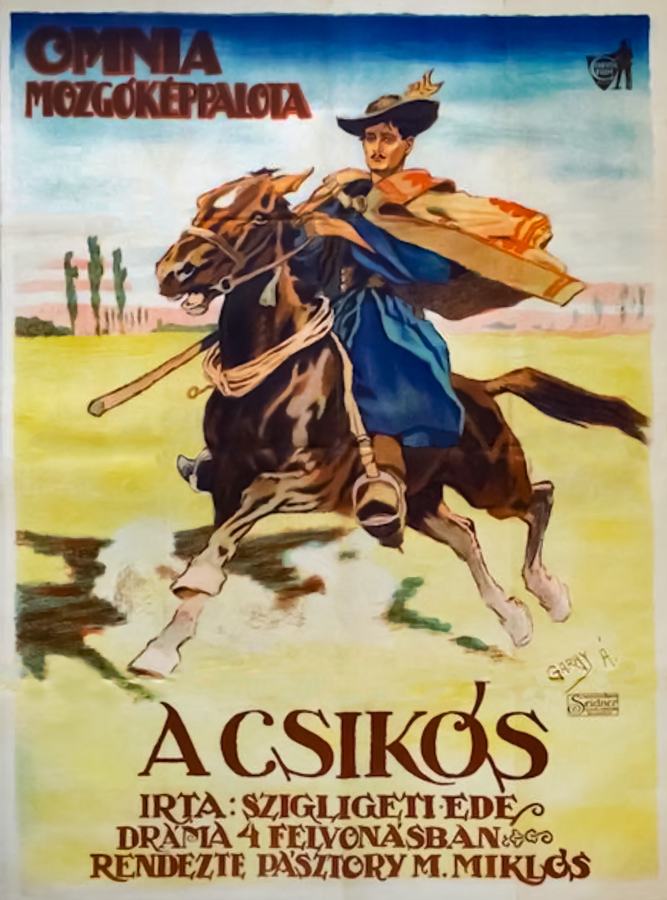
Stepping back into the nascent days of Hungarian cinema, one encounters A csikós, a film that, despite the ravages of time and the scarcity of its surviving prints, resonates with a profound emotionality and a stark beauty characteristic of its era. This cinematic endeavor, penned by the visionary Ede Szigligeti and Ladislaus Vajda, transcends mere historical artifact, emerging as a vibrant testament to the universal power of storytelling, particularly when rendered through the potent, unadorned lens of the silent screen. It is a work that captures the essence of a nation's soul, steeped in the rugged romance of the Puszta and the enduring spirit of its people. The narrative, while perhaps archetypal in its construction, is imbued with an authenticity that elevates it beyond simple melodrama, transforming it into a compelling exploration of human frailty and resilience.
The film unfurls its dramatic tapestry against the breathtaking, almost mythological backdrop of the Hungarian Puszta, a landscape as much a character as any of its human inhabitants. This vast, often desolate plain, with its endless horizons and wild, untamed beauty, serves as the crucible for the story's fervent passions and bitter struggles. The cinematography, even in its preserved fragments, suggests a masterful capture of this environment, utilizing wide shots to convey the isolation and grandeur, and closer frames to emphasize the intimate connection between the csikós and his horses. It’s a setting that intrinsically links the protagonist, János, to something primal and unyielding, much like the stoic, enduring quality of the land itself. This profound sense of place distinguishes A csikós from its contemporaries, anchoring its dramatic flourishes in a tangible, almost spiritual reality. One might draw a thematic parallel to the expansive, character-defining landscapes seen in American Westerns, albeit with a distinctly European, pastoral sensibility, lending the film a unique flavor that is both exotic and deeply familiar.
The performances in A csikós are uniformly compelling, a testament to the powerful, often exaggerated, yet deeply expressive acting styles prevalent during the silent era. József Kürthy, in the titular role of János, the proud horse-herder, delivers a performance brimming with a quiet dignity and an underlying ferocity. His portrayal of a man tethered to the land and his animals, yet yearning for a connection beyond his station, is remarkably nuanced. Kürthy’s physicality, his command of the frame, speaks volumes without uttering a single word, conveying the raw strength and moral fortitude of the csikós. He embodies the archetype with a palpable authenticity, making János a figure both heroic and tragically human. His expressive eyes and deliberate gestures communicate a rich inner life, allowing the audience to invest deeply in his struggles and triumphs.
Ica von Lenkeffy, as Ilona, provides a radiant counterpoint to Kürthy’s stoicism. Her portrayal of the landowner’s daughter is one of grace and spirited independence. Lenkeffy imbues Ilona with a captivating blend of innocence and unwavering resolve, making her a formidable presence who defies societal expectations. Her chemistry with Kürthy is understated yet potent, the silent exchanges between them conveying a profound bond that transcends their disparate social standing. This nuanced romantic dynamic is crucial to the film's emotional core, elevating it beyond a simple tale of forbidden love. It calls to mind the yearning and societal barriers explored in films like The Small Town Girl, though A csikós frames its class divide within a distinctly Hungarian cultural context.
Victor Varconi, a name that would later gain international recognition, delivers a chilling performance as Gábor, the film's antagonist. Varconi masterfully crafts a character who is both outwardly charming and inwardly venomous, a man driven by ambition and a corrosive jealousy. His subtle sneers and calculating glances are chillingly effective, making him a truly memorable villain. The contrast between his refined demeanor and his ruthless actions provides a stark commentary on the deceptive nature of appearances and the corrupting influence of unchecked desire. The dramatic tension between Varconi's Gábor and Kürthy's János forms the backbone of the film's conflict, a classic struggle between integrity and deceit that remains timeless.
Supporting players, including Alajos Mészáros and Oszkár Fodor, along with Aranka Laczkó, round out the ensemble with equally committed performances. Mészáros, perhaps as a loyal friend or fellow worker, brings an earthy realism, while Fodor and Laczkó, in their respective roles, contribute to the intricate web of relationships and societal pressures that define the narrative. Each actor, through exaggerated gestures and profound facial expressions, contributes to the film’s overall dramatic impact, ensuring that the story's emotional beats are clearly communicated to an audience reliant solely on visual cues and intertitles.
The plot of A csikós, while adhering to many of the narrative conventions of early 20th-century cinema, distinguishes itself through its specific cultural grounding and the depth of its characterizations. It’s a tale woven with threads of forbidden love, class struggle, and the pervasive shadow of injustice. The central conflict—János’s false accusation and his subsequent fight for vindication—is a powerful engine for dramatic tension. The writers, Ede Szigligeti and Ladislaus Vajda, demonstrate a keen understanding of human psychology, crafting a narrative that explores themes of honor, betrayal, and the enduring power of love in the face of adversity. The story's progression, from the idyllic blossoming of romance to the dark descent into suspicion and despair, and finally to a climactic resolution, is paced effectively, building suspense through visual storytelling rather than dialogue.
One of the film's most striking aspects is its portrayal of the stark class divisions prevalent in Hungarian society. János, the csikós, represents the earthy, honest laboring class, intrinsically tied to the land, while Ilona and Gábor embody the aristocratic world, with its inherent privileges and prejudices. The film subtly critiques these societal barriers, suggesting that true worth lies not in birthright but in character and integrity. This thematic resonance can be seen in other contemporary works exploring social mobility and class conflict, like Business Is Business or Over the Hill, though A csikós frames it with a unique blend of pastoral romanticism and stark realism. The struggle for justice, and the clearing of János’s name, becomes not just a personal victory but a symbolic triumph over the entrenched injustices of the era.
The directorial vision behind A csikós, though often obscured by the collective efforts of early filmmaking, is evident in its thoughtful composition and dynamic pacing. The use of natural light to capture the vastness of the Puszta and the subtle expressions of the actors is particularly commendable. The film employs a visual grammar that is both accessible and sophisticated, guiding the audience through its emotional landscape without the aid of spoken dialogue. Intertitles are used judiciously, providing essential plot points and character insights without disrupting the flow of the visual narrative. The film's reliance on powerful imagery—the galloping horses, the wide-open plains, the anguished faces of its protagonists—creates a visceral experience that transcends the limitations of its silent format.
The influence of A csikós on subsequent Hungarian cinema, and indeed on the broader European film landscape, is difficult to quantify given its relative obscurity in modern discourse. However, its thematic concerns—the celebration of national character, the exploration of social injustice, and the enduring power of romantic love—are threads that run through many cinematic traditions. One could argue that its pioneering spirit helped lay the groundwork for a distinct Hungarian cinematic identity, one that often grappled with the country's unique history and cultural heritage. Its ability to evoke strong emotions through purely visual means places it in conversation with other silent era masterpieces that understood the profound potential of the moving image. Films like May Blossom or The Sentimental Lady, while different in setting and specific narrative, share a common thread of utilizing the silent medium to explore complex human relationships and societal pressures, proving the universal appeal of such dramatic constructions.
Despite its age and the technical constraints of its production, A csikós retains a remarkable immediacy. The performances, though stylized for the silent screen, communicate universal emotions with a raw intensity that transcends time. The struggle between good and evil, the yearning for acceptance, and the fight for love against overwhelming odds are themes that resonate as powerfully today as they did a century ago. It’s a film that speaks to the enduring human spirit, to the courage required to uphold one's honor, and to the unwavering belief in justice. The dramatic climax, a thrilling race against time or a tense confrontation, would have undoubtedly captivated audiences then, and still holds a potent allure for contemporary viewers willing to engage with the aesthetic of silent cinema.
The restoration and preservation of such films are crucial for understanding the evolutionary trajectory of cinema, and A csikós stands as a valuable piece of this intricate puzzle. It offers a window into the cultural anxieties and romantic ideals of early 20th-century Hungary, providing insights into its social fabric and artistic sensibilities. For enthusiasts of film history, particularly those interested in European silent cinema, this is a profound experience, offering a glimpse into a cinematic past that, though distant, feels remarkably vibrant and alive. The narrative's classic arc, similar to the moral quandaries explored in Brother Against Brother or the intricate character dynamics of Hans hustrus förflutna, proves that fundamental human conflicts are evergreen sources of dramatic power, irrespective of the technological advancements in filmmaking.
Ultimately, A csikós is more than just a historical curiosity; it is a compelling piece of cinematic art that speaks to enduring themes of love, justice, and identity. Its beautiful portrayal of the Hungarian landscape, combined with the powerful performances of its cast, particularly József Kürthy and Ica von Lenkeffy, makes it a significant entry in the canon of early European cinema. The directorial choices, the narrative structure, and the emotional depth all contribute to a film that, even in fragmented form, leaves a lasting impression. It reminds us that the pioneers of cinema, working with rudimentary tools, were capable of crafting stories of immense power and beauty, stories that continue to resonate and inspire. Engaging with A csikós is not merely watching an old film; it is embarking on a journey into the heart of a bygone era, experiencing a profound human drama that transcends the passage of time and the silence of its original presentation. It stands as a testament to the universal language of cinema, a silent epic that truly speaks volumes. The sheer raw emotion, the struggle against overwhelming odds, and the ultimate triumph of the human spirit are themes that connect it to the primal energy of events like the Jeffries-Johnson World's Championship Boxing Contest, though in a dramatically different arena, both showcasing the monumental struggles of individuals against defining forces. This film, truly, is a jewel in the crown of Hungarian cinematic heritage, deserving of wider recognition and appreciation.
IMDb —
1933
Community
Log in to comment.