DbcultAccessing Vault...
Cult Review
Senior Film Conservator
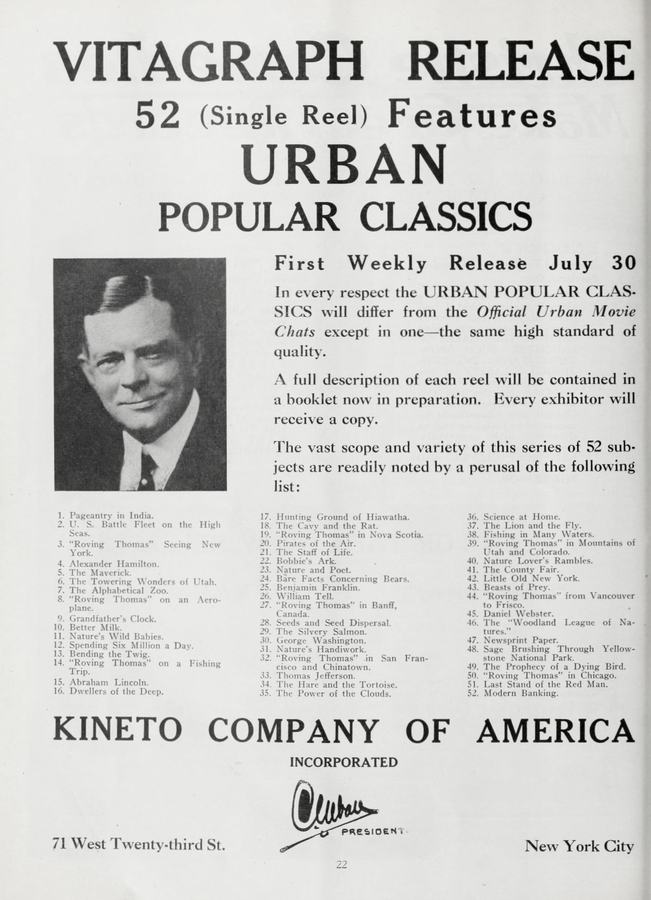
Imagine, for a cinematic heartbeat, that your entire world is a single milkweed leaf—veins like interstates, trichomes like skyscrapers, and every droplet of latex a potential tar pit. Nature’s Handiwork straps you to this Lilliputian continent and magnifies it until freeway cracks become canyons. The film’s prologue is an overture of eggs: opalescent capsules arranged in mandala symmetry, each sphere refracting studio lights into galaxies no human retina was built to admire. A percussive score—woodblocks, brushed snares, sub-bass heartbeats—counts down to eruption. When the first larva punches through, the camera doesn’t politely observe; it practically swallows the neonate whole, GoPro-style, so you feel amniotic sap smear across the lens. It’s less Attenborough calm and more cosmic body-horror baptism.
Directors Liora Nadel and Caden Voss understand that metamorphosis is inherently a thriller. Their gambit: treat every instar molt like a gangland power shift. After the inaugural skin-shed, the caterpillar—now a pudgy Roman emperor—wears chlorophyll stripes like military regalia. The editors splice close-ups of chewing mouthparts with audio of distant thunder, implying that mandible percussion can summon meteorological havoc. Hyperbole? Perhaps. Yet within the cloistered universe of milkweed, that thunder is the guttural warning of a monarch loading cardiac glycosides into its flesh, prepping for chemical warfare against future predators. You half expect The Jaguar’s Claws to leap from the underbrush, though the true antagonists here are chalcid wasps no longer than a hyphen.
The second act is a fugue of consumption. Time-lapse spirals accelerate 48 hours into eight seconds, leaves evaporating like Kleenex in flame. The caterpillar balloons, its segments accordioning into a cargo train of digestive exuberance. Cinematographer Martijn de Kok rigs a slider to travel inside a translucent acrylic tunnel lined with foliage; the result feels like Snowpiercer re-storyboarded by Fabergé. Meanwhile, the sound designers sample bubble-wrap pops and pitch-bend them into the groans of plant vasculature under siege. It’s gluttony as rock opera, yet the film refuses to moralize. Instead, a whispered voice-over—second-person, almost accusatory—asks: “When did you last hunger for something with such monomania?” The question lingers, a rhetorical hook baited with guilt.
Then comes the pivot that will break your brain: the chrysalis sequence, rendered not as tranquil dormancy but as molecular mutiny. Electron-microscopic imagery reveals the larva’s muscles sluicing into cytosolic chowder. Cells tagged with fluorescent proteins strobe turquoise and magenta, a bioluminescent disco. Musical score switches to minimalist synth, its tempo synced with mitotic waves. Here the film tips its philosophical hat to The Hand Invisible, another micro-cosmic essay that framed cellular choreography as divine puppetry. Yet Nadel and Voss secularize the miracle: no creator cameo, only thermodynamics and the elegant brutality of natural selection.
Eclosion arrives at dawn, horizon daubed in tangerine. The chrysalis shell fissures along a T-shaped suture; you anticipate triumph, but the newborn butterfly’s wings are crumpled like wet origami. The camera refuses to cut away, forcing you to witness every labored pump of hemolymph inflating those sails. It’s a moment of exquisite vulnerability, paralleling the human post-trauma crawl into daylight. When the insect finally lifts off, the frame rate slows to 240 fps, each wingbeat printed on the retina like liquid stained glass. Overhead, a drone shot pulls back to reveal the riverine corridor of migrating monarchs—orange shards slicing through azure thermals. Cartographical overlays trace a 3,000-kilometer exodus, reminding you that the creature you just worried over is a single pixel in a continental data set.
Comparative litmus: BBC’s Life in the Undergrowth luxuriates in similar macro porn, yet its narration anesthetizes with omniscient detachment. Nature’s Handiwork weaponizes intimacy, implicating your own mammalian ephemerality. Where From Dusk to Dawn used nocturnal sleight-of-hand to transform predators into metaphors for addiction, this doc suggests that metamorphosis itself is addictive—a serial killer of identities we never knew we mourned.
Flaws? Minimal but worth dissecting. The score occasionally swells into Hans-Zimmer bombast, risking aesthetic gluttony that mirrors its subject. A mid-film detour into human butterfly-conservation NGOs feels grafted, momentarily puncturing the micro-cosmos. And the absence of on-screen scientific nomenclature—no Latin binomials, no calibration bars—may irk pedantic entomologists. Yet these are nitpicks on a caterpillar’s mandible; they don’t derail the narrative freight train.
The epilogue loops back to the milkweed blade, now winter-bare, hosting a constellation of silk-spun chrysalises dangling like parchment lanterns. Snowflakes powder their shells; you realize each is a futures contract signed against apocalypse. End credits roll over infrared footage of a queen butterfly nectaring by freeway sodium-lights—urban halo substituting for celestial navigation. It’s a quiet gut-punch, reminding us that survival hinges on negotiating the glow we invented.
Verdict: Nature’s Handiwork is not merely a documentary; it is a metamorphic engine that liquefies your comfortable anthropomorphism and re-casts it into winged humility. See it on the largest screen possible. Let the scales of disillusion flutter off your eyes. You’ll exit the theater lighter, yet paradoxically more burdened by the fragile grandeur of a planet folding and unfolding inside a billion tiny origami bodies.
References for cinephile context: The Poor Rich Cleaners for class metaphor; A Girl of Yesterday for nostalgia’s decay; Behold My Wife for gendered objectification parables; Saint, Devil and Woman for moral triangulation; Branding Broadway for spectacle critique; Come Robinet sposò Robinette for nuptial satire; The Squaw Man for colonial tension; The Edge of the Law for existential brinkmanship; The Ornament of the Lovestruck Heart for ornamental obsession; It Pays to Advertise for commodification; Notorious Gallagher; or, His Great Triumph for self-mythologizing; The Iron Test for endurance metaphor.

IMDb —
1920
Community
Log in to comment.