DbcultAccessing Vault...
Cult Review
Senior Film Conservator
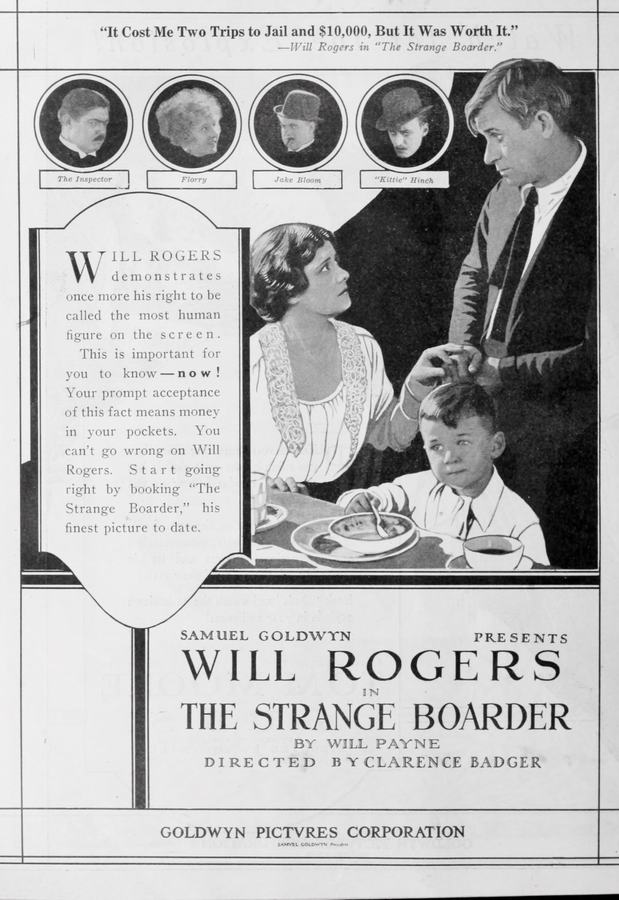
A desert wind hisses through the opening iris shot, kicking up alkali dust that seems to scratch the celluloid itself; within seconds we’re trafficked from sun-blistered mesas to a city whose electric glare feels carnivorous. That tonal whiplash is The Strange Boarder in microcosm—an unheralded 1920 morality fable that straps western stoicism onto urban noir’s jittery back and rides the hybrid beast until its hooves spark on cobblestones.
Director Edfrid A. Bingham—better known then for scenario work than for helming pictures—translates Will J. Payne’s pulp yarn into a chiaroscuro fever dream. Notice how the Arizona exteriors are over-exposed, whites so blistering they threaten to obliterate the frame; cut to the boardinghouse foyer where shadows pool like ink, and faces hover half-submerged. This isn’t just atmospheric dallying—it’s visual rhetoric: honesty bleached, duplicity drowned.
Sam Gardner, essayed by a taciturn Louis Durham, carries the laconic gravitas of early Hart yet lacks that star’s granite mythos. Durham’s Sam is more porous, susceptible—his eyes telegraph every fiscal bruise. When crooked sharpies filch his ten-thousand-dollar grubstake, the actor’s shoulders don’t merely sag; the entire plains seem to settle on his clavicles. Silent cinema often flattened victims into archetypes, but Durham lets shame ferment, wordlessly calculating interest on humiliation.
Enter Irene Rich as Jane Ingraham, the boardinghouse’s lodestar. Rich could arch a brow like a drawbridge, admitting or denying access to her character’s heart with split-second precision. Note the scene where she first spots Sam scrubbing trail-dust off his boots: a single intertitle reads “City ways ain’t yours, cowboy.” Yet her eyes, glimmering with something between pity and predatory curiosity, undercut the condescension. The performance is a masterclass in sub-intertitle acting—what flickers beneath the text block.
Kittie Hinch, meanwhile, is a cocktail of bonhomie and brimstone, played by scene-stealer Jack Richardson. Richardson had the gift of smiling too widely, so every grin felt like a threat; when he slaps Sam on the back in camaraderie, the echo is of planks being nailed over a coffin. His wife Florry (Doris Pawn) drifts through parlor doors in peacock-feather boas, exhaling cigarette tendrils that coil around Sam’s moral compass. Pawn’s gait suggests perpetual tango, hips always half a beat ahead of her intentions.
Jack Bloom’s gambling den is the film’s fulcrum: velvet drapes swallow sound, gaslights throb like migraines, and every poker chip lands with the metallic thud of a spent shell. Cinematographer Frank D. Williams (borrowing liberally from von Sternberg’s future playbook) shoots the card table from directly overhead, turning players into chess pieces awaiting gambit. The murder happens off-frame—Bloom’s torso folds out of sight behind a curtain—yet the violence feels intimate because we witness it through a mirror maze of reflections; the camera doesn’t show the gunshot, it shows the idea of the gunshot ricocheting across faces.
Herein lies the film’s savviest deviation from contemporaries like The Devil to Pay or A Rich Man’s Plaything: guilt isn’t pinned via mustache-twirling villains but through a communal shrug, a city-wide willingness to let the outsider hang if it sanitizes local reputations. Sam’s accusation lands with bureaucratic swiftness—no mobs with torches, just a judge whose gavel feels bored.
Jane’s alibi sequence is a tour-de-force of editorial brinkmanship. Bingham cross-cuts her frantic search for witnesses with Sam’s dungeon-like holding cell where light slices his face into prison-bar stripes. Intertitles shrink, words fragment—“I was…,” “He couldn’t…,”—as if language itself hyperventilates. When her testimony collapses, Rich lets Jane’s pupils dilate in a close-up so prolonged it becomes uncomfortable; the audience becomes voyeur to the moment optimism flatlines.
Salvation arrives via telegram—an eleventh-century deus ex machina retooled for the Jazz Age. Hinch, hiding in a dusty Mexican cantina, confesses. Narratively it’s a cop-out, yet Bingham weaponizes the cliché: the wire’s words crawl over the screen as superimposed scrawl, each line erasing Sam’s fingerprints from the murder weapon. The film’s closing kiss between Sam and Jane isn’t framed against postcard mountains but against a dingy post-office wall—frontier freedom transplanted to urban liminality.
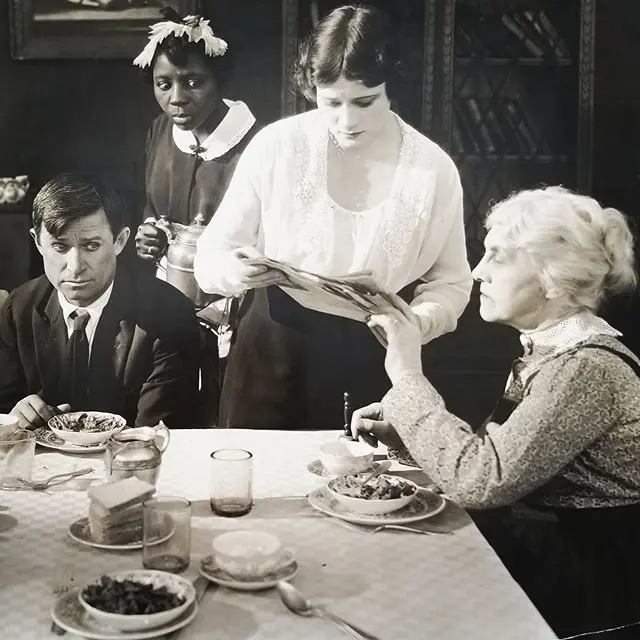
Performances aside, The Strange Boarder fascinates for its pre-code candor. Florry’s adulterous flirting is unapologetic; gambling isn’t a moral pothole but a pragmatic ladder. Compare it to The Family Honor released the same year, where vice guarantees comeuppance; here, vice merely guarantees volatility.
The film’s racial politics, however, curdle. A Chinese houseboy named Ling (Sydney Deane in yellowface) shuffles through scenes dispensing pidgin wisdom—“Man luck like kite, sometime wind, sometime no.” It’s a caricature meant to exoticize the boardinghouse; modern viewers will wince. Yet even this stereotype is weirdly utilitarian, a blunt acknowledgment that America’s underbelly was always multiracial, always exploitable.
Musically, the surviving cut lacks original orchestrations, so contemporary festivals commission new scores. At Pordenone 2019, a quartet rendered a tango-infused motif for Florry that bled seamlessly into a Protestant hymn for Sam—an aural culture-clash mirroring his urban displacement. Such reinterpretations underscore how silents mutate with each accompaniment, celluloid palimpsests.
Technically, the film sits between two eras. Exterior shots retain the static tableaux of late-1910s westerns, while interior set-ups exhibit the roving, psychologically invasive camera that would define 1920s German imports like Die Geächteten. The boardinghouse staircase, shot from a steep Dutch angle, anticipates Caligari’s carnival sets by months, not years.
Commercially, The Strange Boarder underperformed—critics praised Rich but yawned at the derivative murder plot. Exhibitors retitled it “The Gambler’s Alibi” in certain territories, a marketing sleight-of-hand that fooled nobody. By 1922 it was already relegated to small-town circuits, a reel-swappers’ afterthought.
Yet cine-historians now excavate it as a missing link: the moment western iconography—horses, horizons, honor—collides with noir’s existential roulette. The city doesn’t just fleece Sam; it reeducates him, teaches that luck is geography, morality a side bet. When he finally returns west, betrothed to Jane, one senses the frontier no longer offers purity, only a quieter brand of compromise.
For casual viewers, the pleasures are microcosmic: Irene Rich’s eyebrow acrobatics, the cyan tint of night scenes invoking mercury-vapor lamps, the tactile crunch of a forged signature on parchment. For scholars, the film is a Rosetta Stone revealing how Hollywood smuggled continental cynicism into corn-fed genres a decade before von Sternberg’s Betrayed or Wilder’s The Storm.
Restoration notes: only a 35mm nitrate print at MoMA retains the full seven-reel version; European archives hold truncated 16mm reduction prints missing the confession telegram, rendering the ending absurdly abrupt. A 4K scan was conducted in 2021, exposing hairline scratches that resemble lightning across desert skies—blemishes so poetically apt they feel intentional.
Bottom line: The Strange Boarder is neither canonical masterpiece nor disposable programmer. It’s a celluloid hinge, creaking as it swings between moral absolutes of the frontier and urban relativism of the Roaring Twenties. Watch it for Rich’s luminous pragmatism, for Durham’s wounded integrity, for the way shadows in Bloom’s parlor seem to masticate hope. But mostly watch it to witness a genre learning to shuffle the deck with its own myths—sometimes drawing aces, sometimes jokers, always gambling that the next card won’t be the one that breaks the bank of human decency.
IMDb —
1930
Community
Log in to comment.