DbcultAccessing Vault...
5.2/10
Senior Film Conservator
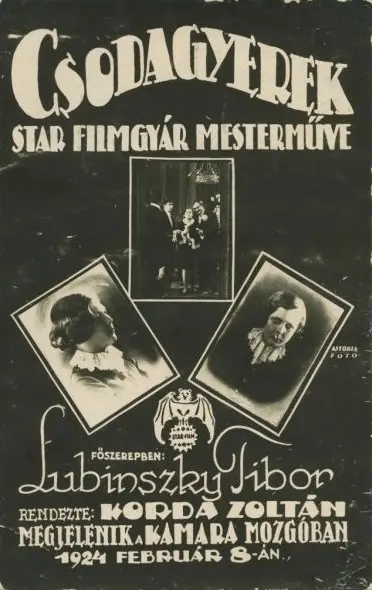
A definitive 5.2/10 rating for a film that redefined the boundaries of cult cinema. A Csodagyerek remains a cornerstone of transgressive art.
To traverse the annals of Hungarian cinema is to encounter the spectral brilliance of the silent era, a period where the visual medium was shedding its theatrical chrysalis to become something profoundly visceral. A Csodagyerek (1923), directed by the legendary Zoltan Korda, stands as a testament to this metamorphosis. It is not merely a film; it is a celluloid artifact that captures the intersection of burgeoning psychological realism and the grandiosity of European expressionism. While many contemporary viewers might find the silence deafening, Korda utilizes it as a canvas, painting a narrative of staggering emotional complexity that rivals the thematic depth of The Man Who Played God.
Before Zoltan Korda became a titan of British cinema, his roots were firmly planted in the fertile, albeit turbulent, soil of the Hungarian film industry. In A Csodagyerek, we witness the nascent stages of his directorial signature: a preoccupation with the individual’s struggle against systemic pressures. The film’s protagonist, a musical prodigy, is not just a character but a vessel for the anxieties of a post-war generation. The casting of Tibor Lubinszky was a stroke of genius. Lubinszky, a child star of unparalleled magnetism, carries the film with a maturity that feels almost supernatural, much like the characters in Lulù struggle with their own perceived roles in a judgmental society.
The supporting cast, featuring stalwarts like Gyula Szöreghy and Lili Berky, provides a rugged framework for Lubinszky’s ethereal performance. Szöreghy, in particular, anchors the film with a gravitas that balances the more flighty, artistic aspirations of the plot. The synergy between these actors creates a domestic milieu that feels both lived-in and claustrophobic. Unlike the sprawling adventures found in Sands of the Desert, Korda keeps the stakes intimate, focusing on the micro-fractures within a family unit when faced with the anomaly of genius.
Technically, A Csodagyerek is a marvel of its time. The use of lighting is not merely functional; it is psychological. Korda and his cinematographer employ shadows to delineate the divide between the public persona of the prodigy and the private torment of the child. There are sequences where the play of light on Lubinszky’s face conveys more than a dozen pages of dialogue ever could. This mastery of visual storytelling is what separates Korda from his contemporaries who were still bogged down by the static nature of stage adaptations. The fluid camera movements, though primitive by today’s standards, suggest an eye for the cinematic that was decades ahead of its time, echoing the experimental spirit of La montagne infidèle.
The film’s pacing is deliberate, allowing the audience to steep in the atmosphere of early 20th-century Budapest. Every frame is meticulously composed, from the ornate concert halls to the stark, humble interiors of the protagonist's home. This contrast serves to highlight the central conflict: the disparity between the lofty world of high art and the grounded reality of human survival. In this regard, the film shares a thematic kinship with Egyenlöség, which also delved into the stratified layers of social existence.
What does it mean to be 'chosen'? A Csodagyerek posits that talent is a double-edged sword. The film delves into the exploitation of the young protagonist, as the adults around him—writers like Zoltan Korda himself ensuring the narrative remains tight—jostle for a piece of his success. It is a cynical look at the industry of art, one that remains relevant in our modern era of child influencers and reality television stars. The emotional toll on the child is depicted with a sensitivity that avoids the saccharine, opting instead for a gritty realism that reminds one of the moral complexities in The Sin of Martha Queed.
The narrative structure avoids the linear simplicity of many silent films. Instead, it weaves through memory and performance, creating a dreamlike quality that mirrors the protagonist's own disorienting experience. We see the world through his eyes—a world that is often too big, too loud, and too demanding. This subjective perspective is a hallmark of great cinema, inviting the audience to empathize rather than just observe. It is this empathy that elevates the film from a simple 'rise and fall' story to a profound character study, much like the nuanced portrayal in The Bashful Lover.
When placed alongside other films of the early 1920s, such as Paradise Lost or the mysterious allure of Lucille Love: The Girl of Mystery, A Csodagyerek distinguishes itself through its psychological depth. While The Twinkler might offer more overt charm, Korda’s work offers a more substantial intellectual meal. The film does not shy away from the darker aspects of its premise, much like the somber tones found in The Devil's Garden. Even when compared to lighter fare like Toonerville's Fire Brigade or the sports-centric Play Ball with Babe Ruth, the gravity of the 'Prodigy' remains unmatched.
The film also serves as a fascinating precursor to the 'returning home' tropes seen in Back from the Front and the domestic dramas like Lena Rivers. It bridges the gap between the theatrical traditions of the 19th century and the avant-garde movements that would soon sweep through Europe. The performances of László Békeffi and Ernõ Szenes further enrich this tapestry, providing a variety of human responses to the central miracle of the child’s talent.
In conclusion, A Csodagyerek is a vital piece of cinematic history that demands rediscovery. It is a film that speaks across the decades, its silence carrying a resonance that modern blockbusters often lack. Zoltan Korda did not just direct a story about a gifted child; he directed a symphony of human emotion, capturing the fleeting, tragic beauty of a genius that the world was not quite ready to protect. It remains a cornerstone of Hungarian artistic expression and a masterclass in silent storytelling that rewards the patient, discerning viewer. Whether you are a scholar of the silent era or a casual fan of classic drama, this film offers a hauntingly beautiful experience that lingers long after the final frame fades to black. It is, in every sense of the word, a masterpiece of the early silver screen.
IMDb —
1934
Community
Log in to comment.