DbcultAccessing Vault...
Cult Review
Senior Film Conservator
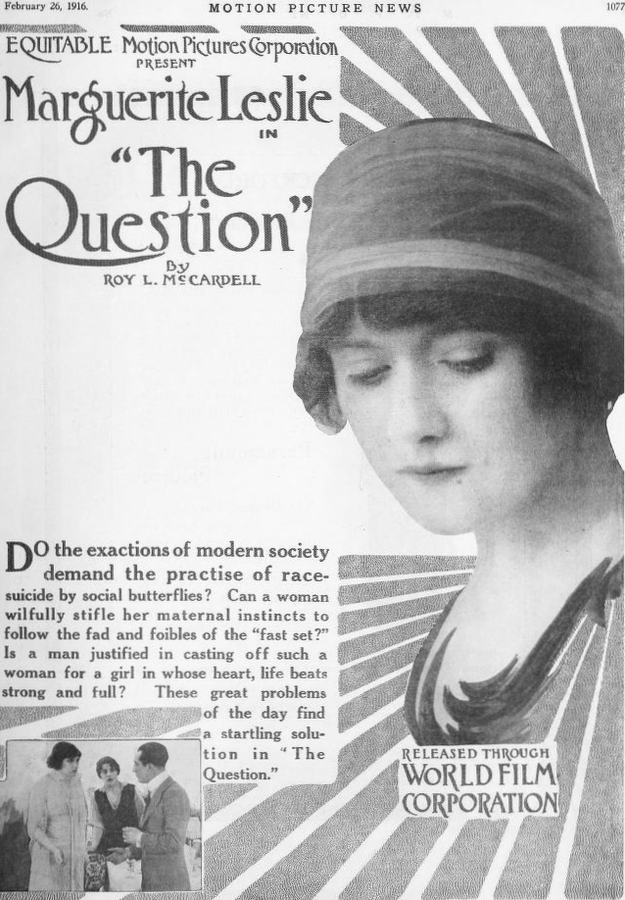
A cathedral of chandeliers, a marriage certificate brittle as parchment, and a diaphragm hidden behind silk handkerchiefs—The Question opens like a Fabergé egg cracked open to reveal not jewels but a live scorpion.
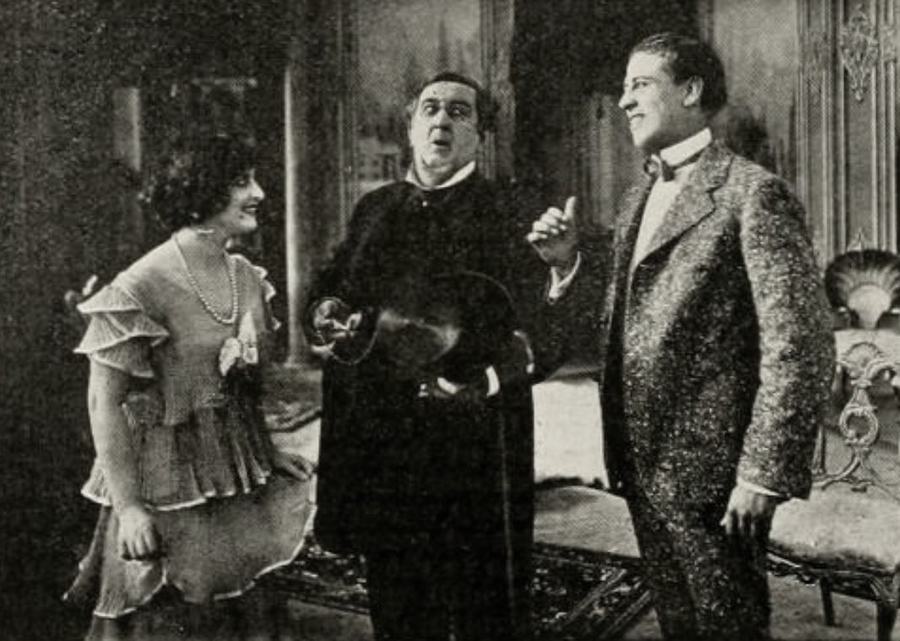
In 1920, when the world still coughed up dust from the Great War, cinema discovered a new battlefield: the boudoir. Roy L. McCardell’s screenplay, staged by a director whose name history has mislaid, is less a narrative than a blood-orange squeezed over white linen—every droplet a moral stain. Bernard Randall’s Ralph Tudor has the posture of a man who believes bank vaults are wombs; Clara Whipple’s Grace Hamilton glides through scenes as though her spine were a string of pearls held aloft by malicious marionette strings. Their contract is money on his side, perpetual girlhood on hers. Children? “I’d sooner host a plague,” her eyes glint.
Enter Anna Lee, played by Lorell Gibson with the stunned radiance of a candle too near an open window. She is the working-class everywoman whose spine must bend so the wealthy may walk upright. Her father—an off-screen gargoyle—blackmails her, threatening to expose ledger tampering unless she filches cash from Tudor’s safe. The film treats this coercion like a magician’s sleeve: every yank reveals another silk square of misery.
Frank Gray, George Anderson’s tousled artist, is the sole character who believes emotions deserve wall-space larger than a banknote. His studio—canvases stacked like storm clouds—promises Anna a life of pigment and passion. Yet she fixates on Tudor, mistaking gratitude for desire, security for love. Their elopement to a fog-choked coastal resort feels less an affair than a mutual suicide pact wearing lingerie.
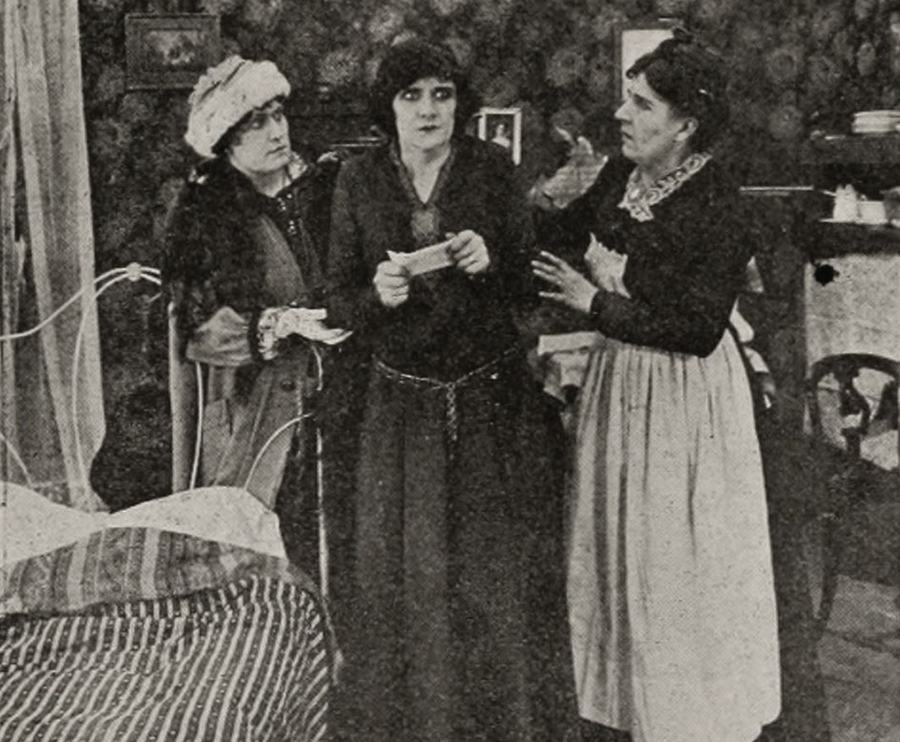
The film’s midpoint pirouettes into Grand-Guignol. Grace, discovering her husband’s defection, retaliates with a dog costume ball—Pomeranians in powdered wigs, pugs dressed as Napoleon—an orgy of fur that mocks the very idea of motherhood. Meanwhile Tudor drowns his future in Scotch, the amber liquid echoing the film’s tinting. Intertitles flare: “A cradle stands empty; a heart stands full.”
Back in the city, Hyatt—Tudor’s ex-partner—slithers through boardrooms claiming the satchel of money is corporate marrow. The assault on Ryan, the clerk, is staged in chiaroscuro: a streetlamp, a swinging crowbar, the sickening thud of flesh on cobblestone. The camera lingers on the cash strewn like autumn leaves, begging the question: does currency carry DNA?
Anna’s death occurs off-camera, announced by a landlady’s telegram that might as well be a death-mask. Her child—swaddled ambiguity—becomes the hot potato of guilt. Grace, suddenly pierced by conscience, adopts the infant, discovering in the bassinet a letter that brands Tudor as progenitor. The final tableau—husband and wife bathed in nursery lamplight—offers no absolution, only a brittle truce stitched from shared culpability.
Visually, the film exploits the grammar of shadows. Doorframes become guillotines; curtains, confessionals. A repeated motif shows hands reaching toward doorknobs yet hesitating—every entrance an invasion, every exit a small bereavement. The Brazilian interlude, shot on studio sets draped in mosquito netting, exudes Expressionist unease: palm fronds claw at the sky like guilty prayers.
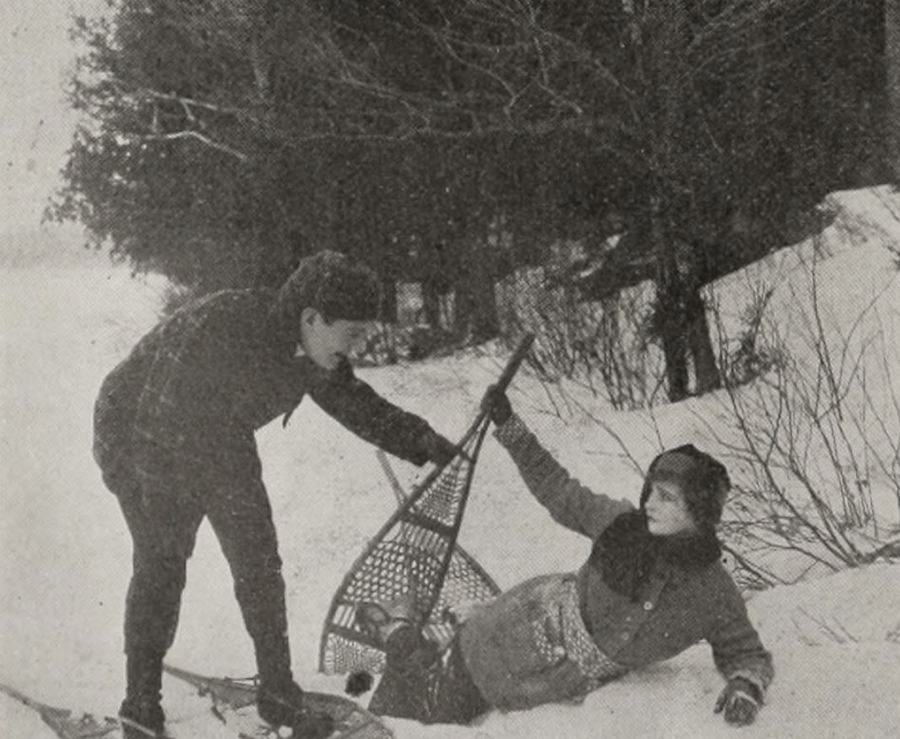
Compared to The Child of Destiny, which sanctifies motherhood through suffering, The Question treats maternity as battlefield collateral. Grace’s refusal to give birth is not mere frivolity—it is a rebellion against patriarchal capitalism that demands women mint heirs like coins. Yet the film cannot quite endorse her; its title card moralizes about “the eternal question of woman’s duty,” hedging bets between suffragette sympathy and Victorian scolding.
Performance-wise, Randall oscillates between granite stoicism and wet-eyed dissolution; watch the moment he learns Anna is pregnant—his jaw trembles as though the news is a ghost breathing ice. Whipple has the harder task: making selfishness charismatic. She succeeds; her Grace is a cobra wearing Chanel, every hiss modulated.
Lorell Gibson’s Anna is the film’s bruised soul. Note how she clutches her pay envelope—not like wages but like a love-letter she must burn. Her final close-up, eyes glassy with morphine perhaps, seems to look past the camera into every audience member who ever bartered dignity for rent.
The score, lost to time, survives only in cue sheets: Wagnerian leitmotifs for Tudor, Debussy-esque arpeggios for Anna, a jaunty rag whenever Grace swans through soirées. Modern restorations often substitute doom-laden strings; silence, however, might be more honest—let the intertitles echo like footsteps in an empty manse.
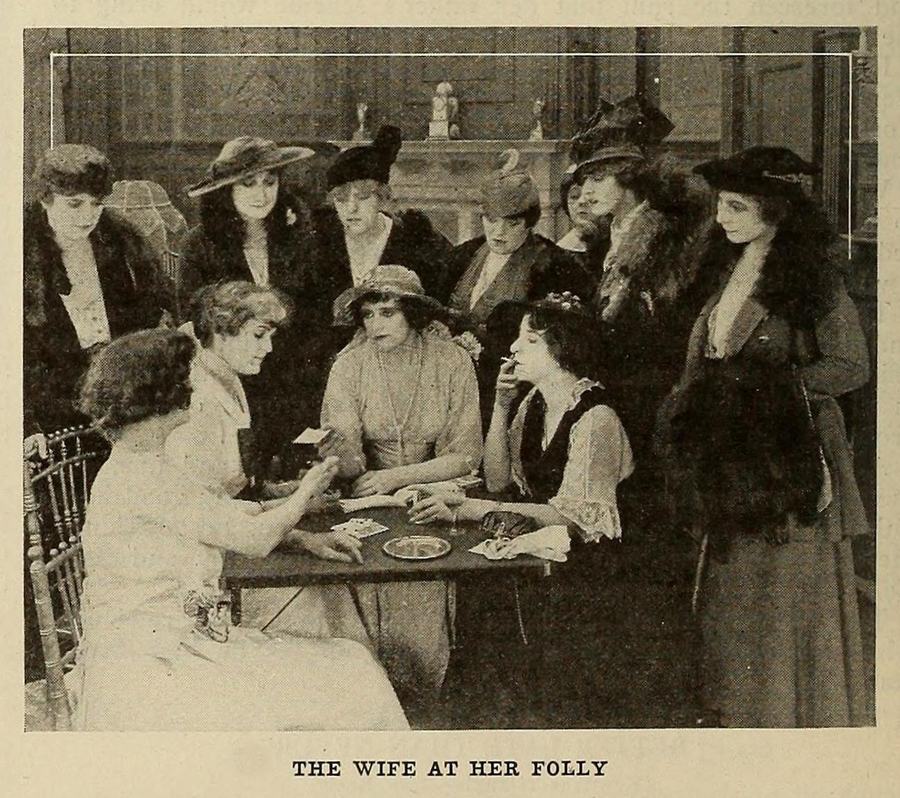
Socially, the film prefigures Diplomacy’s critique of class armor, yet lacks that film’s cynicism. It also rhymes with The Chattel, where women circulate as property, though here the ledger is complicated by affection—ugly, misdirected, but real.
Contemporaneous critics dismissed it as “a woman’s picture wallowing in sin,” yet that misses the razor inside the soap. McCardell’s script weaponizes the very tropes it appears to serve: the fallen woman, the repentant wife, the prodigal husband. Under the melodrama beats a radical inquiry—does possession extend to bodies, to futures, to the unborn?
Restoration notes: only two 35mm prints survive—one in Bologna, one in Rochester—both riddled with nitrate bloom. The tinting has been digitally approximated: amber for interiors, cyan for exteriors, rose for moments of carnal implication. The missing reel—Tudor’s Atlantic crossing—exists only in a continuity script adorned with penciled waves.
Ultimately, The Question is less interested in answers than in the tremor of the question mark itself. It lingers like a bruise on the retina, asking whether love can survive when reduced to ledger entries, whether a child can be both restitution and curse, whether forgiveness is anything more than shared amnesia. Long after the projector’s clatter fades, the afterimage persists: a cradle rocking in an empty room, its occupant somewhere between mercy and revenge.
For further exploration of silent-era moral mazes, see Through Fire to Fortune and The Witching Hour.
IMDb 7
1927
Community
Log in to comment.