DbcultAccessing Vault...
Cult Review
Senior Film Conservator
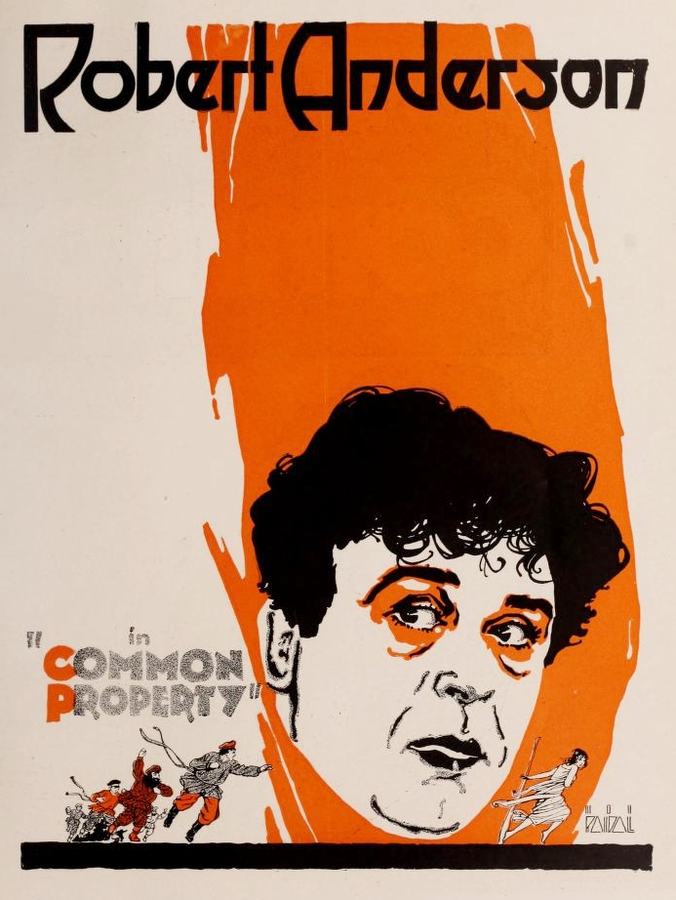
In the annals of early cinema, few films dared to tackle socio-political anxieties with the audacious, almost fantastical, premise of 1919's Common Property. Emerging from a period rife with global upheaval and ideological ferment, this silent drama, penned by Elliott J. Clawson, plunges its audience into a nightmarish scenario that, while hyperbolic, resonates with profound questions about individual liberty, state authority, and the sanctity of the family unit. It’s a compelling artifact, not merely for its narrative bravado but for its reflection of the era's anxieties concerning revolutionary ideologies and their potential impact on personal freedoms. This isn't just a story; it's a cautionary fable, delivered with the visceral punch only silent cinema, with its reliance on stark imagery and heightened emotion, could truly achieve.
The film introduces us to Pavel Pavlovitch, a seemingly ordinary Russian man whose domestic tranquility is abruptly shattered by an unthinkable government decree. Imagine waking to a world where the most intimate bonds are rendered null and void by a stroke of legislative pen. The decree itself is breathtaking in its scope and chilling in its implications: all women between the ages of seventeen and thirty-five are to be nationalized, declared 'common property' for the use of the state's citizens. This isn't just a legalistic pronouncement; it's an utter dehumanization, a reduction of personhood to mere utility. The film, through this extreme premise, lays bare the fragility of personal autonomy when confronted by an all-encompassing, totalitarian ideology. It forces us to confront what happens when the state claims dominion not just over property or labor, but over the very bodies and destinies of its populace. The immediate refusal of passports for the Pavlovitch family underscores their entrapment, a tangible manifestation of their lost freedom.
The horror deepens as the abstract threat becomes terrifyingly personal. Pavlovitch's own aged servant, a figure who should embody loyalty and deference, exploits the new edict to claim Pavlovitch's wife, Anna. This act of profound betrayal is a masterstroke in the narrative, highlighting how easily societal breakdown can corrupt even the most established relationships. It’s a stark reminder that oppressive systems don't just spring forth from a single source; they seep into the fabric of society, empowering individuals to act on their basest desires under the guise of state-sanctioned legitimacy. Similarly, the son of the village priest, another figure traditionally associated with moral uprightness, casts his predatory gaze upon Pavlovitch's daughter. This dual assault on the family's women, one by an insider and the other by a community figure, amplifies the sense of helplessness and moral decay pervading Saratov. The film brilliantly uses these individual claims to illustrate the widespread, immediate, and devastating impact of the decree, transforming a bureaucratic pronouncement into a deeply personal nightmare.
In silent cinema, the burden of conveying complex emotions and character arcs falls squarely on the shoulders of the actors' physicality and facial expressions. Nell Craig, as Anna, Pavlovitch's wife, delivers a performance steeped in palpable terror and quiet defiance. Her wide, pleading eyes and subtle gestures convey the crushing weight of her predicament, a woman stripped of her agency and facing an unthinkable future. She embodies the universal fear of losing control over one's own destiny. Robert Anderson, as Pavlovitch, portrays a man initially bewildered, then desperate, and finally resolute. His frantic attempts to protect his family, his visible anguish, and his eventual determination form the emotional core of the film's struggle against an impersonal, monstrous state. Colleen Moore, though perhaps in an earlier stage of her storied career, brings a youthful vulnerability to the daughter's role, making her plight even more poignant and emphasizing the innocence threatened by the decree. The supporting cast, including John Cook as the insidious servant and Arthur Maude as the priest’s son, effectively embodies the opportunistic and morally compromised elements of a society in disarray. Their exaggerated villainy, characteristic of the era, serves to underscore the profound threat to the Pavlovitch family.
Just as the situation for the Pavlovitch family appears utterly bleak, verging on insurmountable despair, a dramatic turning point arrives, characteristic of the era's narrative conventions. A troop of American cavalry gallops onto the scene, a literal deus ex machina, bringing with them the promise of intervention and justice. Their arrival in Saratov ignites a fierce street battle against the Russian mob, a visceral clash that visually represents the ideological conflict at the heart of the film. This sequence, undoubtedly intended to stir patriotic sentiment in its American audience, portrays a clear-cut struggle between the forces of individual liberty and the oppressive weight of state-sanctioned mob rule. The cavalry, clad in their distinctive uniforms, symbolizes a principled stand against tyranny, a direct challenge to the notion that human beings can be reduced to state property. The action is swift and decisive, culminating in the withdrawal of the abhorrent edict and the joyous reunion of the Pavlovitch family, their autonomy restored. While perhaps a simplistic resolution by modern standards, it served as a powerful affirmation of justice for audiences of the time, providing a cathartic release from the tension built throughout the narrative.
Common Property is more than just a melodramatic thriller; it’s a fascinating historical document reflecting the post-World War I anxieties and the burgeoning fear of communism following the Russian Revolution. Released in 1919, the film taps into a potent vein of anti-Bolshevik sentiment, presenting a hyperbolic worst-case scenario of what state control could lead to. The nationalization of women, while a fictional construct, draws parallels to the real-world upheaval and radical societal restructuring that characterized the early Soviet state, albeit in a highly exaggerated and propagandistic manner. The film’s message is clear: unbridled state power, particularly when it encroaches upon personal and familial rights, leads to chaos, moral degradation, and the destruction of the social order. This theme of individual struggle against overwhelming societal or governmental forces finds echoes in other films of the era, such as The Corner, which often depicted characters trapped by circumstances beyond their control, or even Beauty in Chains, where the very title suggests a similar struggle against oppressive forces, albeit perhaps in a more metaphorical sense. The film also touches upon the concept of sacrifice for freedom, a motif explored in works like The Sacrifice of Pauline, where characters often endure immense personal hardship to protect their loved ones or uphold their principles.
As a work of silent cinema, Common Property relies heavily on visual storytelling, expressive acting, and intertitles to propel its narrative and convey its message. The direction, though uncredited in the provided details, effectively builds tension through dramatic close-ups and dynamic crowd scenes. The contrast between the intimate terror within the Pavlovitch home and the chaotic spectacle of the street battle in Saratov is skillfully managed. The film's visual language, while perhaps less sophisticated than later silent masterpieces, is nonetheless effective in communicating its urgent political and social commentary. It’s a testament to the power of early cinema to engage with contemporary issues, even if through a lens of melodrama and overt moralizing. The resolution, with the American cavalry representing a force for good, underscores a particular geopolitical perspective prevalent at the time, positioning America as a defender of freedom against what was perceived as the encroaching threat of radical ideologies. This ideological stance is not uncommon in films from this period, which often used narrative as a vehicle for nationalistic or moralistic messaging. While the film's premise is extreme, its core themes—the defense of individual rights, the sanctity of family, and the dangers of unchecked state power—remain surprisingly resonant, provoking thought long after the final frame.
In an era that saw profound shifts in global power dynamics and the very fabric of society, Common Property served as a dramatic vehicle for exploring deeply held fears and hopes. It might not possess the artistic gravitas of a truly groundbreaking cinematic achievement, but its audacity in tackling such a controversial and emotionally charged subject makes it a significant, if often overlooked, piece of film history. The performances, particularly from Nell Craig and Robert Anderson, imbue the fantastic narrative with genuine human stakes, allowing the audience to feel the immediate threat to their characters’ existence. The film reminds us of the power of cinema to reflect, and sometimes even shape, public opinion during times of immense social and political change. It's a vivid snapshot of a particular moment in history, capturing the anxieties and the fervent beliefs of a world grappling with new definitions of freedom and governance.
Ultimately, Common Property stands as a compelling example of how early narrative cinema engaged directly with the political zeitgeist. It’s a loud, clear alarm bell, ringing out against the potential abuses of power and the erosion of fundamental human dignities. The film's fantastical premise serves to amplify its message, making the threat feel immediate and universal, even if the specific details are exaggerated. The triumphant arrival of the American cavalry, while a convenient plot device, speaks to a broader yearning for justice and the belief in external forces capable of righting egregious wrongs. This narrative choice, though perhaps simplistic, offers a powerful emotional release and a reinforcement of prevailing values. It is a film that, despite its age and silent format, continues to provoke thought about the delicate balance between state authority and individual freedom, a conversation that remains perpetually relevant. The enduring impact of films like Common Property lies not just in their entertainment value, but in their capacity to serve as cultural mirrors, reflecting the deepest fears and most cherished ideals of their time.
The film's exploration of personal peril under a totalitarian system, where even the most intimate aspects of life are politicized, resonates with other narratives of resistance and survival. One might consider it in conversation with films that depict individuals fighting against overwhelming odds, or even those that explore the psychological toll of oppression. While its resolution is decidedly optimistic, it doesn't shy away from depicting the terrifying depths to which human society can sink when fundamental rights are abrogated. The vivid portrayal of the 'Russian mob' and the stark contrast with the disciplined cavalry highlights a clear, moralistic worldview, typical of much cinema produced during periods of intense ideological conflict. This makes Common Property not just a piece of entertainment, but a valuable historical document for understanding the cultural anxieties and political narratives of its time, offering a window into how complex global events were translated into popular art.
In conclusion, Common Property is a fascinating dive into early 20th-century socio-political anxieties, wrapped in a dramatic, often melodramatic, silent film package. Its bold premise and clear moral stance make it a compelling watch for anyone interested in the intersection of cinema and history, or simply in a powerful story about the enduring human fight for freedom and family. It’s a testament to the enduring power of storytelling to confront the unthinkable and champion the values that define us.
IMDb 6.9
1930
Community
Log in to comment.