DbcultAccessing Vault...
Cult Review
Senior Film Conservator
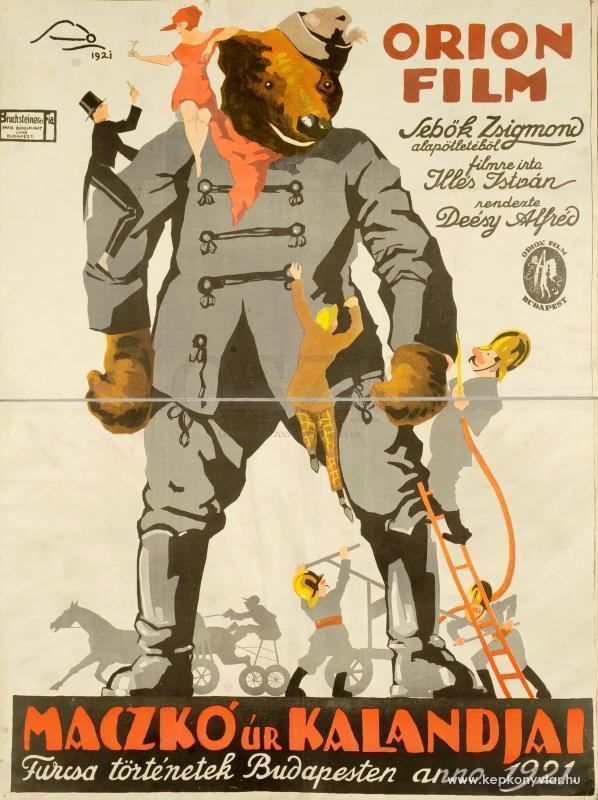
Mackó úr kalandjai (1950) is a cinematic gem that marries the innocence of childhood with the complexities of adult desire, creating a narrative that feels both timeless and refreshingly unique. Directed with a deft hand by a team of Hungarian auteurs, the film centers on two siblings whose relentless curiosity leads them to meddle in their aunt’s romantic affairs, guided by the cryptic counsel of a bear named Mackó. This isn’t your typical family drama—it’s a labyrinthine exploration of how children, with their unfiltered honesty, can disrupt the carefully constructed facades of adults.
At the heart of the film is a delicate tension between the protagonists’ youthful naivety and the adults’ hidden vulnerabilities. The children’s interventions, though well-meaning, expose the fragility of societal norms, particularly those surrounding love and marriage. This dynamic is heightened by Miklós Szomory’s portrayal of Mackó, a character who serves as both a moral compass and a catalyst for chaos. His bear-like demeanor—part wise mentor, part mischievous trickster—adds a layer of whimsy that keeps the tone from veering into melodrama.
The film’s success hinges on its ensemble cast, who bring a richness to their roles that elevates the material. Tommy Hegedüs and Cia Jatzkó, as the inquisitive siblings, deliver performances that are both endearing and razor-sharp, their chemistry mirroring the push-and-pull of their aunt’s romantic entanglements. Miklós Szomory’s Mackó is a masterclass in physical comedy, with every lumbering step and sly glance hinting at deeper layers of meaning.
József Kürthy and Norbert Dán, playing the competing suitors, embody the film’s central conflict—two men vying for the affection of the aunt, each representing different facets of societal expectation. Their rivalry is played with a mix of charm and desperation, making their interactions with the children both humorous and poignant. Meanwhile, Margit Lánczy’s portrayal of the aunt is a study in restraint and simmering emotion, her quiet strength contrasting with the children’s exuberance.
Mackó úr kalandjai thrives in its ability to blend humor with social critique. The film’s exploration of how children perceive and navigate adult relationships echoes the themes of Brewster's Millions, where a young protagonist’s moral clarity exposes the greed of those around him. Similarly, the labyrinthine plot—complete with mistaken identities and secret alliances—shares DNA with Double Crossed, though Mackó úr kalandjai infuses its twists with a lighter, more familial tone.
What sets this film apart is its treatment of love as both a public spectacle and a private vulnerability. The aunt’s romantic journey mirrors the children’s own burgeoning understanding of relationships, creating a parallel that is both insightful and deeply human. This duality is reminiscent of The Suitor, where the boundaries between genuine affection and performative gestures blur, but Mackó úr kalandjai adds a layer of innocence that prevents the narrative from becoming cynical.
Visually, the film is a masterclass in subtlety. The cinematography leans into soft, golden hues that evoke the warmth of childhood memories, juxtaposed with the stark, shadowy interiors of the adults’ world. This contrast is not merely aesthetic—it reinforces the thematic divide between innocence and experience. The score, a mix of playful melodies and somber motifs, further underscores the duality of the narrative, guiding the audience through moments of levity and introspection.
The direction, with its meticulous attention to detail, ensures that every scene serves a purpose. Whether it’s the children’s mischievous scheming or the adults’ increasingly desperate attempts to maintain control, the pacing is brisk yet deliberate, allowing the audience to savor the unfolding drama. This balance of chaos and control is a hallmark of the film’s genius, making it feel both urgent and timeless.
Though set in a specific historical context, Mackó úr kalandjai resonates with universal themes that transcend time. Its exploration of how childhood curiosity can unravel adult facades is as relevant today as it was in 1950. The film’s ability to blend humor with heart, while never losing sight of its central message, is a testament to the strength of its storytelling.
For modern audiences, the film offers a refreshing antidote to the hyper-dramatic narratives that often dominate contemporary cinema. Its quiet, character-driven approach invites viewers to reflect on their own relationships and the societal pressures that shape them. In this regard, it stands alongside classics like It May Be Your Daughter, which also examines the tensions between individual desires and societal expectations.
Mackó úr kalandjai is a film that rewards patience and rewards attention. Its charm lies not in spectacle, but in its ability to find poetry in the mundane and meaning in the seemingly trivial. The interplay between the children and adults creates a narrative that is as much about growth and understanding as it is about romance and deception.
For those seeking a film that balances humor and heart with a deft touch, Mackó úr kalandjai is a must-watch. Its legacy as a quietly profound piece of cinema is secure, and its themes of innocence, love, and the chaos of human connection remain as vital as ever. To explore similar films, consider checking out Brewster's Millions or Double Crossed, both of which offer compelling parallels to this Hungarian classic.
IMDb —
1915
Community
Log in to comment.