DbcultAccessing Vault...
5.2/10
Senior Film Conservator
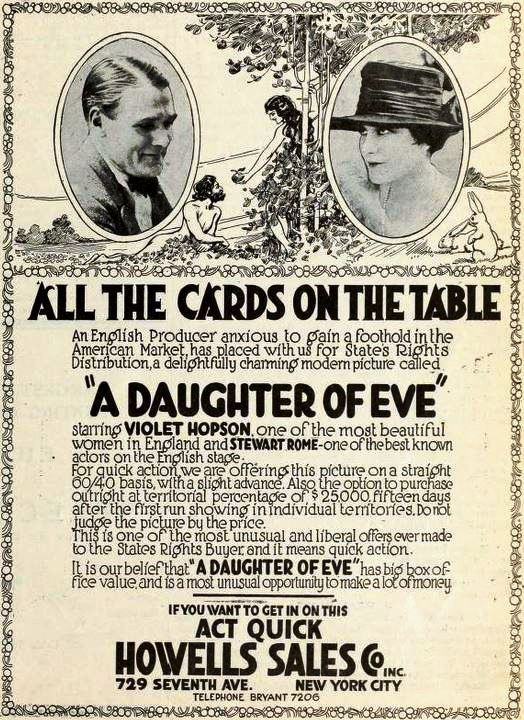
A definitive 5.2/10 rating for a film that redefined the boundaries of cult cinema. A Daughter of Eve remains a cornerstone of transgressive art.
Stepping back into the flickering shadows of early cinema, one often encounters narratives that, despite their age, resonate with surprising contemporary relevance. A Daughter of Eve, a silent film from 1917, is precisely one such artifact, offering a fascinating glimpse into the nascent stages of psychological drama on screen. It’s a picture that, at first glance, presents itself as a straightforward melodrama of love, betrayal, and murder, yet it quickly morphs into something far more introspective and disquieting, challenging the audience’s perception of reality long before such narrative devices became commonplace. The genius, or perhaps the frustration, lies in its audacious use of the 'it was all a dream' trope, a narrative gambit that, while often maligned in modern storytelling, here serves as a potent vehicle for exploring the anxieties of its central character.
The film introduces us to Lady Beatrice, a figure of refined elegance played with understated intensity by Vesta Sylva. Her world, seemingly one of tranquility and societal decorum, is subtly disrupted by the reappearance of a ghost from her past: an ex-lover, now fallen on hard times. Her decision to extend a clandestine loan to him — an act born of lingering affection or perhaps a sense of obligation — becomes the catalyst for a terrifying descent into a waking nightmare. This initial premise, fraught with moral ambiguity and the quiet tension of a secret kept, immediately grounds the narrative in human frailty. The weight of this secret, the fear of discovery, and the potential societal scandal it could unleash are palpable, even without spoken dialogue. It's a testament to the directorial hand and the actors' expressive abilities that these complex internal conflicts are so vividly conveyed.
As the story unfolds, the stakes are dramatically raised. Lady Beatrice's husband, a prominent Lord, is found brutally murdered, and her ex-lover quickly becomes the prime suspect. The unfolding events craft a chilling atmosphere of suspicion and injustice. The framing of the ex-lover is portrayed with a stark, almost inevitable, sense of doom, drawing the audience into a web of circumstantial evidence and public outcry. This segment of the film masterfully builds suspense, hinting at the darker undercurrents of human nature and the swift, often irrational, judgment of society. One might draw parallels here to other silent films exploring themes of wrongful accusation and the fragility of justice, such as Evidence, where the truth is obscured by perception and manipulation, or even the Hungarian classic A gyanú (The Suspect), which also delves into the psychological torment of an individual caught in a legal maelstrom. The emotional performances, particularly from Sylva and Edward Banfield as the accused, carry the immense burden of this narrative arc, their faces conveying volumes of despair and desperation.
However, just as the tension reaches its zenith and the audience prepares for a tragic culmination, the film delivers its startling revelation: the entire harrowing ordeal was merely a dream. This twist, while potentially frustrating for some viewers, demands a re-evaluation of everything that came before. It transforms the narrative from a literal crime drama into a profound exploration of Lady Beatrice's subconscious anxieties. The dream becomes a mirror reflecting her deepest fears: the guilt of her past indiscretion, the societal repercussions of her actions, and perhaps even a latent fear for her husband's safety or the stability of her privileged life. This audacious narrative choice, while a common trope, is utilized here to delve into the psychological underpinnings of character, rather than simply offering a convenient escape. It invites us to consider the powerful, often disturbing, landscape of the human mind and how our waking thoughts and hidden desires manifest in our nocturnal imaginings.
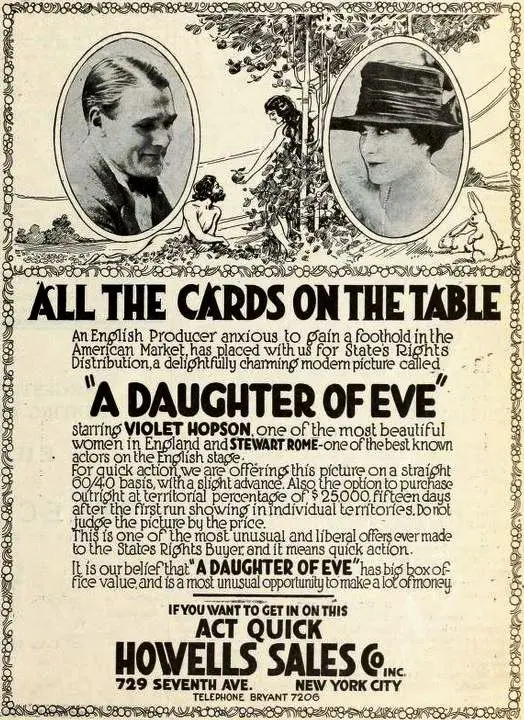
The performances, constrained by the conventions of silent cinema, are nonetheless compelling. Ronald Colman, even in his early career, demonstrates the charismatic screen presence that would later define his iconic status. While his role here might not be as central as in his later, more celebrated works, his contribution to the ensemble is undeniable, adding a layer of authenticity to the emotional tapestry. Vesta Sylva, as Lady Beatrice, carries the emotional weight of the film with remarkable grace. Her expressive eyes and subtle gestures communicate a complex range of emotions, from quiet longing to utter terror, making her internal journey believable even when the external reality is revealed to be illusory. Edward Banfield, as the ex-lover, embodies the tragic figure, his portrayal evoking both sympathy and a sense of his character's inherent vulnerability. The supporting cast, including Ralph Forster, Violet Hopson, Stewart Rome, and Cameron Carr, each contribute to the film's atmospheric depth, creating a believable world for Lady Beatrice's nightmare to unfold within.
The screenplay, penned by J. Bertram Brown, navigates these complex emotional and narrative waters with a certain ambition. While the 'dream' device can be polarizing, its application here feels less like a cheat and more like a deliberate artistic choice to explore the psychological rather than the purely literal. Brown's script, even in its silent form, manages to build a compelling narrative arc, demonstrating a nascent understanding of character-driven storytelling. The pacing, typical of the era, allows moments of quiet contemplation to breathe, punctuated by bursts of dramatic intensity. There’s an almost theatrical quality to some of the scene compositions, reminiscent of stage plays adapted for the screen, which was common practice in early cinema. This approach, while sometimes feeling a little static to modern eyes, ensures that the emotional beats are clearly articulated through visual cues and the actors' exaggerated, yet effective, physicality.
Visually, the film offers a window into the aesthetic sensibilities of 1917. The cinematography, while not groundbreaking by today's standards, effectively uses light and shadow to enhance the dramatic mood. Interiors are often richly detailed, conveying the opulence of aristocratic life, which then starkly contrasts with the grimness of the perceived legal proceedings. Outdoor scenes, though limited, provide a sense of scope and place. The editing, crucial for conveying narrative and emotional flow in a silent film, is generally effective, guiding the audience through Lady Beatrice's tumultuous experience without unnecessary ambiguity, despite the eventual twist. It’s a testament to the craftspeople of the era that they could evoke such strong emotional responses with limited technical resources, relying heavily on visual storytelling and the sheer power of human expression.
Examining A Daughter of Eve in the broader context of silent cinema reveals its unique position. While many films of the period focused on adventure, romance, or social commentary – think of the straightforward thrills of The Explorer or the class dynamics explored in Lure of Ambition – this film ventures into more internal territory. Its psychological ambition sets it apart, even if the execution of the dream twist might be debated. It’s a precursor to later, more sophisticated psychological thrillers, demonstrating that filmmakers were already pushing the boundaries of what cinema could convey beyond mere surface action. The film’s exploration of guilt and the subconscious mind aligns it more closely with the thematic weight of a film like Mortmain, which often deals with the inescapable consequences of past actions or inherited burdens, albeit in a more literal sense. The 'dream' element, while sometimes seen as a cop-out, here serves to elevate the narrative from a simple crime story to a commentary on the character's internal state.
The legacy of A Daughter of Eve, while perhaps not as widely celebrated as some of its contemporaries, lies in its brave attempt to delve into the human psyche. It reminds us that early cinema was not merely a medium for spectacle or simple entertainment, but also a burgeoning art form capable of exploring complex emotional and philosophical themes. For enthusiasts of silent film, it offers a compelling example of how actors, writers, and directors navigated the unique challenges of the medium to tell stories that resonated deeply with audiences. It’s a film that, despite its occasional narrative conveniences, manages to leave a lasting impression, prompting reflection on the nature of reality, the burden of secrets, and the profound, often unsettling, power of the mind to create its own truths. This cinematic journey, though brief, is a valuable piece of film history, showcasing the evolving artistry of a medium still finding its voice, but already capable of speaking volumes without uttering a single word.
IMDb 6.2
1927
Community
Log in to comment.