DbcultAccessing Vault...
5.6/10
Senior Film Conservator
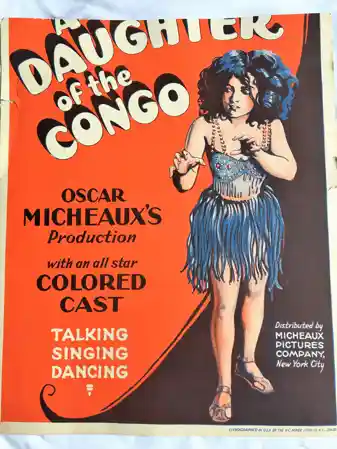
A definitive 5.6/10 rating for a film that redefined the boundaries of cult cinema. A Daughter of the Congo remains a cornerstone of transgressive art.
Alright, so we’re talking A Daughter of the Congo, a silent film from 1930. If you’re a film history buff, especially interested in early Black cinema, this one’s absolutely worth your time. It’s an important piece of work by Oscar Micheaux. But if you're someone who needs fast cuts and a big soundtrack, well, you might find yourself checking your watch quite a bit. It’s a niche view, for sure.
The core story here is pretty straightforward: a US cavalry officer ends up in Africa and rescues a young woman. She's been raised there, and she’s mixed race. Some truly unpleasant slavers are causing trouble, and our hero steps in.
What struck me first was the sheer ambition for its time. Micheaux was really doing something special, even if the resources were clearly stretched thin. You feel that, you know? Like, the whole production is just *trying* so hard. 💪
The acting, it's very... silent movie. Lots of big gestures, wide eyes. Charles R. Moore, as the officer, he carries a certain weight, a kind of stoic bravery. But then you have some of the other characters, and their reactions are just so *big* sometimes, it almost makes you chuckle a little. Not in a bad way, just, you know, dramatic.
There’s this one particular scene where the slavers are being chased, and the way they move, all frantic and flailing. It’s not quite a modern action sequence, obviously, but you get the danger. The cuts are quick enough to make it feel tense for a silent film.
Willor Lee Guilford, who plays the titular daughter, Congola. She really embodies this sort of innocent, yet resilient, spirit. There are moments when her face just tells a whole story without any intertitle needed. That’s when silent film really clicks, I think. 💡
The film’s portrayal of Africa is, well, very 1930s Hollywood filtered through an independent lens. It’s not exactly authentic, no. You see the sets, they’re clearly not on location. But for its time, it's an attempt to depict something grand and adventurous, even if it feels a little staged now.
One detail I kept noticing was the costumes. Some of the outfits, especially on the villagers, seem a bit... generic? Like they just grabbed whatever they had. But then Congola’s dress, it has this distinct look to it. It makes her stand out, which is smart.
The pacing, it's definitely slower than we're used to. Sometimes a scene just lingers. A character will walk into a room, then pause, then look around, then take another step. It can feel a bit drawn out, but it also gives you time to just take in the frame.
And the intertitles! Ah, the intertitles. They do a lot of heavy lifting here. Some of them are just plot points, but a few have this flowery language that’s pretty charming. Like, they really wanted to make sure you *felt* the emotion, even if the words were a bit much.
“A heart torn betwixt two worlds!” Stuff like that. Bold.
What’s really interesting is how Micheaux handles the themes of race and identity, subtle as it has to be in this format. Congola's background is central. It's not just a rescue story; there’s something more underneath about belonging, about heritage. You can tell Micheaux had a lot on his mind, trying to tell these complex stories through a medium that often simplified everything.
There’s this one scene near the end, a sort of resolution. It feels almost abrupt. Like, after all that buildup, things wrap up pretty quickly. You expect a little more fanfare, but it’s just… done. Which, I guess, is kind of realistic in its own way? Not everything has a big Hollywood ending, even in 1930.
Overall, A Daughter of the Congo is a challenging film to watch today, but a rewarding one if you approach it with an open mind. It's a window into a different era of filmmaking and storytelling, especially from a Black perspective. You'll see the rough edges, for sure. But you also see the passion. And that, I think, is what makes it stick with you.
IMDb 5.5
1932
Community
Log in to comment.