DbcultAccessing Vault...
5.4/10
Senior Film Conservator
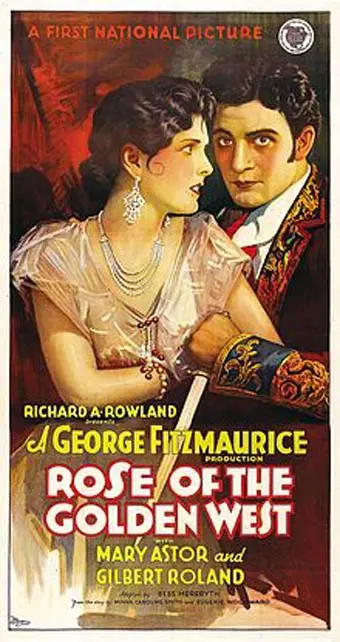
A definitive 5.4/10 rating for a film that redefined the boundaries of cult cinema. Rose of the Golden West remains a cornerstone of transgressive art.
Is Rose of the Golden West (1927) worth watching today? Short answer: yes, but with significant caveats that demand a certain appreciation for cinema history. This is a film for those who seek to understand the foundational narratives of early Hollywood, for silent film aficionados, and for anyone curious about the burgeoning star power of Mary Astor. It is emphatically NOT for viewers expecting modern pacing, complex character arcs, or sound-era polish.
The film presents an intriguing, if somewhat predictable, slice of Americana that, despite its age, still manages to convey a sense of adventure and romantic idealism. It works. But it’s flawed. It’s a relic, but one that occasionally glitters.
This film works because of Mary Astor’s undeniable screen presence. Even in 1927, her ability to convey strength and vulnerability without a single spoken word is remarkable, anchoring the entire production. The silent era often demanded exaggerated emoting, but Astor possessed a naturalistic grace that transcended the conventions, hinting at the depths she would explore in later, more renowned roles. Her portrayal of Rose is the heart that keeps this otherwise conventional Western beating.
This film fails because its narrative predictability, even for its time, borders on formulaic. The antagonist, Colonel Ashley, is a caricature of villainy, lacking any genuine nuance, and the climactic resolution feels less earned and more inevitable. The pacing, while typical for the era, can feel sluggish to a contemporary audience, especially during expositional sequences that rely heavily on intertitles to move the plot forward rather than visual storytelling.
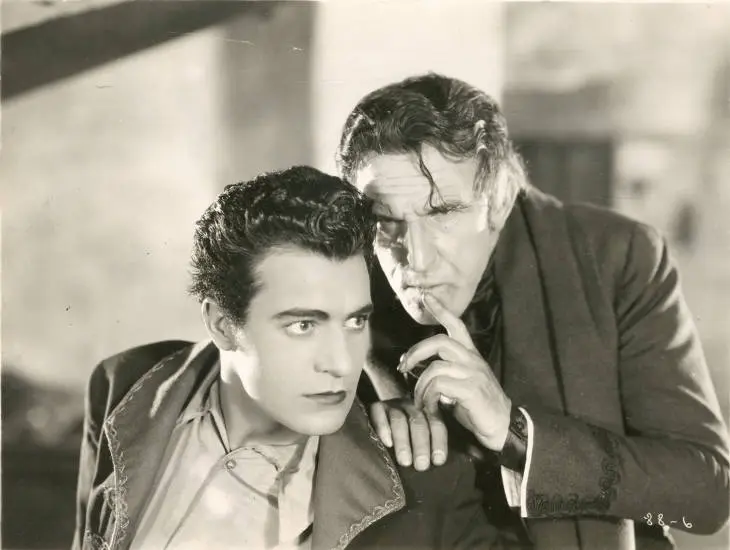
You should watch it if you are a serious student of film history, particularly interested in the Western genre's early iterations or the evolution of acting before sound. It’s also a valuable watch for those who appreciate the artistry of silent cinematography and wish to witness a young star in the making. If you're looking for a casual, thrilling Western or a film with deep psychological insight, this isn't it.
The narrative of Rose of the Golden West unfurls with a distinct, almost mythic quality, positioning Mary Astor's Rose as a frontier matriarch in all but name. Her homestead, a vital waystation, isn't just a physical location; it's a symbol of resilience against the encroaching forces of unchecked capitalism and lawlessness that defined certain pockets of the American West. The conflict isn't merely about land; it's about the very soul of a nascent society, caught between rugged individualism and the nascent, corrupting influence of power.
Colonel Ashley, portrayed by Montagu Love, is less a man and more an embodiment of greed. His desire to control the spring that feeds Rose's land is a thinly veiled metaphor for the insatiable hunger for resources, a theme still resonant today. Love plays him with a broad, theatrical menace, perfectly suited for the silent screen, where subtlety often gave way to overt villainy. His henchman, Gustav von Seyffertitz, adds a layer of quiet, unsettling threat, his piercing gaze doing more work than any intertitle could.
The arrival of Gilbert Roland's Brent introduces the romantic element, but also a crucial moral ambiguity. Is he a savior or a rogue? His initial interactions with Rose are fraught with suspicion, a dance of wary glances and unspoken challenges. This tension, while somewhat resolved by the narrative's demands, offers a fleeting glimpse into what could have been a more complex character study. The film, however, opts for the more straightforward path of hero-meets-heroine, united against a common foe.
The climax, involving a confrontation over the disputed land, feels both inevitable and, in its execution, a little too neat. While it delivers the expected resolution, it misses an opportunity to delve into the deeper societal implications of such conflicts. Instead, it prioritizes individual triumph over systemic critique. It’s a film that promises a grand struggle but delivers a personal victory, which, while satisfying, leaves a hunger for more expansive storytelling.
The direction in Rose of the Golden West, while competent, rarely ascends to the heights of true innovation seen in contemporaries like F.W. Murnau or even some of D.W. Griffith's more ambitious works. The camera work by George Barnes is functional, capturing the expansive landscapes that define the Western genre, yet it often feels more illustrative than interpretive. We get wide shots of riders traversing vast plains, establishing the isolation and grandeur of the setting, but fewer moments of truly inspired visual metaphor.
There are moments, however, when the cinematography shines. A particular sequence involving a chase through a dusty canyon, for instance, utilizes dynamic angles and rapid cuts (for the time) to convey a genuine sense of urgency. It's in these action-oriented scenes that the film momentarily shakes off its more staid expositional sequences, demonstrating a nascent understanding of visual rhythm.
The reliance on intertitles is, of course, a hallmark of the silent era, but here they sometimes feel overly verbose, slowing the narrative momentum. A more confident director might have trusted the actors and the visual storytelling to carry more of the exposition, allowing the emotional beats to resonate more purely. Compared to a film like The Narrow Street, which often uses subtle visual cues to convey character interiority, Rose of the Golden West can feel a bit heavy-handed in its explanations.
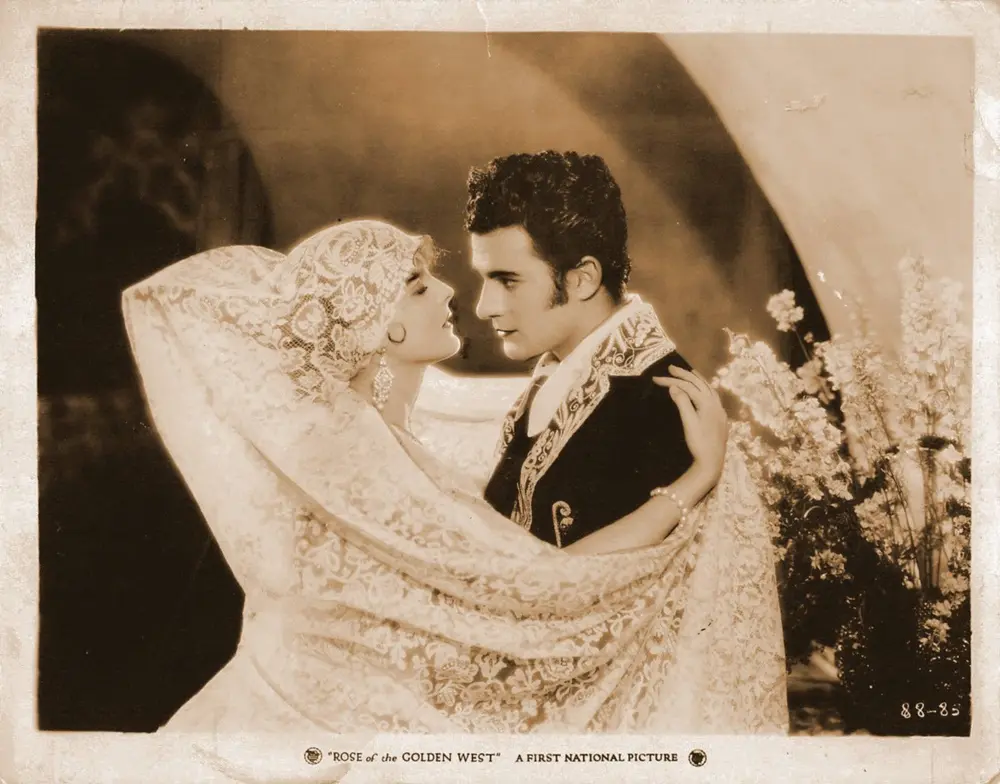
Yet, the film manages to establish a consistent tone, blending elements of romance, adventure, and drama into a cohesive whole. The aesthetic, while not groundbreaking, is certainly evocative of the period, transporting the viewer to a romanticized vision of the American frontier. It’s a testament to the crew’s ability to build a believable world with limited technical means, using natural light and practical sets to good effect.
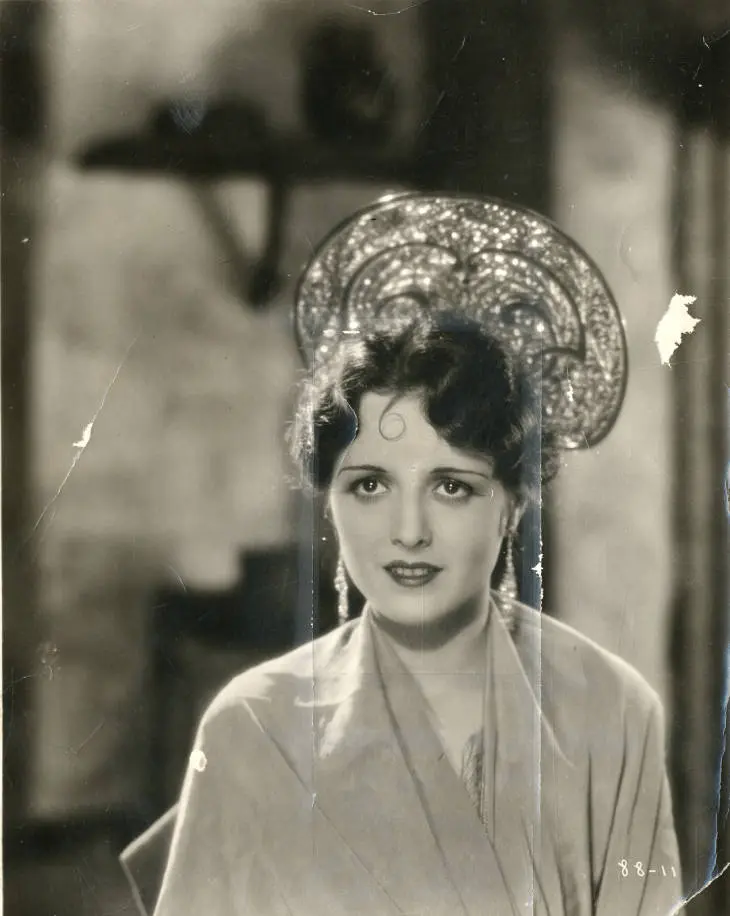
Mary Astor, even at this early stage of her career, demonstrates a captivating screen presence that elevates the material. Her Rose is not merely a damsel in distress; she is fiercely independent, her eyes conveying a mixture of defiance and weariness that speaks volumes. In a scene where she confronts Colonel Ashley alone, her posture and the subtle tightening of her jaw communicate more resolve than any dialogue could. It's a performance that hints at the formidable actress she would become, capable of holding her own against giants like Humphrey Bogart decades later.
Montagu Love as Colonel Ashley is a delightful villain, if a rather one-dimensional one. He relishes the opportunity to chew scenery, his sneers and gestures perfectly calibrated for the back rows of a silent picture house. While he lacks the complex motivations of a truly memorable antagonist, his sheer theatricality provides a clear, unambiguous threat against which Rose's virtues can shine. His performance is a masterclass in silent film villainy, a stark contrast to the more nuanced portrayals seen in some European silent films like Die Narbe am Knie.
Gilbert Roland, as the romantic lead Brent, embodies the dashing, slightly roguish hero archetype. His charm is palpable, and he shares a decent, if not electric, chemistry with Astor. While his character isn't given much depth beyond being 'the good guy,' Roland's physicality and expressive face make him a convincing presence. His quick reflexes in a barroom brawl sequence are particularly well-staged, showcasing a youthful exuberance that is infectious.
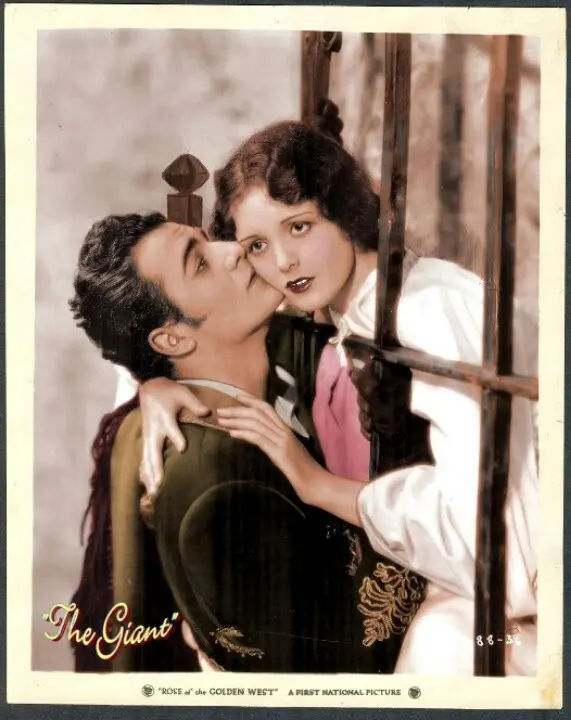
The supporting cast, including Flora Finch in a smaller role, provides adequate background color, though their characters are largely archetypal. Gustav von Seyffertitz, however, deserves special mention. His silent menace as Ashley's enforcer is genuinely unsettling. He doesn't need grand gestures; a cold stare or a subtle shift in his expression is enough to convey a profound sense of danger. It's a performance that demonstrates the power of understated evil, a surprising observation for a film that often leans into overt dramatics.
The pacing of Rose of the Golden West is undeniably a product of its era. Silent films, without the benefit of synchronized dialogue or sophisticated sound design, often relied on a slower, more deliberate rhythm to allow audiences to absorb the visual information and read the intertitles. This can be a challenge for modern viewers accustomed to rapid-fire editing and constant narrative propulsion. There are extended sequences, particularly in the film's first act, dedicated to establishing the setting and the initial conflict, which can test patience.
However, when the action picks up, the film demonstrates a surprising energy. The aforementioned chase scenes and confrontations are edited with a briskness that belies the film's overall measured pace. These moments serve as welcome bursts of excitement, preventing the narrative from becoming entirely stagnant. It's an uneven rhythm, but one that ultimately serves the story's episodic structure.
The tone oscillates between earnest drama and lighthearted romance, with occasional touches of frontier grit. It never delves into the grim realism of later Westerns, preferring a more romanticized, almost mythological portrayal of the West. This choice imbues the film with a certain charm, a nostalgic glow that makes it feel less like a historical document and more like a fable. It's a decidedly optimistic vision, even in the face of adversity, aligning it with other romantic adventures of the time like The Dawn of Love.
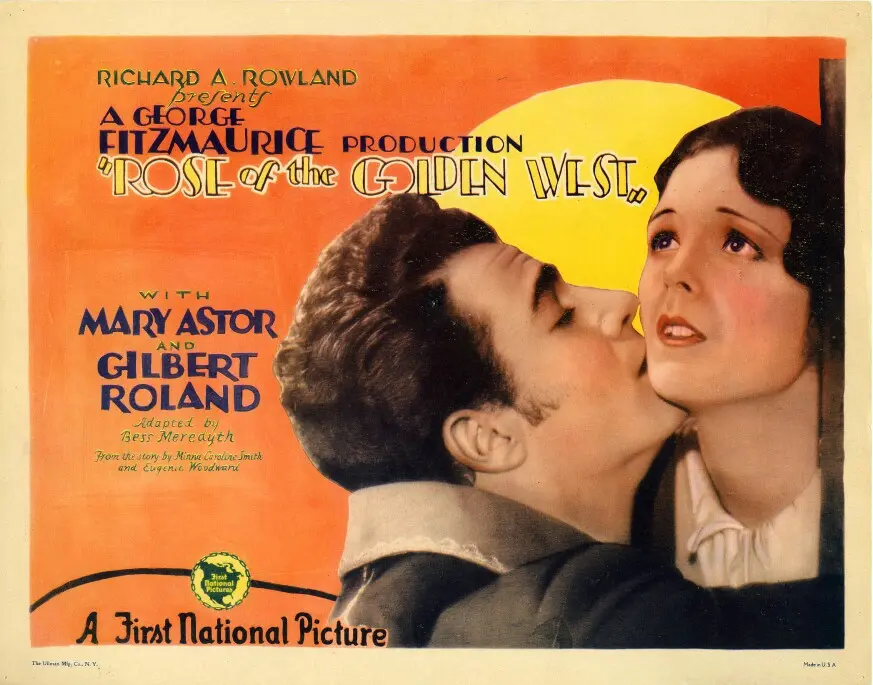
While not a groundbreaking film, Rose of the Golden West offers a valuable window into early Hollywood's approach to the Western genre and showcases the nascent brilliance of its lead actress.
Yes, for specific audiences, Rose of the Golden West is absolutely worth watching today. It’s a historical artifact that provides context for the evolution of cinema. It allows us to see how stories were told before sound, how actors conveyed emotion purely through physicality and facial expression. It's a journey back in time, offering a unique perspective on a foundational genre.
For those interested in Mary Astor’s career trajectory, this film is essential viewing. Her performance here is a clear indicator of her future stardom. It's also a good example of a 'bread and butter' Western from the silent era – not revolutionary, but solidly entertaining within its own conventions. It’s a testament to the enduring appeal of simple stories well told, even if they sometimes feel a little too simple.
Rose of the Golden West is not a lost masterpiece, nor does it aim to be. It is a robust, if conventional, silent Western that primarily serves as a showcase for a young Mary Astor's burgeoning talent. For those willing to engage with its historical context and the inherent limitations of silent cinema, there is genuine enjoyment to be found. It’s a film that asks for a certain generosity from its audience, and in return, it offers a charming, if somewhat unsophisticated, adventure.
My recommendation is clear: approach Rose of the Golden West not as a modern blockbuster, but as an archaeological dig into cinema's past. You'll find a sturdy foundation, a compelling lead, and a story that, while familiar, still manages to resonate with themes of resilience and self-determination. It’s a valuable piece of film history, imperfect but undeniably significant for what it represents and for the talent it foregrounds. It’s more than just a curio; it’s a living testament to an era.
IMDb —
1918
Community
Log in to comment.