DbcultAccessing Vault...
6.5/10
Senior Film Conservator
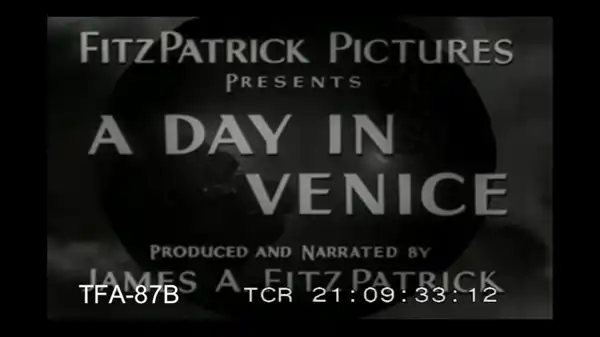
A definitive 6.5/10 rating for a film that redefined the boundaries of cult cinema. A Day in Venice remains a cornerstone of transgressive art.
Honestly? Only if you have ten minutes to kill and you like looking at old footage. If you're looking for a plot or characters, you're going to absolutely hate this. It's for people who like history or just want to see what Venice looked like before it was completely swamped by modern tourism. 🛶
I watched this on a Tuesday morning while drinking some lukewarm coffee. It's part of those 'Traveltalks' shorts they used to play in theaters. Back then, this was probably the closest most people got to an international vacation. Now, it feels like a very slow, very polite version of a travel vlog you'd find on your phone.
The first thing you notice is the color. It's early Technicolor, so everything looks a bit like a coloring book. The oranges are really orange and the blues are almost too blue. It makes the city look fake, like a set at a theme park, even though it's the real place.
The narrator—James A. FitzPatrick—has this voice that just doesn't quit. He’s known as 'The Voice of the Globe,' but to me, he sounds like a guy reading a very long grocery list. He says everything with this weirdly intense gravity. Like, he talks about a gondola like it's a sacred object instead of just a boat.
There is a lot of footage of the water. The water looks... thick? I don't know how else to describe it. It doesn't look like the clear blue stuff you see in modern 4K videos. It looks heavy, like green pea soup. You can almost smell the canal through the screen, and not in a good way.
I got really distracted by the pigeons in St. Mark's Square. There are so many of them. There’s a shot of a woman covered in them, and she’s just smiling like it’s the best day of her life. I would have been screaming. One pigeon looks like it’s trying to steal a guy's hat in the background. 🐦
Speaking of hats, everyone is wearing one. It’s 1933, so you weren't legally allowed to exist in public without a hat, apparently. The men all have these stiff fedoras and the women have these little tilted things. It makes the whole city look very formal, even when they're just walking around looking at birds.
The camera doesn't move much. It mostly just sits there and lets the gondolas glide past. It's very relaxing if you don't think about how heavy those old cameras must have been. They probably needed three guys and a mule just to move the tripod ten feet.
I noticed one gondolier who looked really bored. He’s just rowing away, staring off into space while the narrator talks about the 'romance of the canals.' That guy probably just wanted his lunch break. It's those little human moments that make these old shorts worth it.
If you've seen New Movietone Follies of 1930, you know how stiff these early sound-era productions can feel. This one is no different. It’s very staged. Even the people walking by seem like they were told to 'act natural' and then they immediately forgot how to walk like humans.
There's no mention of politics or anything happening in the world at the time. It’s just 'look at this pretty bridge' and 'look at that pretty church.' It’s a complete escape. I guess that’s what people needed in 1933.
The Bridge of Sighs gets a mention, of course. It’s a requirement for any Venice movie. But the shot is so quick you might miss it if you blink. The movie is only 9 minutes long, so they really cram the landmarks in there. It's like a speed-run of a vacation.
I think I liked the quiet moments best. When the narrator shuts up for three seconds and you just hear the music and see the shadows on the stone walls. The shadows are really deep in this film. It gives the buildings a lot of texture that you don't always see in black and white films from the same time, like Way Down East.
Does it have a point? Not really. It’s just a vibe. It's the 1930s version of 'no thoughts, just vibes.' You look at the water, you look at the hats, you listen to the guy with the deep voice, and then it’s over.
The music is very 'travelogue.' It’s got that sweeping, orchestral sound that feels like it should be playing while a giant map scrolls across the screen. It’s a bit much, but it fits the mood of the time. Everything had to be Grand and Important.
One weird thing—the narrator calls it 'The City of Canals' about five times. We get it, James. There’s water. We can see it. It’s right there.
I found myself wondering what happened to the people in the background. There’s a little kid leaning over a railing in one shot. He’d be ancient now, or gone. It’s a bit trippy to think about. That’s the real reason to watch stuff like this. It’s not for the 'cinematography.' It’s to see a world that doesn't exist anymore.
Anyway, it ends abruptly. The sun sets (or the film just gets darker) and the narrator says something about bidding farewell to the 'Queen of the Adriatic.' Then the 'The End' card pops up. No credits, no fuss. Just a quick trip and back to reality.
It’s fine. It’s totally fine. If you’re a fan of the Rambling 'Round Radio Row shorts or other weird little artifacts from the studio system, you’ll dig it. Otherwise, it’s just something to have on in the background while you do laundry.
I’m glad I saw it, but I don’t think I’ll ever need to see it again. It’s a one-and-done kind of deal. A nice little slice of the past that doesn't overstay its welcome. 🎬
IMDb 6.7
1935
Community
Log in to comment.